News & Media
Featured
10 Insights into 4IR in South African Mining 2026
Tuesday, July 28, 2026
What's in this article
- 1.01 The role of the CEO in the adoption of AI
- 2.02 Value over volume: The strategy behind sustainable mining success
- 3.03 Modern tools, traditional mines: Navigating innovation with care
- 4.04 Tech that supports, not replaces–A human centred mining approach
- 5.05 Why digital projects fail – lessons from experience
- 6.06 Supply chain, inventory, warehousing, and spend are opportunities to find margin
- 7.07 AI is changing the world – what does it mean for miners?
- 8.08 Line management’s view is very pragmatic
- 9.10 Data is easy; information requires effort
This study is composed of ten structured CEO interviews (that have been anonymised), as well as additional focus group sessions with line management from a diverse range of miners, as well as industry meetings and strategy sessions held by the Minerals Council in 2025. Although this study focuses on artificial intelligence, the data itself is entirely human‑generated. This makes the findings subjective but provides a clear view of current leadership thinking.
01 The role of the CEO in the adoption of AI
As South Africa’s mining industry faces growing complexity—from challenging ore bodies to shifting economics and rising sustainability demands—the role of the CEO is evolving rapidly. Mining CEOs are beginning to see themselves not just as business leaders, but as drivers of innovation and technology-driven decision-making.
Against this backdrop, the adoption of AI has the potential to fundamentally reshape the sector. By improving efficiency, strengthening safety, health and enabling more informed decision‑making, AI offers mining companies a pathway to operate more sustainably and competitively in a rapidly changing environment. AI‑driven predictive analytics can optimise equipment maintenance—reducing downtime, preventing failures, and lowering operational costs—while advanced algorithms support real‑time monitoring of mine conditions to enhance worker safety and health. Ultimately by leveraging AI and technology, mining companies can unlock new levels of productivity in an increasingly competitive and resource-conscious industry.
CEOs interviewed emphasised that adopting AI and advanced technologies in mining is not merely a technical upgrade; it represents a fundamental shift in how mines operate, how decisions are made, and how value is created.
By moving our operations from experience-driven to data-driven. From reactive, experienced based decisions in a smaller context to coordinated mine wide data-driven control – in real time, with predictive elements such as maintenance replacing breakdown driven maintenance. Real time condition monitoring would replace inspections, and operational decisions would be guided by continuous data streams accessible by the miners.
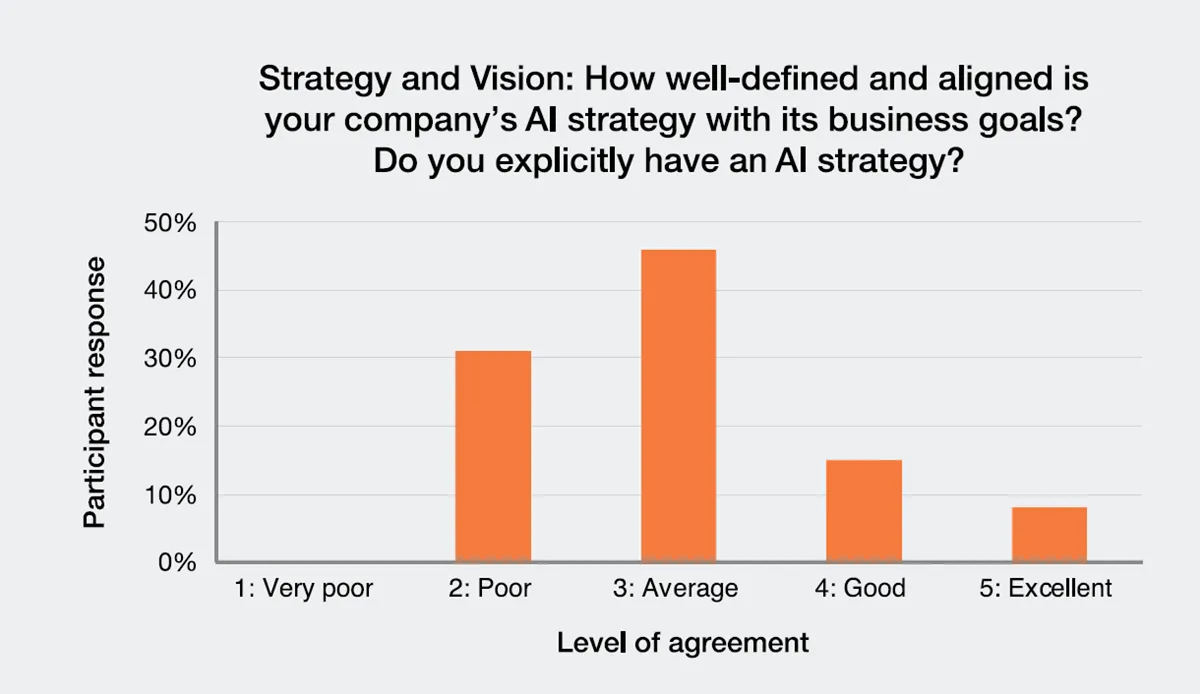
CEOs acting as technology champions play a pivotal role in bringing people, systems, and capabilities together to deliver deliberate, technology‑enabled outcomes. Yet most organisations have not fully embedded AI into their strategic decision‑making. Nearly half of CEOs surveyed (46%) rate their AI strategy as merely “average”, and only 23% believe it is well‑defined and aligned with their business goals.
The intention to adopt AI is certainly there, but execution—or even knowing where to begin—remains a significant weakness. This gap underscores why AI‑savvy CEOs are essential: they are the leaders who can drive both the cultural and technological transformation required to shift AI from aspiration to measurable impact.
We found that IT strategies must clearly articulate how systems will enable collaboration and data-driven decisions. In a sector traditionally cautious about technology, progress hinges on decisive leadership: without clear alignment and CEO-driven momentum, AI adoption risks stalling at the pilot stage rather than delivering the operational efficiency, safety, health and productivity gains that you wanted.
As one CEO aptly put it, the CEO needs to “create the culture that will go out and explore, challenge the status quo and look for new solutions.”
This cultural shift is critical. Mining is a risk averse industry and leaders within the industry are recognising both the opportunities and threats that AI brings for business models.
Traditionally, miners have been cautious about adopting new technology. One CEO stated bluntly: “If the CEO doesn’t trigger it in the business it won’t happen.” This comment underscores a recurring theme in the interviews that were conducted—technological transformation in mining starts at the very top. When leaders are hesitant, progress grinds to a halt. In one of the interviews an employee mentioned that their business had been in the ‘Dark Ages’ because the leader never saw the viability of technology being applied to deep, conventional mines.
The CEO is key to the process—once a sufficiently attractive technology is identified, the CEO must lead the case to invest in it. Thereafter the IT investment should be treated with similar seriousness and evaluation criteria from conception to post implementation as a Capital Project.
But to integrate AI seamlessly into operations CEOs must create the conditions for active collaboration. This means ensuring that project teams leverage systems as enablers, adopt new operating models, and place trust in the data generated. Ultimately, success depends on breaking down silos through clear and decisive leadership, all aligned to the purpose of the project.
Recommended actions for mining leaders
- Make AI a CEO-led transformation, not an IT project
- Treat AI and digital as core to business strategy, not a support function
- Set top-down accountability for value delivery and adoption
- Embed AI investment discipline like capital projects
02 Value over volume: The strategy behind sustainable mining success
Modern mining success is no longer measured by how much material can be extracted from the ground as quickly as possible. Instead, true success lies in creating sustainable, long-term value across financial, operational and social dimensions. Mining leaders believe that focusing on sustainable long-term value over short-term production metrics—such as volume—leads to more stable and efficient operations. Achieving this requires:
- Strong leadership
- Smart use of technology; and
- Clear communication with workers and communities
But why does this shift in focus matter?
Our CEOs reminded us that commodity prices in the mining sector are known for their extreme volatility. Prices can soar in boom times (like the gold run in 2025 to 2026), tempting companies to chase higher volumes to maximise short-term profits. But when prices fall sharply—as they often do—the same high-volume approach can leave mines exposed, driving up costs and risking financial instability.
Depending on where they are in the mining cycle, they told us that the typical pattern was to gravitate from value over volume strategies to volume at any cost. The CEOs we interviewed shared how they drive both strategic and tactical choices depending on current market realities.
While some specific ore bodies force companies to pursue volume to keep operations viable, the consensus among those interviewed is that the lessons from two significant commodity cycles over the past 30 years (outside of coal—they noted) show that prioritizing value over volume was probably the correct approach to follow all the time.
Success requires a lot of discipline, they told us—and it’s a challenge to communicate the long-term proposition to stakeholders when boom times happen.
To successfully drive a value over volume strategy, the key focus areas for the executive are operational performance improvements, that is measurable productivity and efficiency initiatives, and the ever-present focus on cost management.
The three levers the CEOs spoke of were:
- Operational technology improvements
- Digitisation
- Rapid data analysis
Ultimately, a value over volume strategy attempts to ‘future proof’ those mines—so that no matter what the mineral price is doing, they can remain competitive through the price cycle.
Leaders and middle management both emphasised in interviews that to accomplish this goal data must be laid out in a way that you can understand, interpret and act promptly on what you are seeing. This in turn enables the reconfiguration of cost bases while improving safety, health, and volumes. The CEOs speak of deliberately positioning at the most competitive place in the cost curve using these tools.
CEOs should define the ambition, while the team must execute. It helps to have clear goals and direct support from leadership in terms of the tools, technology, and infrastructure affected.
The CEO supports these internal change efforts through stakeholder engagement with government, regulators, unions and communities. The CEOs feel that it is important to align with our communities. They have the responsibility of communicating why this value over volume approach is good for stakeholders—articulating how this approach will ultimately result in higher quality jobs that will pay better.
Recommended actions for mining leaders
- Prioritise high-value use cases over broad transformation
- Start with specific, ROI-driven use cases (e.g. predictive maintenance, supply chain optimisation)
- Scale what works; stop what doesn’t (fail fast)
- Build momentum through incremental win
03 Modern tools, traditional mines: Navigating innovation with care
Mining companies are advancing their operations by adopting different technologies based on their specific needs. For them success is not just about acquiring tools—it depends on:
• How effectively these tools are applied to existing operations
• How well change is managed; and
• Making sure workers understand, accept and adopt the new ways of working
CEOs play a critical role in driving this transformation, yet technology adoption cannot be a one-size-fits-all approach. The tools chosen must align with the mine’s operational realities and the capabilities of its workforce to avoid costly mismatches and stalled progress.
To make this shift sustainable, companies must invest in building the right skills and knowledge. Immersive training methods such as virtual reality (VR) and augmented reality (AR) are proving highly effective—improving retention by 30% and creating muscle memory specific to each site’s operations. This ensures that technology is not only implemented but embedded successfully, empowering a workforce that is confident, capable, and ready to unlock long-term value through innovation.
Each mining operation has its own particular approach and technologies depending on the minerals mined and mining methods. While some of these operations could be automated, doing so would significantly disrupt the workforce. Some leaders see significant promise in automation, while other CEOs feel that automation may become a bone of contention—especially when you think that the safest mine is one with no humans in it.
Holistically, the most promising tools can fail to deliver value if they’re not aligned with the realities on the ground. But based on our interviews the broad consensus was very pragmatic:
As one CEO summed up: "We can’t replace existing industries and business structures with a technology, but we can apply the modern technology on the existing infrastructure and extract better performance."
Transformational change is likely to arise with greenfield mines—layering digital tools onto existing infrastructure allows miners to share data, turn it into actionable insights and drive incremental performance improvements without disrupting core activities. However, layering technology alone is insufficient. When we speak of a data led future, one CEO feels that his responsibility is to ensure that AI facilitated at strategic level is clearly understood at mine level. In his words, “Change management, to get people to adopt the technology and get them to understand it, is critical.”
This brings us to a critical enabler: data management. Without high-quality, accessible, and well-managed data, even advanced technologies cannot deliver their full potential. Our analysis shows that data maturity1 in mining remains a challenge:
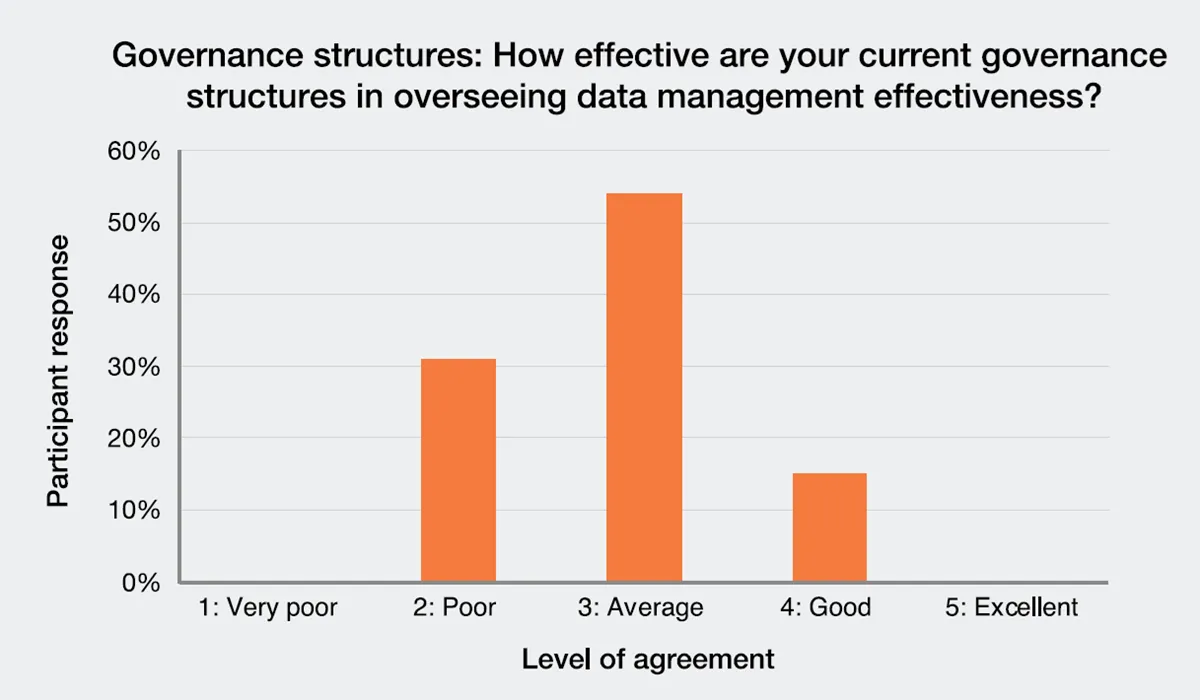
With over 85% of respondents rating their data management as average or poor, it’s clear that improving data governance and accessibility must be a priority. CEOs must champion investments in systems that create a single source of truth, enabling collaboration and real-time decision-making across operations.
The future of mining innovation lies in a delicate balance: harnessing modern tools while preserving the strengths of traditional operations and ensuring that technology and people move forward together. Success will depend on aligning strategy, systems, and culture so that data-driven decisions become the norm, not the exception.
The importance of change management
In one organisation, worker fatigue was only picked up at payroll stage, after excessive overtime had already occurred — too late to prevent unsafe behaviour.
A new digital system was introduced that could detect fatigue in real time and automatically prevent workers from clocking in when it was unsafe. The technology worked well, but the real risk was people. Without proper
change management, the solution could easily have been seen as management taking away workers’ rights, leading to resistance and conflict.
The lesson: even the best technology will fail without clear communication, early engagement, and helping people understand why the change is being made.
"Change management is critical in talking to people and making them understand it."
A golden perspective
In one deep‑level, labour‑intensive operation, significant effort had already gone into improving working conditions—including better monitoring of dust, noise, and ventilation to create a safer underground environment. When it came to productivity, leadership recognised that technology alone was not the answer. The real lever was putting the right people in place—people who could understand change, anticipate its impact, and act before issues affected the business.
A key shift was moving from being a follower of technology to taking a leadership role. With limited off‑the‑shelf solutions available, the organisation had to develop its own approaches to move people away from high‑risk areas, introduce real‑time condition monitoring, and use safety dashboards to actively manage risk. With better data and safer ways of working in place, productivity improvements followed—through improved shift cycles, better planning, and fact‑based decision‑making.
The lesson: leadership sets the tone. By building the right culture, appointing the right people, and backing them with the right information and tools, organisations can improve both safety and performance at the same time.
Recommended actions for mining leaders
- Shift decisively to a “value over volume” operating model
Use data and analytics to:
- Optimise cost position across price cycles
- Improve productivity, efficiency, and safety simultaneously
- Align incentives and communication with long-term value creation
04 Tech that supports, not replaces–A human centred mining approach
The foundation of the problem
"We don’t have smart people to run our mines in the future."
Unemployment and inequality continue to drive scepticism around the Fourth Industrial Revolution (4IR), particularly among South Africa’s low-income communities. Many fear that automation and digital technologies will lead to job losses, especially for those with limited education and few formal skills, who already face significant barriers to employment.
Over the past 30 years, the government has struggled to address the deep inequalities inherited from Apartheid, particularly in rural areas where access to quality education, digital infrastructure and the internet remains limited. These persistent gaps leave many South Africans unprepared to take advantage of opportunities in the digital economy. While 4IR has the potential to create new roles in areas such as data analysis, drone flying and maintenance, artificial intelligence and digital content creation, these opportunities often remain out of reach for those without the necessary training or connectivity.
Realistically, the risk of job displacement is highest for low‑skilled workers, who currently make up a large portion of the mining workforce. Until recently, you could join a mine with basic literacy skills and be trained and developed internally—sometimes progressing all the way to highly technical roles, even up to mining engineering. So, what’s changed?
We are now shifting from an environment defined by ‘labour availability’ to one that demands ‘skills readiness’. Most of the AI‑readiness challenges identified in this study—reported by 70% of mines surveyed—centre on the lack of suitable digital skills required to work effectively alongside new technologies.
To be clear, AI is largely viewed as a tool that augments workers rather than replaces them—but doing so requires a level of skill that hasn’t historically been demanded in mining. The encouraging news is that most employees are already comfortable using mobile phones and apps. The challenge, however, is that they will now need to learn how to capture data accurately and interact effectively with AI‑enabled systems.
Part of the challenge is mindset. People generally learn quickly how to ask AI questions and improve their prompts as they gain exposure to technology. However, that exposure is still uneven in South Africa, which limits how confidently and effectively workers can engage with AI tools.
Formal reskilling programmes are essential, but underdeveloped, we were told. There is no concerted effort or investment by government into education and skills that are truly relevant to the future economy. Initiatives such as the Tshimolongong Digital Innovation Precinct - the Wits University–based digital innovation and technology hub launched in 2016 - help marginalised communities to join the digital economy. This is a positive example, but it is solitary and located in Braamfontein in Johannesburg.
Although initiatives are available, access is limited for many low-income individuals, particularly those in rural or underserved areas. For many, the cost and distance involved in reaching such centres make participation difficult, potentially leaving large segments of the population excluded from the benefits of digital transformation.
The government’s role in building a future-ready workforce: Reform the education system
Government’s responsibility here is considerable—it cannot be left to the mines and industries to replace the education system post-school. It will require time and investment into the education (and/or re-education) of people of South Africa—especially in rural areas. This would require access to the internet, links with schools and institutions to help distribute knowledge and content. Most fundamentally it would require a target population that values learning.
If South Africans wants to play a part in mining in future they will need to obtain relevant skills. In the absence of an effective government and education system, our miners spoke about the power of the collective—with the Minerals Council as the vehicle, we as the industry can influence policy to some extent.
Emphasis should be placed on STEM subjects with less university capacity going to non-productive coursework that does not suit the workplace—this, along with creating a culture of attendance at schools and universities, is also part of the role of government if they want South African labour to play a role in the digital economy.
Upskilling rather than replacing: Building a skilled workforce for AI integration
In South Africa’s mining sector, many leaders are rethinking the role of technology. Rather than replacing workers with machines, they believe technology should be used to make existing jobs more efficient, meaningful, and productive. The goal is not fewer people—but smarter tools and better information that enable people to do their work better. Smarter tools enable users to capture more meaningful data with greater accuracy. By guiding them through tasks step by step, these tools not only improve execution but also reinforce stronger data-handling practices. As organisations shift towards a streaming data environment, this capability will enable faster replanning and more responsive corrective actions, significantly reducing the time between insight and action.
As one CEO put it: "I disagree with looking at how we can go mechanized and get rid of people. We will not go contract mining and close our HR department in search of efficiencies."
This perspective reflects a uniquely South African approach to employment in mining: technology should augment human capability, not eliminate it. However, many local mines are mature operations, which means they lack the flexibility to integrate new technologies as easily as greenfield projects. We were told that the mining industry has spent decades trying to automate and mechanise and simply has not found all the solutions yet. As one CEO observed, “why carry on beating that drum? When there is a completely different solution to be found in digital operations?”
However, the interviews told a different story. When asked to rate their readiness for AI integration, 15% of respondents described their capability as very poor, while more than half—54%—rated themselves as poor. Another 15% said average, and 15% said good. Not a single respondent rated their readiness as excellent. This means nearly 70% of mines are operating with poor or very poor AI readiness. It is not just a technology gap—it is a skills gap, and it is the single biggest barrier to unlocking the benefits of AI in mining.
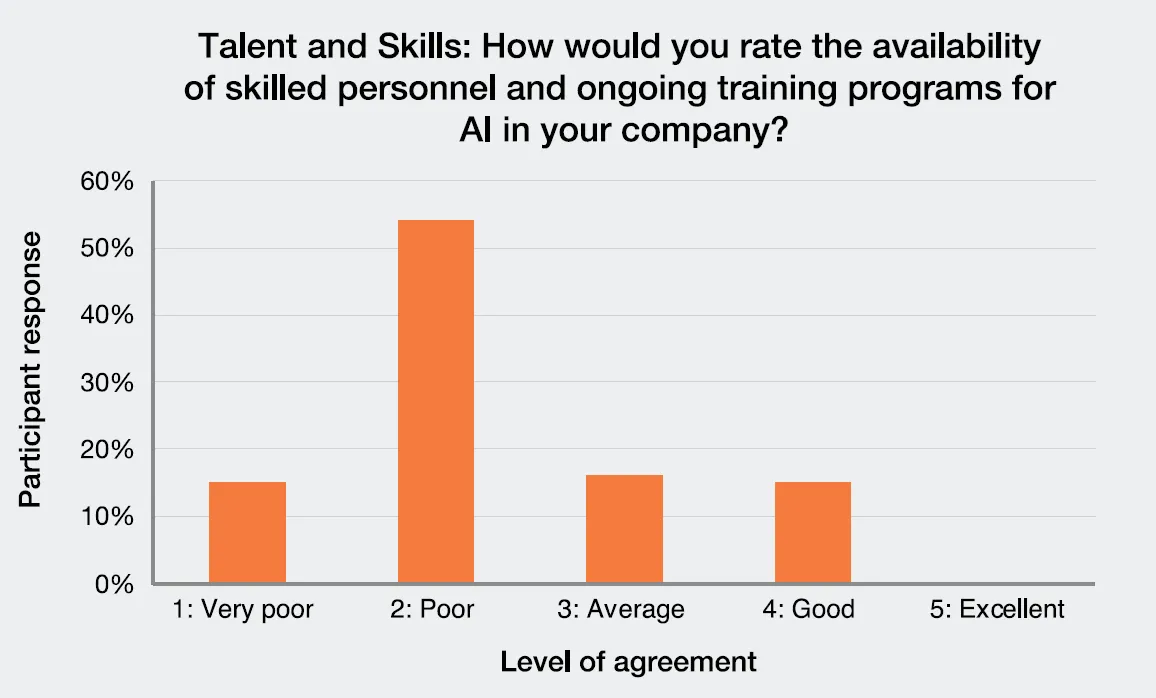
This reality underscores the urgency of structured, ongoing training programmes. Without them, even the most advanced technology will fail to deliver its potential. Many of South Africa’s deep-level mines have ore bodies that lend themselves to labour intensive operations. As one CEO argued, “You are not trying to radically change what you do. You are not going in with a view of, ‘let’s have a massive overhaul and we’re changing everything’ (which comes with real challenges and unforeseen consequences and costs). You are saying, ‘let’s do what we do—but do it better.’”
This vision is not about reducing headcount; it is about making jobs more productive and meaningful. Technology should serve as an assistant, “you can do the job in 60% of the time and use the other 40% to think how you are going to do your job better.”
Another CEO told us, “The thinking here is not ‘I could have 40% less employees’”— instead this is about having much more productive employees thinking about better ways to do things. That CEO went on to further emphasise that “this is not necessarily a cost cutting exercise—its actually a revenue generating exercise.”
Throughout the interviews, a consistent theme emerged: digital and VR training is the best way to upskill our mines and make them more efficient. When people have the right digital tools and information at their fingertips, less time is wasted on manual or inefficient processes. With AI-driven insights, workers can focus on higher-value tasks, reduce institutional friction, and lower operational risk—all while making their roles more fulfilling.
The future of mining depends on people, not machines, and the companies that invest in building AI skills today will lead the industry tomorrow.
Recommended actions for mining leaders
- Build a robust data backbone before scaling AI
Invest in:
- Data governance and integration (single source of truth)
- Systems that deliver “the right data to the right person at the right time” (i.e. renewal of your operating model)
- Focus on turning data into actionable insight—not just collecting more data
05 Why digital projects fail – lessons from experience
Technology can transform mining—but only if it is aligned with business needs and embraced by the people who use it. Without that alignment, even the smartest tools fall flat.
When we asked mining professionals why digital projects fail, one theme stood out: misalignment of digital tools with business needs.
As one miner put it: IT often “implemented fancy tools without fully understanding the business case, and especially without getting line‑management buy in, leading to costly failures”.
In one striking example, a major safety issue involving the planning and logging of blasts was eventually resolved with a simple, custom-built solution—but only after a multimillion-rand enterprise resource planning (ERP) system had failed. The reason for the failure? A lack of buy-in from line management. However, once the team engaged the right stakeholders in the business and developed a custom booking tool with proper user input, the solution worked. The key difference between success wasn’t the technology itself—it was adoption at the operational level.
This lesson repeats across the industry. One miner reported that during mergers and acquisitions, staff reported significant challenges integrating systems across different business units. Each unit operated its own system, leading to inefficiencies and long working hours for staff who had to manually integrate information. Their proposed solution was to consolidate and standardise using an ERP, to help break the silo mindset and streamline operations—an extensive multi-year task—which of course will also face the same challenges of adoption and ownership when it’s complete.
These examples show why management and employees need to work together for technology to be integrated smoothly. This also highlights the critical role of effective data management, which is fundamental to enabling and sustaining this integration.
When mining professionals were asked to rate the quality, availability, and management of their data, more than half indicated that their data management is only “average.” What we see here is siloed transformation: some parts of the business are effectively harnessing data, while others lag significantly behind. The strongest scores tend to come from areas such as processing, handling, stockpiling, and blending. By contrast, the mining side remains far more opaque—from limited granularity in the data collected to an over‑reliance on spreadsheets—making it difficult to generate the insights needed for real‑time decision‑making.
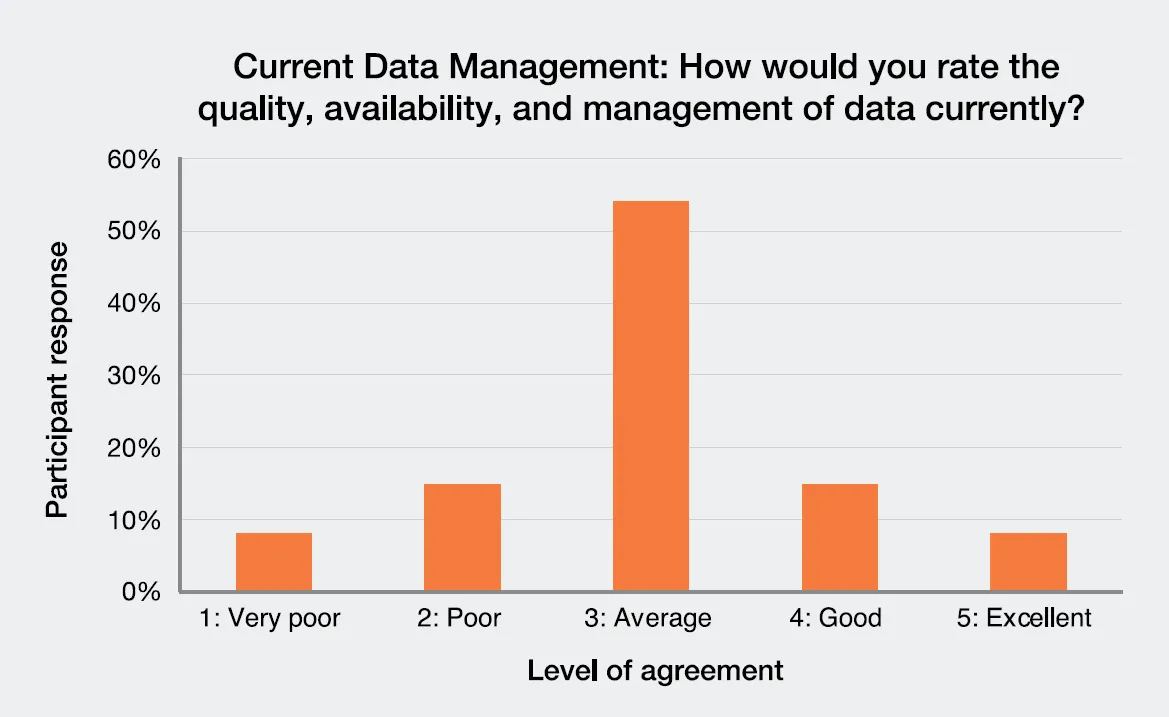
This means the industry is far from having the robust data infrastructure needed to support advanced technologies like AI, automation, and digital twins.
Data management is not just numbers—it is the lifeblood of decision-making.
One executive noted, “One of the biggest pitfalls is that data doesn’t help if it’s just data. It needs to be put through the funnel to get to wisdom.”
Collecting data without proper processing of that data to turn it into actionable information led to inefficiencies, we were told. The solution is to focus on processing important data to improve productivity, sustainability, as well as safety and health, using advanced analytics and automation as opposed to sourcing new data.
We need to:
- “Fixate on getting the right data to the right person at the right time”
- Not solely focus on gathering data; and
- Build a strong data infrastructure that delivers clear, actionable information
The hard work is in creating that ‘data back-bone’ of the business we were told—providing that precise information.
The potential value here is enormous. In one case when their digital twin (a detailed digital model of the mine and processing facilities) was up and running it delivered unexpected benefits, including optimising their shift cycles, reducing energy consumption from pumps, and improved ventilation performance along the way.
That CEO’s comment was that it had been a “fantastic journey”—from initially focusing on equipment reliability to realising that they were getting many more useful insights from the digital twin that they had not expected.
Ultimately, the success or failure of digital transformation in mining hinges not just on the technology choice itself, but on people. Change management and buy-in were crucial for the success of technology implementations. When employees were engaged from the start and solutions were aligned with real business needs, implementations thrived. But when change was imposed without support or understanding, even the most advanced systems failed. This was the most common source of failure for digital programmes.
Looking ahead, as miners begin to explore more advanced technologies such as AI to monitor access, compliance and behaviours and set off alarms when safety protocols are breached, the lesson remains the same: technology only works when people are part of the process—and when data is managed as a strategic asset.
When data is harnessed effectively, it can help mines predict problems before they occur, optimise production, reduce costs, and improve safety and health conditions across every level of the operation. Software programmes are helping mines cut audit times from months to days, improve compliance, and boost productivity. But they have also shown that success depends on more than technology alone. It requires choosing tools that fit the operation, training people to use them properly, and learning from mistakes. From better inventory control to smarter process management, the lesson is clear: technology works best when it is practical, well understood, and aligned with the way mines run.
What digital projects succeeded, and where?
When we asked mining leaders how a large software transformation had impacted their businesses, it was clear that despite challenges, significant progress has been made across the mining industry:
Firstly, improved compliance and efficiency has been a major achievement for one of the companies. The implementation of new systems has drastically reduced the time required for audits from 3-4 months to just a week. This improvement not only boosted compliance but also freed up resources for other priorities, demonstrating how the right technology can create tangible operational benefits.
In their efforts to enhance cost reduction and inventory management, another company invested in a large ERP programme. This initiative ultimately led to substantial cost savings in material movement and better inventory management. However, the implementation was not without challenges. They faced a significant obstacle with automated ordering for example—an issue which triggered unintended purchases due to a lack of user understanding. This resulted in internal sales at discounted prices to clear excess stock. Despite these setbacks, the company has since refined its processes, and its stores are now well-organised and efficiently managed.
Another important theme is the adaptation to business size and needs. A company that broke away from its parent company had to carefully select digital tools suitable for a smaller business that had intentions to grow internationally. While they are still evaluating the success of these tools, they are pleased with the progress so far. This adaptation has been crucial in ensuring efficient and effective operations between countries and assets.
In the realm of contract mining and technology needs, transitioning to contract mining has changed the technology requirements for another mining house. Previously they deployed large scale ERP technologies, which are no longer needed due to the shift in mining methods and the reduction in full-time employees. This transition has allowed them to streamline their technology stack and focus on what they feel truly adds value to their operations.
One of the most notable achievements we heard of across multiple miners has been a productivity improvement through advanced process control (APC). APC comes in many forms with a wide variety of applications that resulted in a 10-15% productivity improvement for one miner’s plant. The process involved significant investment in infrastructure and sensors, and while there were delays due to scope changes, the technology itself has proven to be highly effective.
Additionally, centralised procurement has been successfully managed in-house by another company. This centralisation has led to smart contracting and centralised data, allowing for more informed decisions and improved procurement processes. This in turn has opened the door for procurement as a managed service as an option—which has become more popular in 2025.
In today’s mining industry, technology is no longer just about adoption—it’s about harnessing it boldly and wisely. The real value lies in turning lessons learned into strategic advantages. When it comes to digital transformation, it’s not merely about the software—it’s about the strategy behind it. From avoiding costly missteps in automated ordering to tailoring digital tools for smaller operations, mining companies are quickly realising that success depends on aligning technology investments with real on-the-ground business needs.
Recommended actions for mining leaders
- Put people at the centre—skills are the real constraint
- Invest in structured, continuous upskilling (digital, AI, data literacy)
- Use immersive tools (e.g. VR/AR) to accelerate adoption
- Redesign roles for augmentation, not replacement
06 Supply chain, inventory, warehousing, and spend are opportunities to find margin
South African mining companies are increasingly turning to local and strategic sourcing to improve cost management and efficiency. Their focus has been on building resilient supply chains, diversifying risks, optimising procurement processes, and planning for the future to ensure continuous and efficient operations.
In recent years, the management of costs, procurement, and supply chains has undergone significant changes. Post-COVID, many companies faced challenges such as supply chain disruptions and shipping delays. For instance, at one miner, they had to source components from different sections to commission their Integrated Resources Centre due to missing parts. This led to the implementation of a smarter sourcing platform, which provides end-to-end visibility of the procurement cycle and helps manage stock with predictive modelling and AI today.
Several mining companies have also introduced new systems allowing suppliers to log in and update their information, and tenders to be managed through portals. This has streamlined processes and integrated underground stores into stock level management systems. Additionally, companies have diversified their supplier base to avoid reliance on a single region or country, creating visibility from a cost management perspective.
The move towards local sourcing has also been driven by the need for greater visibility and control over supply chains. Companies have developed maps to track the flow of goods and shifted sourcing to more local sources, despite challenges like reliable power and manufacturing costs. This has led to the establishment of dual sources of supply and longer-term contracts with suppliers, ensuring better planning and support.
Examples of how this is done:
One company faced issues with explosives supply due to problems at a factory in South Africa. They resolved this by ensuring total sight of the value chain and setting up automated notifications for stock levels.
Some companies are forming partnerships with suppliers to secure stock and ensure timely delivery. During the COVID-19 pandemic, a mining house learned to create integration and visibility around strategic supply. Some have even implemented automated processes for reordering consumables when stock levels reach a certain point, ensuring a steady supply of critical items like roof bolts.
Risk diversification and strategic decisions
To mitigate risks, mining houses are diversifying their suppliers. One company started sourcing explosives on-site instead of relying solely on a single supplier, which helped them during the 2021 riots. Companies are also considering local production to reduce dependency on international suppliers.
In terms of efficiency and cost savings, mining houses are implementing Value Delivery Plans (VDPs) to control costs and ensure efficient use of resources. Engineers now assess the necessity of items like tires before ordering, leading to significant cost savings. Companies are also working with procurement teams to optimise stock levels and reduce unnecessary orders, leading to better control over inventory and reduced waste.
Mining houses are engaging in long-term planning with suppliers to ensure future needs are met. For example, discussions with timber suppliers about planting trees years in advance to meet future mining requirements. Companies are also looking at substituting products in the supply chain to improve efficiency where it is safe to do so.
The mine with no HR department
One of our CEO’s told us their business was formed from businesses bought from the old traditional mining houses and was initially run in the old traditional way. They acquired mines that were not meant to be operated full-time by them but by contract miners. They converted an open cast mine, which was mined 120 meters down into an underground mine that is now generating value. They realised that these mines should be operated by contractors and not full-time employees.
The impact of this realisation was significant. The technology deployed for a mine with full time employees was not needed because there were no employees. The contract miner comes with their own tools, technologies, and systems that are fit for their purpose. The company had deployed massive modules like SAP but discovered that these were not needed due to the change in mining methods.
Now they could operate without a large HR department, and a smaller, more optimal management and executive team. The contract miner does their job, and the GM’s responsibility is to ensure compliance with safety and health regulations, monitor safety, production and costs and deliver the desired profitability. This approach is different from the old mining model which required many employees. The game has changed, and they no longer need the same technology as before.
Recommended actions for mining leaders
- Treat change management as a core capability
- Engage line management early and continuously
- Clearly communicate the “why” & the context behind technology changes to users
- Build Digital Activation Teams to drive adoption on the ground
07 AI is changing the world – what does it mean for miners?
Many CEOs have already engaged with narrow AI, particularly in areas such as taking minutes and identifying key themes in meetings. One CEO shared how AI was used to analyse market price predictions and improve purchasing decisions. However, they also highlighted some challenges—most notably, the AI’s limited understanding of the complex business environment and the potential risks associated with exposing sensitive information to AI systems.
One CEO admitted that their company has not yet used AI or developed any models, preferring to be ‘first followers’ rather than leaders in this space.
In fact, two thirds of our interviewees have not yet engaged with AI in their businesses at all. This highlights a gap in AI adoption within the industry, which could be an opportunity for growth and development. AI is coming—and fast. However, while it holds the potential to significantly impact the industry, there are also challenges and risks that need to be carefully managed.
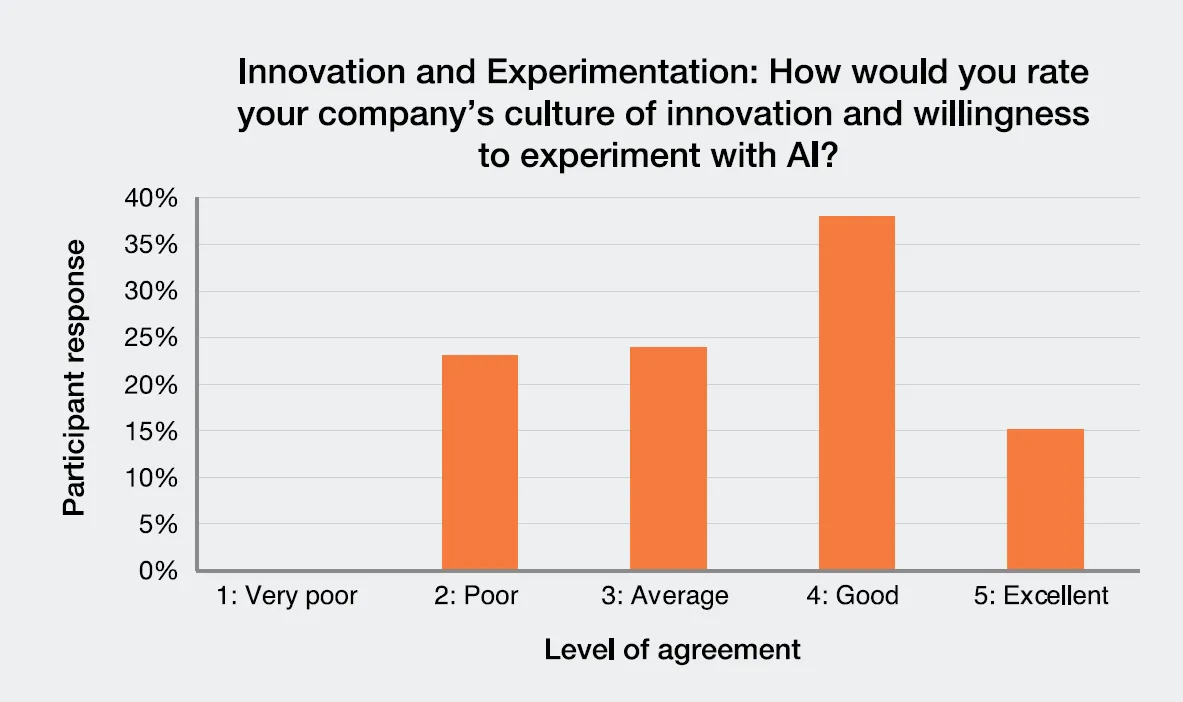
Is AI the solution we have been waiting for?
One of our esteemed CEOs likened AI to a powerful Porsche, emphasising that while AI holds immense potential, we must carefully plan our journey. Governance frameworks, rules and standards are essential to ensure that as we embrace AI—we move forward one step at a time. This CEO highlighted that globalisation is no longer just about trade; it has evolved into a digital space where ideas, knowledge, and skills can travel around the world and return enriched. For the mining industry, this shift presents both opportunity and complexity. AI and digital technologies are set to transform how mines operate, enabling faster, smarter and more connected decision-making. However, the integration of these tools must be approached with care considering how it will affect the mines—specifically the workforce. Rather than rushing adoption, mining companies need to embed these technologies in a way that respects the unique pace, scale and operational realities of the sector—ensuring that innovation supports long-term resilience and growth.
Other CEOs that were interviewed also solidified the point that ‘new’ technologies should be integrated slowly. They pointed out that we are in uncharted territory, where we don’t yet fully understand the possibilities, AI offers. While AI can be useful for manipulating information, its application in core mining processes remains to be seen. Collaboration between technology developers and the mining industry is crucial to explore and realise these possibilities in their minds. Some emphasised the need for collaboration between software providers and the mining industry. They acknowledged that while Microsoft has developed advanced technologies like Copilot, the mining industry must work closely with them to explore and implement these innovations, so they are relevant to the tasks at hand.
The transformative potential of technology was another key theme:
They told us, “Our biggest issue in mining is we generate millions and millions of data points, and AI has the capacity to take all of those and in microseconds put all of that together and convert data into knowledge and be able to see what is actually going on in real time and make the right decisions. You can start to see positive impacts on safety, volume growth and efficiency.”
The CEO consensus was that technology offers significant opportunities for transformation, but they cautioned against viewing it as a silver bullet. They emphasised that while AI and automation can significantly enhance operations—making them quicker, more precise and more efficient—the true impact will depend on the specific use cases selected and how well human beings adapt to these changes.
While AI and digital technologies hold great promise for the mining industry, their successful implementation will require careful planning, collaboration and a willingness to embrace change.
All our respondents have looked at AI in some way, but most have looked at the options and have chosen not to invest yet. They are very clear about where they will create value (known use cases and efficiencies) and are executing those. As one leader told us, “It’s also an iterative process as opposed to developing a strategy and that is it.”
Those that claimed to be most successful in terms of approaching the new technologies noted that success “Takes the approach of being brutal to stop projects and fail fast.”
Recommended actions for mining leaders
- Align technology to operational reality
Avoid “one-size-fits-all” solutions— tailor to:
- Mining method
- Workforce capability
- Asset maturity
- Focus on augmenting existing infrastructure, not replacing it wholesale
08 Line management’s view is very pragmatic
We wanted to know how we should get buy-in for a big digital programme according to the managers, engineers and project owners themselves—as a counterpoint to the CEOs.
The first principle they shared was that a successful digital programme is not a short term ‘quick wins’ approach. In their minds it is a long-term effort that begins with a carefully prepared plan for the next five years.
Because people don’t like change.
“Why change it if it’s been working for so long?”
These questions take time to absorb and internalise, we are told—and “typically as miners we see the problem on the horizon, but we don’t understand the problem or the challenge it represents until we are in the middle of it.”
Every initiative needs to answer three key questions (to be a success) according to the line managers who execute projects:
- What does success look like?
- What values will be used?
- How sustainable is the solution over the medium to long term?
Once an initiative has been planned and the need for it clearly stated in advance—they see a Digital Activation Team that would be responsible for taking people on the journey, raising awareness and improving engagement. Please note this is distinct from change management, this concept is a dedicated team for digital operations.
Also based on their experience, the type of initiative they advocate is also not general in nature—they are specifically use-case based. This incremental approach of solving specific problems is the best way to harness your data, the line managers tell us, with each use case adding new sources and re-using existing ones, the effect over time is exponential.
PwC’s recent AI in Operations study looked at the global and local adoption of AI and the 400 respondents revealed that successful AI implementations in operations also recommended the development of “complementary use cases that support your business strategy, emphasising projects that offer strong returns. Leverage GenAI to achieve rapid ROI”.
This creates the beginning of the data platform, which is a formidable challenge. By starting out with high value use cases that overcome specific operational barriers, the mines are setting a precedent for success, getting their people on board and engaged with technology, and proving the value with measurable ROI. In this way they gradually build the foundations of your AI infrastructure. Notably—if your data remains in silos, it will add considerably to long term costs, we were told by the focus group.
What does the ideal digital project team look like?
The focus group recommended that the execution teams be constructed around the business stakeholder group, the digital transformation team, and the team of (technological) partners. They noted that implementing Agile as a journey was worthwhile, from onboarding through to incremental exposure to the Agile journey and attached concepts.
Innovation is not decentralised; it’s still centralised:
- Show what’s in it for the feet on the ground (what’s in it for me)?
- Experiment and run proof of concepts (POCs) before reaching scalability
- Show how a digital solution is going to change and add value, then it becomes easier to implement
Innovation needs to a) show value and b) be driven from the ground up:
- It is very difficult to implement without showing value
The teams that have achieved traction in this space tell us that you need a degree of centralised control. Business as usual teams need support and structure to be successful where it comes to exploring new technologies.
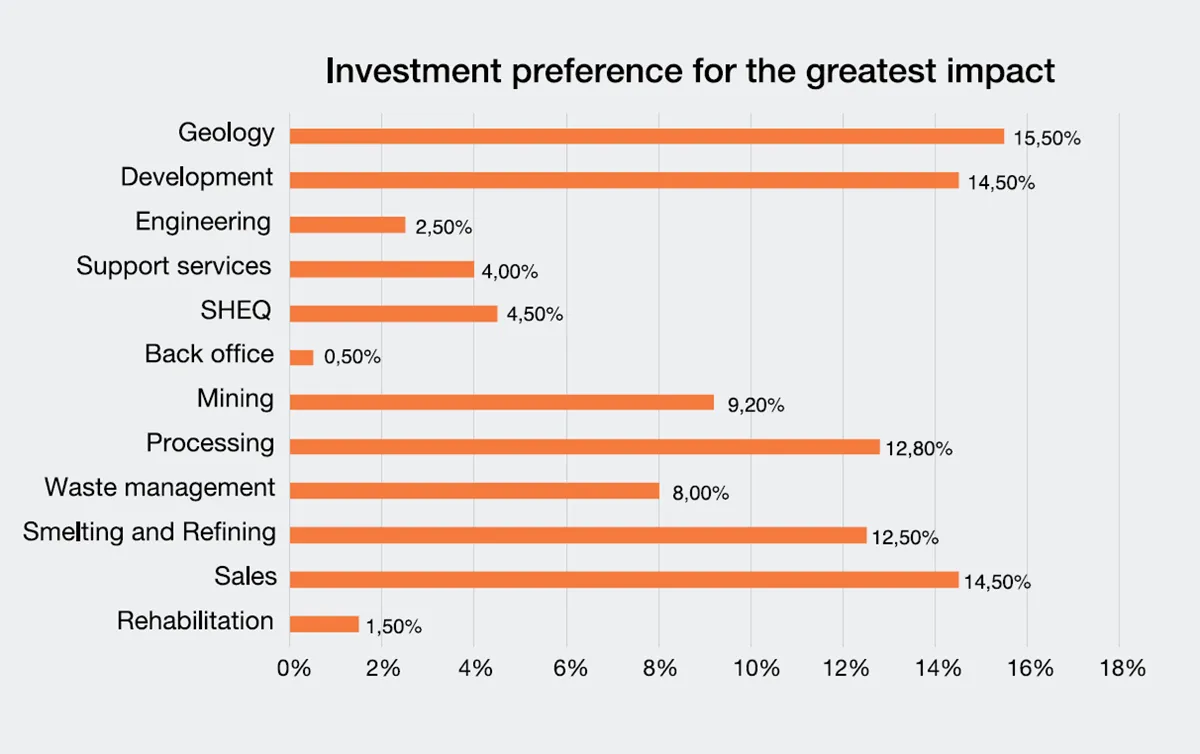
This graph demonstrates where our focus group—line management—believes that investment is most needed in AI‑driven processes to ensure due attention at the correct time:
Technology could revolutionise our infrastructure:
Without adequate infrastructure providing a reliable electricity supply and access to markets, businesses are limited in the amount they can mine and transport to clients. This limits them from unlocking full value, especially at peak prices, contributing to higher mining costs. While it is not feasible to displace existing industries and business structures entirely, modern technology can be applied to existing infrastructure to enhance performance (ports and rail are good examples) and diagnose maintenance needs quickly.
These infrastructure issues are currently also holding back investment in the mining sector. The lack of reliable infrastructure not only increases operational costs but also deters potential investors who are wary of the risks associated with inadequate support systems.
Addressing these infrastructure challenges is crucial for the mining industry to fully leverage 4IR technologies and achieve sustainable growth. By improving infrastructure, the industry can create a more stable and attractive environment for investment, ultimately driving innovation and efficiency.
Considering the current use of 4IR technologies, the African mining industry is lagging international counterparts. Unlike American, Australian, or European mines, local businesses often do not deploy the best available technologies. This gap presents a significant challenge: how to get ahead of the technology curve given the constraints of margins, operational depth, and absent any significant government support.
One of the primary reasons for this lag is insufficient investment in the mining industry and skills development. Weak investment in exploration remains a significant constraint where outlays on mineral exploration are declining by 6.2% year-on-year. Without adequate investment, mines cannot achieve the productivity levels seen in other regions. To bridge this gap, there needs to be a concerted effort to invest in both advanced technologies and the development of a skilled workforce capable of leveraging these innovations effectively. Investment in mining takes a long time and requires a secured pipeline of resources for investors, therefore exploration needs to resume at an accelerated pace. This dual approach will be crucial for enhancing productivity and maintaining competitiveness on a global scale.
According to Stats SA’s GDP data, South Africa’s mining Capex has declined by 9.6% year-on-year since 2024, inflation adjustment terms. This is seen particularly in the PGM sector where prices continue to be low.
Recommended actions for mining leaders
- Unlock margin in supply chain, procurement, and inventory
Digitise and integrate:
- End-to-end procurement processes
- Inventory visibility and predictive stock management
- Use AI to drive cost control and resilience
09 Changing the narrative with AI
If infrastructure is the backbone of mining, skills are its lifeblood. South Africa’s rural communities face deep educational challenges—overcrowded schools, poor outcomes, and limited access to resources. This digital divide restricts the flow of talent into the mining industry. But AI and affordable connectivity can change that story.
Education
Education is the obvious starting point—simply by connecting teachers and students to a wealth of online resources. AI translation tools mean access in your home language is now opening to all. But this is not just digital textbooks and educational videos; this enables ideas such as twinning a rural school with a city school to improve the standards of education. It also opens online learning, learner management systems and self-education.
In the context of our overcrowded, under-resourced schools that are dominated by poor outcomes, simply providing internet access to rural communities could revolutionise our rural areas and invigorate local entrepreneurship. This is a potential long-term strategy the mining industry can consider in the light of the skills crisis: providing internet access in and of itself helps with education and literacy and immediately opens the door for trade across the world.
Communication technology
In South Africa, cellular providers quickly overtook Telkom in terms of providing infrastructure, however neither private nor public institutions have invested in affordable rural internet connectivity in a meaningful way. The result is limited connective infrastructure near towns, and there is no incentive for these companies to expand their networks and/or lower their costs to facilitate access.
The game changer?
Competitive satellite internet could be the answer, but then it must be affordable and easy to access. This could enable alternative learning pathways and truly stimulate rural economies as young people overcome the digital divide and start self-learning.
In a failing school system, satellite internet and AI especially can tailor educational content to individual student needs.
Apart from preparing these young people and students for a technology-driven economy, the internet represents a true great leap forward for rural communities.
Effective rollout
Mining companies can play a leading role. By supporting rural connectivity, subsidizing devices and data, and investing in practical training programmes, the industry can grow the skills pipeline it needs. On-site learning paths—covering data literacy, AI-assisted process control, and digital safety systems—turn theory into practice. Over time, this creates a workforce ready to harness technology confidently.
Inside the mine, success depends on using data properly. When data is managed well, mines can predict failures before they occur, optimise production, reduce energy use, cut costs, and improve health and safety. Building a strong data backbone and ensuring the right information reaches the right person at the right time is essential. Our focus groups highlighted that investment in AI-driven processes for timely decision-making is a top priority.
Looking ahead: Implementing AI and technology to transform South Africa’s mining industry
As the mining sector continues to evolve, the next five years are expected to bring a wave of complex challenges for South Africa’s mining industry—some familiar, others entirely new. Drawing on insights from industry experts, a clearer picture is beginning to emerge, and it points to a future where AI, automation, and advanced digital tools must be implemented deliberately and human‑centrically to unlock productivity, health, safety, and sustainability at scale.
Infrastructure is one of the foremost hurdles. Inefficiencies in rail and port systems, have already resulted in substantial opportunity losses. AI cannot replace rail capacity or rehabilitate port assets, but it can help mines navigate constraints more intelligently: optimising stockpiles, synchronising load-out schedules, modelling logistics bottlenecks, and reducing demurrage through better foresight. Even so, the full value of our resources will remain locked underground unless infrastructure is upgraded in parallel with digital transformation.
Another critical challenge is the skills gap and the state of national institutions. Reliable cadastral systems, clarity over reserve ownership, and effective municipalities and macro institutions are foundational for investment certainty and operational resilience. AI-driven mines depend on clean, accessible data and stable power and water. Without institutional renewal and data governance, digital programmes stall, and analytics struggle to translate into decisions at the face and the plant.
Additionally, the ore bodies are getting deeper and scarcer, necessitating better technology to maintain or improve margins. From digital twins and short‑interval control to autonomous equipment and AI‑augmented planning, our industry is lagging in deploying innovative technologies compared to other mining jurisdictions. These tools can materially improve margins: enhancing geotechnical monitoring, predicting equipment failures, optimising ventilation energy, and continuously adjusting metallurgical parameters to improve recovery. But none of this works without people who are trained to use the tools, trust the insights, and embed them in daily routines.
Investment is a further pressure point. Insufficient capital flowing into new mines and extensions of existing operations hampers the adoption of modern technology and suppresses productivity gains. The path forward requires a twin investment thesis: commit capital to digital foundations (data platforms, connectivity, sensorisation) and commit equally to human capital through structured, ongoing training. Technology adoption that outpaces workforce capability fails; conversely, mines that build skills alongside systems see faster payback and broader value creation.
Global competition intensifies the imperative. Demand for raw materials is rising, yet structural labour dynamics—wage increases without corresponding productivity growth—threaten competitiveness. The answer is not replacement but augmentation: AI and automation should support workers to complete tasks in 60% of the time and use the remaining 40% to improve and innovate. This partnership model requires early engagement with unions and line management to co‑design training, align KPIs with data‑driven performance, and share the productivity dividend fairly. It also supports beneficiation within South Africa, where advanced analytics and process control can raise product quality and value at home.
Sustainability of mining towns and the economics of lower‑grade ores add complexity. Digital twins, AI‑guided energy optimisation, and precision scheduling can make marginal ores more viable and reduce environmental footprints. At the same time, communities need pathways into the digital economy: more graduates in relevant STEM fields, foundational digital literacy, and practical programmes that upskill current and future workers for roles in data, maintenance, safety technology, and AI‑enabled operations. Without this, the social fabric around mines frays as traditional low‑skill roles declines.
In short, implementing AI in South African mining is both a technological and a human project. Today, nearly 70% of mines describe their AI readiness as poor or very poor, underscoring that the binding constraint is skills, not software. To overcome the next five years’ challenges, industry, government, and labour must act together: upgrade rail and port infrastructure while digitising core institutions; establish robust data backbones and governance so information flows to the right person at the right time; and prioritise continuous upskilling so AI becomes a trusted assistant on every shift. If we marry physical infrastructure with digital capability, and technology with people, South Africa can transform its mining industry—competing globally, creating safer, healthier and smarter operations, and generating sustainable value for communities. The future of mining depends on people empowered by technology, and the time to implement is now.
Recommended actions for mining leaders
- Invest in enabling infrastructure and partnerships
Advocate for and co-invest in:
- Rail, port, and energy reliability
- Digital connectivity (especially rural)
Partner with:
- Technology providers
10 Data is easy; information requires effort
The mining industry is undergoing a pivotal transformation. As operations evolve, the focus has shifted from traditional methods to technology-driven strategies. Data and artificial intelligence are no longer abstract concepts of the future—they are tangible tools capable of redefining operations, enhancing safety and health, and driving sustainable practices. However, to seize these opportunities, we must first cultivate resilience and adaptability. Our CEOs and focus group made the point that the key is getting people to perceive challenges as opportunities and obstacles as pathways to growth.
Treating data as a strategic asset, rather than just a byproduct of operations, opens doors to transformation. When used strategically, data enables us to make smarter, faster decisions—decisions that can save lives, reduce costs, and protect the environment.
Consider a mining environment where safety and health hazards are identified before they escalate, where predictive maintenance keeps machinery running and workflows uninterrupted, where waste is reduced and sustainability takes centre stage.
This vision is not theoretical—it is achievable through purposeful use of data and intelligent systems. By treating data as a core asset and applying AI to extract actionable insights, mining operations can move from reactive to proactive, unlocking new levels of productivity, safety, health and environmental sustainability.
The journey toward technological integration is not without its challenges. It requires effort, discipline, and the willingness to fail fast and learn even faster. Organisations that have succeeded in integrating AI and advanced technologies into their operations have done so with one guiding principle: resilience. They have been bold enough to stop projects that no longer serve their purpose and pivot toward solutions that truly create value. They recognize that transformation is not a single event but an ongoing process of refining, testing, and transforming.
As we move forward, it is critical to remember that the future of our industry is not about replacing people—it’s about empowering them. Technology changes demand for certain roles, but it will also open doors to new opportunities, fostering a workforce more capable, efficient and innovative than ever before. The role of leadership, particularly CEOs, has shifted—no longer merely driving change, but creating environments that nurture discovery and exploration. It is the users, the employees, who will drive adoption, and it is their creativity and collaboration that will unlock the true potential of these tools.
Together, we must ask ourselves: How can we create a culture that thrives on exploration and experimentation? How can we inspire individuals to embrace change and see themselves as architects of progress? The answers lie in fostering collaboration, providing the tools and strategies for innovation, and celebrating each step forward—no matter how small.
Concluding recommendations
South Africa’s mining industry stands at a defining crossroads—constrained by ageing infrastructure, declining investment, and a widening skills gap, yet presented with a once-in-a-generation opportunity to redefine its future through AI and data-driven transformation.
This study makes clear that success will not be driven by technology alone. It will depend on leadership that aligns strategy to value, embeds innovation into core operations, and places people at the centre of change. From CEO-led cultural transformation and disciplined “value over volume” strategies, to pragmatic, use-case-led adoption and stronger data foundations, the direction is clear: the industry must move from experimentation to execution.
AI’s real promise lies not in replacing miners, but in augmenting them—turning data into actionable insight, improving safety, unlocking productivity, and enabling smarter, more sustainable operations at scale. Yet, with nearly 70% of mines reporting low AI readiness, the primary constraint is not technology, but skills.
The path forward requires coordinated, deliberate action: renewed investment in exploration, new mines and infrastructure; the development of industrial grade digital backbones; a sustained focus on workforce upskilling; and deeper collaboration between industry, government, and technology partners.
Those organisations that succeed will treat data as a strategic asset, prioritise adoption over tools, and embrace an iterative, outcome-driven mindset.
The question is no longer whether AI will transform mining—it is whether South Africa’s mining sector will move with sufficient speed and discipline to lead that transformation.
Ultimately, the future of South African mining will not be defined by the technologies it adopts, but by the urgency, focus, and conviction with which it chooses to act.

Andries Rossouw I Africa Energy, Utilities and Resources Leader I PwC South Africa
Vuyiswa Khutlang I SA Mine Project Leader I PwC South Africa
Pieter Theron I Industrials and Services Africa Leader I PwC South Africa
Chrisna Evans I Associate Director I PwC Mining Operation Transformation I PwC South Africa
Ian Mackay I Associate Director, Smart Mining I PwC South Africa
Market News
Related articles
.webp?language=en)
Articles
Thursday, October 22, 2026
Building a competitive African automotive industry for the next generation
Africa’s mineral resources give the continent an important stake in the future of automotive manufacturing.
Articles
Tuesday, October 20, 2026
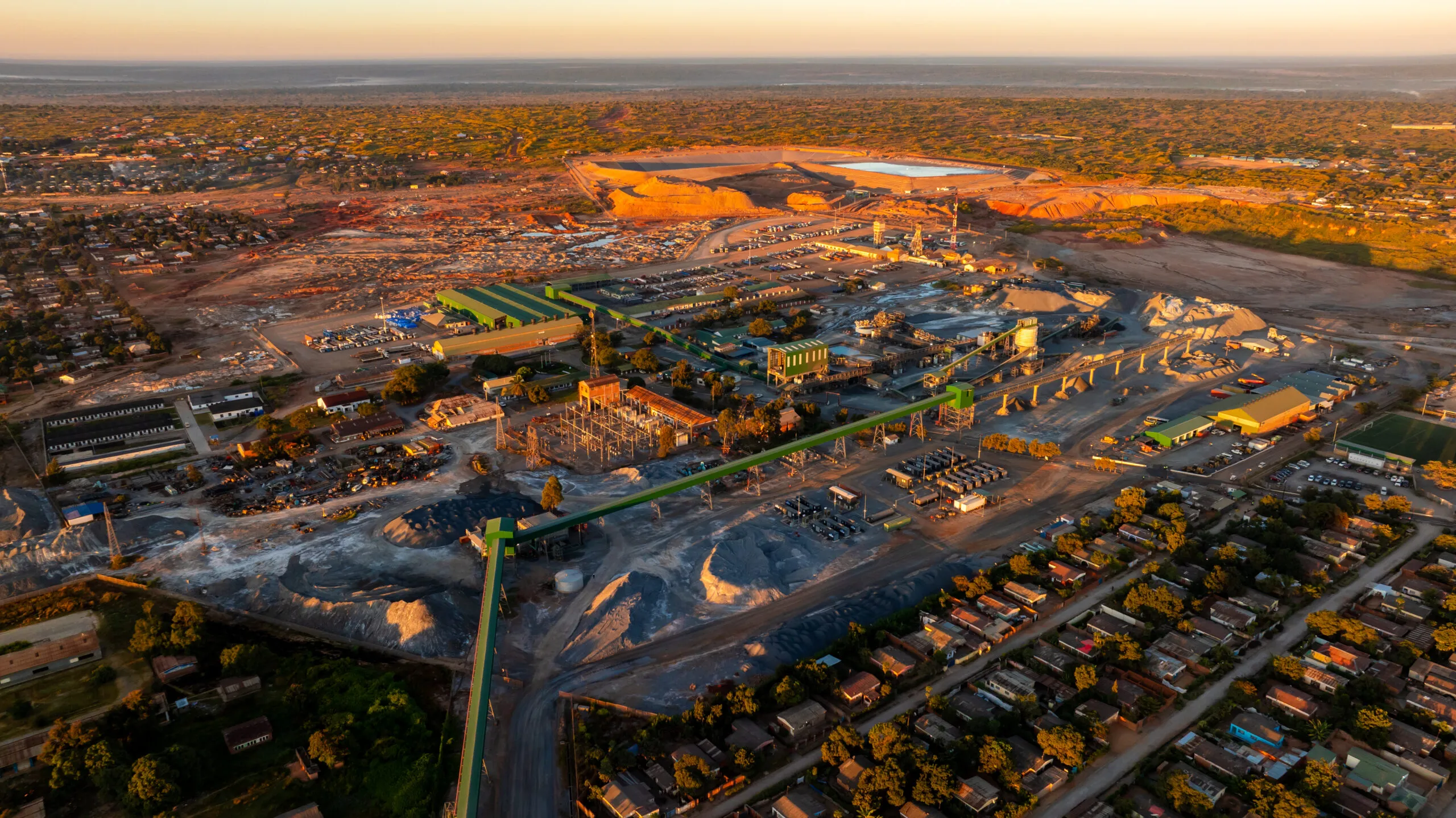
From century-old mine to global zinc powerhouse
Kipushi has demonstrated that an established mine can be revitalised through high-grade resources, new processing infrastructure and sustained investment.

Articles
Monday, October 19, 2026
Beyond the Mine- $300 Million Zambia–DRC Energy Deal to Drive Mineral Value Addition
Landmark cross-border electricity project could deliver up to 550 MW unlocking copper and cobalt production, mineral beneficiation and regional industrial development.













-ltd-a325b1d3-6414-476b-9b7e-20c2285d5a51.webp?language=en)


-Primary-Logo.webp?language=en)