News & Media
Featured
AfDB's Morocco battery investment signals shift from exporting minerals
Friday, July 31, 2026
What's in this article
Africa's ambition to move up the global critical minerals value chain took a significant step forward this week after the African Development Bank (AfDB) approved a €100 million loan to Gotion Power Morocco to support the development of the continent's first integrated lithium iron phosphate (LFP) battery gigafactory. The Bank also intends to mobilise up to €141 million in additional financing from development partners, bringing together public and private capital behind one of Africa's most significant clean technology manufacturing investments to date.
The project, to be developed in Morocco's Rabat-Salé-Kénitra Free Trade Zone, will produce battery cathodes, cells and battery packs within a single integrated manufacturing facility. The first phase will have an annual production capacity of 10 gigawatt-hours (GWh), with expansion plans targeting 100 GWh, positioning Morocco among the emerging global hubs for battery manufacturing.
While the investment represents a major milestone for Morocco, its significance extends far beyond one country. It reflects a broader shift taking place across Africa's mining sector, where governments are increasingly seeking to transform the continent from a supplier of raw materials into a producer of higher-value industrial goods.
For decades, Africa has supplied many of the minerals underpinning the global energy transition, including cobalt, manganese, graphite, phosphate and lithium. Yet much of the economic value generated from these resources has traditionally been captured elsewhere through refining, battery manufacturing and electric vehicle production. As global demand for battery technologies accelerates, African countries are placing greater emphasis on local beneficiation, industrialisation and regional value chains that retain more value on the continent.
The Morocco gigafactory illustrates how that transition can be achieved through partnership.
The project combines Morocco's industrial infrastructure and manufacturing ecosystem with Gotion High-Tech's battery technology and production expertise, supported by long-term financing from the African Development Bank and additional development finance partners. Rather than operating as a standalone manufacturing facility, the investment forms part of a wider strategy to establish an industrial ecosystem capable of supporting electric mobility and energy storage technologies.
This collaborative model is becoming increasingly important as Africa seeks to compete in industries that demand substantial capital investment, advanced technology and highly specialised skills. No single institution, company or government can develop these industries independently. Instead, success increasingly depends on partnerships that align finance, industrial policy, technology transfer and long-term investment.
The timing is significant. Governments across the continent are implementing policies aimed at encouraging mineral beneficiation, while regional initiatives such as the African Continental Free Trade Area (AfCFTA) are creating new opportunities to develop cross-border manufacturing value chains. Investments in transport corridors, renewable energy infrastructure and industrial zones are similarly laying the foundations for a more integrated African industrial economy.
Morocco has steadily positioned itself at the centre of this transition. Already one of Africa's leading automotive manufacturing centres, the country has spent more than a decade building competitive industrial zones, logistics infrastructure and supplier networks that have attracted global manufacturers. Battery production represents the next logical step in strengthening that ecosystem while supporting the growing global demand for electric vehicles and renewable energy storage systems.
The project also reflects the changing priorities of development finance. Increasingly, institutions are directing capital towards investments that combine industrial development, climate objectives and regional economic integration. Battery manufacturing sits at the intersection of these priorities, supporting both Africa's clean energy ambitions and its long-term industrial competitiveness.
Beyond manufacturing, the investment is expected to generate skilled employment, strengthen local supplier industries and encourage technology transfer, while creating opportunities for businesses operating across the battery value chain. More importantly, it demonstrates that Africa's critical minerals can support industries located on the continent rather than simply feeding manufacturing elsewhere.
The announcement arrives at a time when conversations across Africa's mining sector are increasingly centred on implementation rather than ambition. The debate is no longer whether the continent should add value to its mineral resources, but how governments, investors, manufacturers and development institutions can work together to make it happen.
That question sits at the heart of Mining Indaba 2027, whose theme, Stronger Together: Partnerships in Practice, focuses on moving beyond commitments to deliver tangible outcomes. The Morocco battery gigafactory offers a practical example of that philosophy in action. It demonstrates how strategic partnerships can mobilise capital, technology and industrial expertise to build new manufacturing capacity, strengthen regional value chains and expand Africa's role in the global clean energy economy.
As competition for critical minerals intensifies, projects such as this suggest that Africa's greatest opportunity may not lie solely in what it extracts, but increasingly in what it manufactures.
Reference: African Development Bank Group, African Development Bank Approves €100 Million to Gotion Power Morocco to Develop Africa's First Lithium Iron Phosphate Battery Gigafactory, 24 July 2026.
Market News
Critical & Strategic Minerals
Industrialisation
Downstream Buyers
Governments
Related articles
Articles
Monday, August 31, 2026
Governments are becoming mining dealmakers in the race for critical minerals
Governments are moving deeper into the mining deal room, shifting from traditional lenders and regulators to investors, customers, price-setters and strategic partners as countries race to secure critical mineral supply chains.
Wednesday, November 12, 2025
Africa’s Critical Minerals: the decade that will define global power
As the US–China rivalry deepens, Africa’s mineral wealth is emerging as both opportunity and leverage. The next ten years will determine whether the continent remains a source of raw materials - or becomes an industrial power in its own right.
Digital Diaries
Wednesday, November 5, 2025
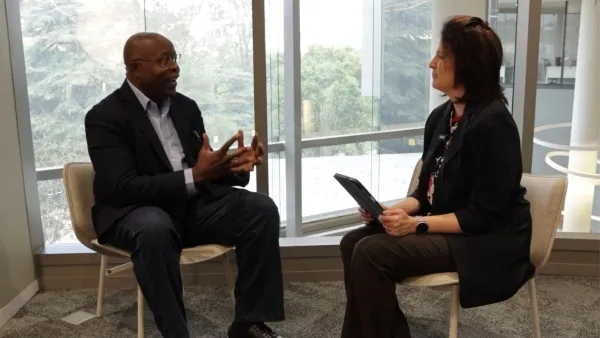
Digital Diary - Ben Magara, CEO of Exxaro Resources
In this exclusive conversation with Ben Magara, CEO of Exxaro Resources, our Product Director, Laura Nicholson, discusses Exxaro’s growth and diversification into manganese and renewable energy.






-ltd-a325b1d3-6414-476b-9b7e-20c2285d5a51.webp?language=en)

-Primary-Logo.webp?language=en)