News & Media
Featured
Africa’s Critical Minerals: the decade that will define global power
Wednesday, November 12, 2025
What's in this article
You might not think about the lithium, cobalt, or rare earths inside your phone or laptop, but these elements are the backbone of modern technology - and the epicenter of a global race for control. From electric vehicles to AI data centres, from renewable grids to missile systems, the world’s largest economies are competing fiercely for access to the minerals that make it all possible. And Africa, home to some of the planet’s richest reserves, sits squarely in the middle of this new strategic contest.
The global resource race enters a new phase
For two decades, China has dominated global critical minerals - not just mining them, but refining and processing them into the building blocks of the green and digital economy. Its influence stretches from cobalt in the DRC to bauxite in Guinea and rare earths in Tanzania. But the balance is beginning to shift. The United States has quietly overtaken China as the largest source of foreign direct investment in Africa, channelling US$7.8 billion in 2023 compared to China’s US$4 billion, according to the China Africa Research Initiative at Johns Hopkins University.
The surge is being driven by Washington’s International Development Finance Corporation (DFC), set up to counter Beijing’s strategic presence. Its investments target mines and supply chains that can feed directly into US industry - from Rwanda’s tin and tungsten to South Africa’s planned critical minerals refineries.
Africa’s leverage grows - but the risks remain
As global powers compete, African countries hold a growing degree of leverage. Yet the next decade will determine whether that leverage translates into lasting economic transformation. “Expecting Americans or anyone else to negotiate Africa’s best interests is unrealistic,” says Sepo Haihambo, economist and former FNB Namibia executive. “African governments must come to the table with clear objectives and frameworks that retain value locally.” Haihambo argues for a shift from “cash-for-ore” deals toward production-sharing agreements, local equity participation, and sovereign wealth models that invest in long-term development.
It’s an approach already taking root in places like Rwanda, where Trinity Metals, part-owned by the Rwandan government, operates tin, tantalum, and tungsten mines under stringent ethical and ESG standards. The company now exports directly to US refineries — a small but symbolic realignment of global supply chains.
Processing power: the missing link
If Africa’s next economic chapter is to be different from the last, local processing capacity will be key. Some progress is visible. ReElement Africa, a subsidiary of US-based American Resources Corporation, is building a critical minerals refinery in Gauteng, South Africa. CEO Ben Kincaid believes it marks a turning point: “By refining at the source, you capture more value, upskill labour, and build an economy around the resource. That’s the foundation for real industrial growth.”
However, such examples remain the exception. Most African states still face severe constraints — unreliable power, poor logistics, and limited technical capacity. Without large-scale infrastructure investment and stable policy environments, value addition will continue to lag behind rhetoric.
China: deep roots, quiet adjustments
Despite Western efforts to “de-risk” supply chains, China’s presence is not receding. Its state-backed and private firms have built resilient positions in strategic minerals, often supported by integrated infrastructure deals. Rather than retreat, Beijing is expected to adapt - deploying smaller, more commercially oriented players and blending resource investment with broader trade and technology partnerships. The outcome is likely to be a “China-plus-one” era, where Western and Chinese interests coexist uneasily within the same markets.
The ESG imperative
Ethical sourcing will become a decisive competitive factor over the next decade. Western buyers - from automakers to tech giants - are demanding traceable, low-carbon, conflict-free minerals. Companies that can certify origin, environmental integrity, and labour conditions will gain premium access to global markets. Those that can’t risk exclusion. As Trinity Metals’ Shawn McCormick puts it: “We’ve shown that you can produce these materials professionally, responsibly, and transparently - and still compete globally.”
A decade of divergence
By 2035, Africa’s critical minerals landscape will be both more competitive and more complex:
- China will remain the dominant processor, though less unchallenged.
- The US and allies will establish strategic footholds in “friend-shored” jurisdictions.
- Selective African winners - notably South Africa, Namibia, Rwanda, and Zambia - will move up the value chain.
- Others may remain locked in a familiar pattern: exporting ore, importing technology.
The difference will come down to governance, infrastructure, and negotiation capacity.
From resources to leverage
Africa’s minerals are no longer just commodities - they are strategic assets in a global realignment of power and production. The world’s demand for lithium, cobalt, and rare earths is surging, but what Africa does with that demand will define its next decade. The opportunity is vast; so are the pitfalls.
If African governments can combine industrial vision with investment discipline, the continent may finally break the cycle - moving from resource extraction to industrial transformation. The race for Africa’s critical minerals is not just about who digs - it’s about who decides what happens next.
Market News
Communities
Energy
Governance & Policy
Industrialisation
Infrastructure
Investment
NextGen
Mining Service Providers
Major & Mid-Tier Mining Companies
Investors
Governments
Exploration & Junior Mining Companies
Downstream Buyers
Communities
Related articles
Digital Diaries
Wednesday, November 5, 2025
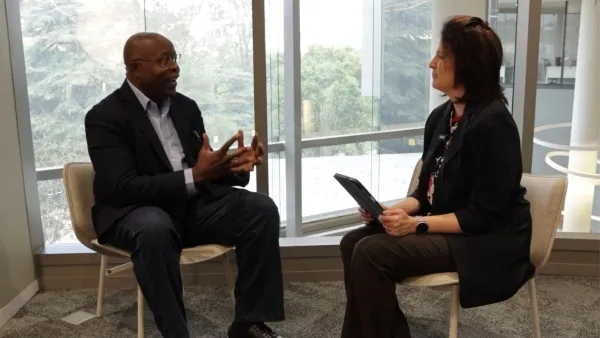
Digital Diary - Ben Magara, CEO of Exxaro Resources
In this exclusive conversation with Ben Magara, CEO of Exxaro Resources, our Product Director, Laura Nicholson, discusses Exxaro’s growth and diversification into manganese and renewable energy.
Wednesday, June 11, 2025
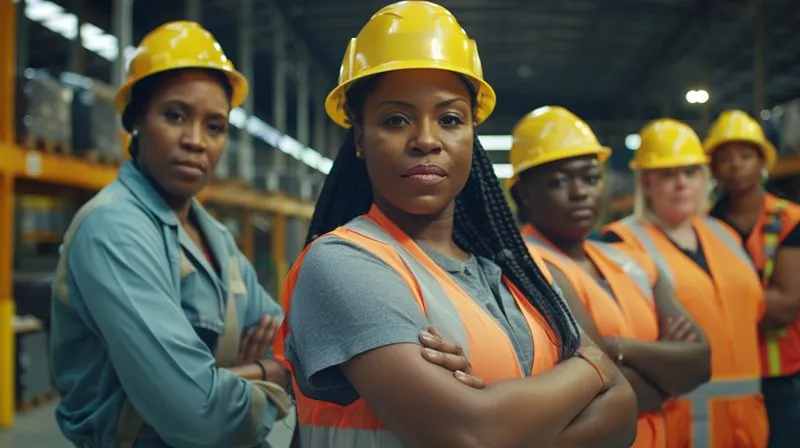
Championing the cause of women in mining
There can be no doubt that great strides have been made to ensure gender parity in the South African mining sector. This is largely underpinned by the initiatives that the Minerals Council has implemented in collaboration with its members.
.webp?language=en)
Articles
Thursday, May 25, 2023
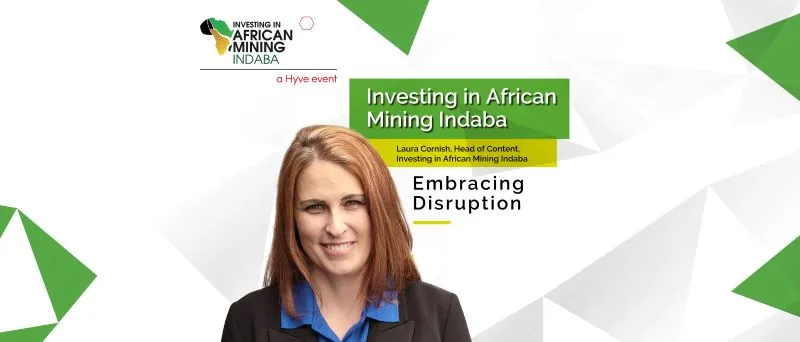
Embracing Disruption
In celebration of the Investing in African Mining Indaba’s 30th birthday, Laura Cornish spoke to Craig Sisterson about how the event is evolving to ensure it meets the needs of a sector that is undergoing significant change.








-ltd-a325b1d3-6414-476b-9b7e-20c2285d5a51.webp?language=en)

-Primary-Logo.webp?language=en)