News & Media
Exxaro exits Australia as portfolio reshaping accelerates
Monday, September 7, 2026
What's in this article
Exxaro Resources is set to exit its only offshore mining asset through a two-step transaction that will see the South African diversified miner acquire Anglo American’s remaining stake in the Moranbah South coking coal project in Australia before selling the entire asset to Stanmore Resources for $105 million.
The transaction marks a further step in Exxaro’s deliberate reshaping of its portfolio, as the company concentrates its coal operations in South Africa while increasing its exposure to renewable energy and future-facing metals.
Exxaro currently owns 50% of Moranbah South through a joint venture with Anglo American subsidiary Anglo Coal (Grosvenor). Following Anglo American’s decision to dispose of its Australian steelmaking coal assets, Exxaro exercised its pre-emptive right to acquire the remaining 50%.
It will then transfer 100% of Moranbah South to Stanmore, subject to regulatory approvals. Completion is expected before the end of the fourth quarter of 2026.
A strategic exit, rather than a retreat from coal
The transaction is significant because it demonstrates how Exxaro is distinguishing between its continued commitment to coal and its willingness to exit assets that no longer fit its strategic priorities.
Moranbah South was classified as non-core in Exxaro's portfolio. The company has described its future around three distinct pillars: its established South African coal business, renewable energy and future-facing metals.
“Coal remains an important business pillar,” CEO Ben Magara said in announcing the transaction, while reiterating that Exxaro remains focused on its South African coal portfolio and on growing its renewable energy and future-facing metals businesses.
The Australian disposal therefore does not represent an abandonment of coal. Instead, it reflects a more selective approach to where Exxaro deploys capital, management capacity and growth investment. Magara has previously described coal as the foundation of Exxaro's portfolio, with the business generating the cash needed to fund its next phase of growth.
“Coal is our foundation and the goose that lays the golden eggs to give us the cash to build the future-facing minerals we want,” he said earlier this year.
Building around three growth pillars
Exxaro's portfolio transformation has accelerated over the past year.
The company has strengthened its manganese exposure through Tshipi, expanded its renewable energy platform and continued to assess opportunities in commodities such as copper. At its August 2026 results presentation, Magara said Exxaro wanted energy and future-facing metals to contribute more than half of group earnings by 2030.
“We’re not reducing coal but growing the other buckets,” he said.
That distinction is important. Rather than attempting to replace coal immediately, Exxaro is using the existing business as a platform from which to build new sources of earnings.
The company's strategy identifies manganese, renewable energy and other future-facing minerals as key areas for diversification. Exxaro has also confirmed that it remains interested in copper opportunities, with management previously saying it was in advanced discussions around a potential investment.
A more focused South African mining portfolio
The Moranbah South disposal also reinforces Exxaro's geographic focus.
The Queensland asset was its only mining interest outside South Africa, creating a portfolio that stretched across jurisdictions and time zones while requiring management attention outside the company's established operating base. By exiting Moranbah South, Exxaro can concentrate on a South African portfolio that includes its long-life coal operations, growing manganese exposure and expanding renewable energy business.
The move follows the disposal of Exxaro's ferroalloys business in 2025 and comes as the company continues to reshape its portfolio around assets that can support longer-term earnings diversification. This is increasingly becoming a feature of the global mining industry, with companies reassessing portfolios to focus capital on commodities and jurisdictions where they believe they have the strongest competitive advantages.
For South African miners, the strategy also reflects a broader effort to build resilience around domestic assets while capturing growth from the energy transition. Minerals Council South Africa CEO Mzila Mthenjane has argued that South Africa remains well endowed with minerals needed for the future economy, but that investment and exploration need to accelerate to realise that potential.
Stanmore sees a different opportunity
For Stanmore Resources, Moranbah South represents precisely the opposite strategic proposition. The Australian company is acquiring a large resource base that sits directly alongside its existing assets in Queensland's Bowen Basin.
The Moranbah South tenements contain 724 Mt of measured and indicated resources in the Goonyella Middle Seam and are located next to Stanmore's Eagle Downs and Isaac Downs Extension projects, as well as its producing Isaac Plains Complex. The acquisition therefore offers Stanmore an opportunity to consolidate a strategically important resource position around infrastructure and projects it already understands.
“The acquisition of the Moranbah South tenements will represent a significant milestone for Stanmore’s development portfolio, increasing our resource base and strengthening the platform to deliver on our future growth aspirations,” said Stanmore CEO and executive director Marcelo Matos.
Matos said the resource is expected to contain premium hard coking coal and could potentially be accessed through infrastructure associated with Eagle Downs if that project is developed.
The transaction also resolves up to $60 million of deferred and contingent consideration associated with a 2024 designated area agreement, according to the deal announcement. For Stanmore, therefore, the transaction is not simply an acquisition of additional coal resources. It provides greater control over a contiguous resource base and strengthens the development potential of its existing Queensland portfolio.
Capital discipline meets commodity strategy
The contrasting motivations of the two companies illustrate an increasingly important feature of mining investment: the value of an asset depends not only on its resource base, but on where it sits within a company's wider portfolio.
Moranbah South may be non-core for Exxaro while being strategically valuable to Stanmore because of its proximity to existing operations and development projects.
That creates an opportunity for both companies to extract greater strategic value from the same asset.
For Exxaro, the transaction converts a non-core offshore holding into a cleaner portfolio and allows management to focus on its three strategic pillars. For Stanmore, it provides additional scale and optionality in a major metallurgical coal region.
The transaction also comes at a time when miners globally are becoming increasingly selective about capital allocation, balancing commodity cycles with longer-term demand expectations.
South African companies are particularly active in this portfolio reshaping. Harmony Gold, for example, is building a significant copper exposure alongside its established gold business, with CEO Beyers Nel describing copper as the company's “growth lever” while gold provides a store of value through periods of uncertainty.
Exxaro's next chapter
The Moranbah South exit is therefore best viewed as part of a broader transition rather than an isolated divestment.
Exxaro is retaining coal as a core earnings generator while attempting to build a more diversified business around manganese, renewable energy and future-facing minerals. The company has set ambitious renewable energy targets, including plans to expand generation capacity towards 1 GW by 2027 and as much as 1.6 GW by 2030.
At the same time, its Lephalale Solar Project is already supplying renewable electricity to the Grootegeluk coal mine, illustrating how Exxaro is attempting to combine its existing coal platform with investments in lower-carbon energy.
The strategic challenge now is execution: turning portfolio diversification into durable earnings growth while maintaining the cash-generating strength of the coal business.
For Magara, that means expanding the businesses that can shape Exxaro's future without prematurely weakening the business that finances that transition.
As he put it in August: “We’re not reducing coal but growing the other buckets.” The Moranbah South transaction is a clear example of that philosophy in practice.
WATCH:
Digital Diary - Ben Magara, CEO of Exxaro Resources
Investors
Market News
Sustainability
Energy
Critical & Strategic Minerals
Related articles
Digital Diaries
Wednesday, November 5, 2025
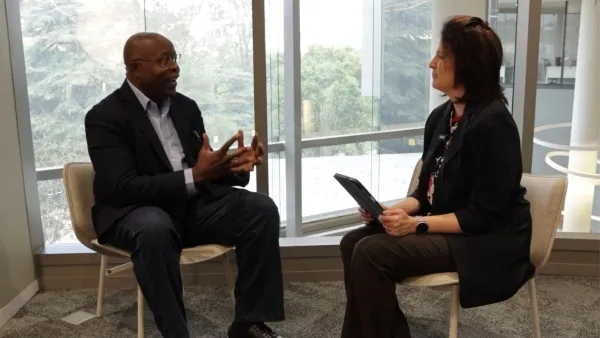
Digital Diary - Ben Magara, CEO of Exxaro Resources
In this exclusive conversation with Ben Magara, CEO of Exxaro Resources, our Product Director, Laura Nicholson, discusses Exxaro’s growth and diversification into manganese and renewable energy.
Articles
Tuesday, October 20, 2026
From century-old mine to global zinc powerhouse
Kipushi has demonstrated that an established mine can be revitalised through high-grade resources, new processing infrastructure and sustained investment.
Articles
Tuesday, August 18, 2026
Thungela strengthens coal platform with rail recovery and asset extensions
Thungela sold 7.4 Mt into the export market during H1,26, including 600,000 t of third-party coal. Export sales exceeded production, with the company able to leverage additional rail allocation opportunities alongside an improvement in Transnet Freight Rail's performance.










-ltd-a325b1d3-6414-476b-9b7e-20c2285d5a51.webp?language=en)

-Primary-Logo.webp?language=en)