News & Media
From endowment to capability: What AI can and cannot do for Africa’s critical minerals
Bongi Ntsoelengoe
Monday, November 23, 2026
What's in this article
Africa holds more than 30% of the world’s critical mineral reserves, including cobalt, manganese, platinum group metals, copper, graphite, lithium, nickel and rare earth elements. At the same time, Africa is home to a significant and growing share of the world’s young population, creating both an opportunity and an imperative to translate mineral wealth into jobs, skills, industrial capability and long-term economic value.
Yet mineral endowment on its own does not create prosperity. The more important question is whether Africa has the capability to discover, characterise, mine, process and beneficiate these resources competitively, safely and responsibly and whether we can retain a greater share of the value created within the continent. Digital Technology, data and artificial intelligence will increasingly shape how effectively we answer that question.
Digital technology is not new to the mining industry
With more than two decades in mining and having the privilege of crafting and leading adoption of digital roadmaps, I have seen how digital technology changes the way we work, a journey I describe as “from Muscles to Minds”. Retrofitting production drills with autonomous technology and being operated remotely from a central digital control centre, to the development of a TMM Digital twin for mining dynamic risk based decision making; required our expert thinking, operational understanding, reskilling of teams using Immersive or VR technology to build competency, rethinking management processes how we operate and maintain the, upgrading infrastructure requirements e.g. communications. It was evident that technology was impressive, but people determined whether it succeeded. Technology adoption is fundamentally a people and change-management process. Technology may be selected by leadership, but users ultimately determine whether implementation succeeds
How AI has changed the way we process data into insights in Mining
Mining has always generated large amounts of data; AI lets us connect, interrogate and learn from it at speed. This matters because the current reality talks to deeper orebodies that are of a lower-grades with complex mineralogy, that will inquire increased cost in infrastructure, energy including having constraints in water resources. With commitments to ESG there is a focus on lower carbon footprint and a link to traceable minerals. Across the value chain, machine learning can improve exploration targeting; modelling and simulation clarifying orebody variability and risk before capital is committed; autonomous equipment and real-time risk analytics can make mining safer and more efficient; and Advanced Process Control, digital twins and real-time characterisation can optimise recovery, throughput, energy, water and reagent use. Data is not the objective. Better decisions are.
Unlocking uneconomic resources
Drawing on my earlier work evaluating beneficiation routes for low-grade iron ore, I ask whether better orebody knowledge, characterisation, simulation, sensing, AI, automation and innovative processing can change what we consider technically or economically possible. Could we find resources that exploration has missed, design processing routes faster, improve recovery from low-grade ores, recover critical minerals from tailings and mine waste, shorten the path from discovery to investment decision, and test scenarios with digital twins? These questions matter if Africa is to move from resource ownership to resource competitiveness.
We should not digitise inefficiency
AI is not the strategy. A poorly understood orebody does not improve because we apply AI to it, poor data produces poor decisions, and an inefficient process does not become competitive by being digitised. We must start with the problem: what are we solving, for whom, what value will it create, and are our people ready? Successful adoption needs technology readiness, infrastructure, skills, leadership sponsorship, change management and user participation. SAIMM work on sustainable technology adoption reaches a similar conclusion, so mining modernisation must remain people-centred.
Africa should not only be a user of technology
Africa should not simply import the technologies needed to extract its minerals. It should also develop knowledge, intellectual property, digital platforms, engineering capability, equipment and technology businesses. Critical minerals can anchor local research and development, Mining Equipment, Technology and Services (METS) industries, universities, technology companies, Original Equipment Manufacturer (OEM) partnerships and start-ups. South Africa’s century of mining experience and technical base can support the wider continent.
From endowment to capability
Technology and AI can help us explore faster, operate more safely, recover more mineral, reduce waste and invest better, but they are only one part of the equation. We also need trusted data, digital infrastructure, research and innovation capability, new skills, strong partnerships and, above all, people willing to adopt new ways of working. The question is not only what AI can do for African mining, but how we combine Africa’s endowment, people, engineering capability and emerging technologies to build globally competitive value chains and keep a greater share of the value in Africa.
Join Us at Mining Indaba 2027
Mining Indaba 2027 is where African and global mining leaders come together to connect and shape the future. Exhibit, sponsor, or register today —don’t miss out!
Related articles
Digital Diaries
Wednesday, November 5, 2025
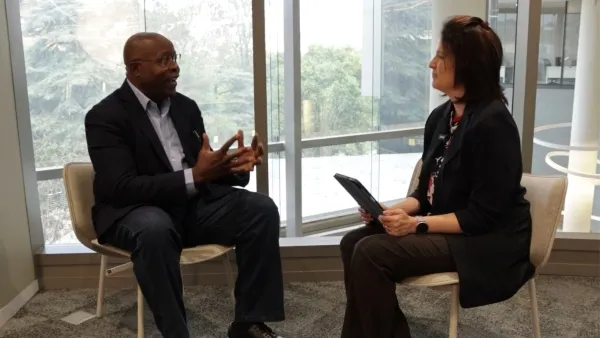
Digital Diary - Ben Magara, CEO of Exxaro Resources
In this exclusive conversation with Ben Magara, CEO of Exxaro Resources, our Product Director, Laura Nicholson, discusses Exxaro’s growth and diversification into manganese and renewable energy.
Friday, October 31, 2025
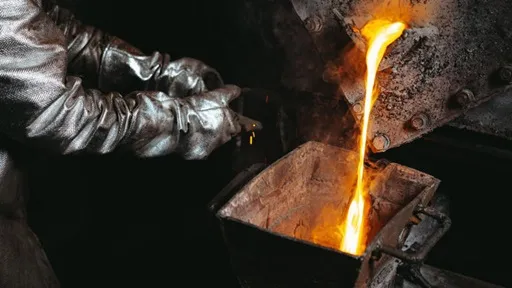
Commercial production begins at Newmont’s Ahafo North
This establishes the company's second operational site in the country, expanding Newmont’s existing footprint with four open pit mines and a stand-alone mill.

Tuesday, October 21, 2025
“We’re in the foothills of a major copper shortage"
Robert Friedland, Ivanhoe Mines founder, has warned that geopolitical fragmentation, soaring demand, and chronic underinvestment are pushing the world toward a historic copper crunch.