News & Media
Making women visible across Africa’s mineral value chains
Caroline Obure
Monday, September 28, 2026
Mecktilder Mchomvu, Executive Director of the Tanzania Women in Mining and Mineral Industry (TWiMMI), discusses what meaningful partnership looks like for women in mining—and why better data, fit-for-purpose finance and access to commercial opportunities are essential to moving from inclusion in principle to participation in practice.
1. Mining Indaba 2027 is themed “Stronger Together: Partnerships in Practice.” From your work with women in Tanzania’s mining sector, what would a genuinely effective partnership look like in practice?
I have seen the word “partnership” carry two very different meanings, depending on where it is used.
At the mine site, partnership means that someone arrived with a weighing scale, helped a miner secure a licence or provided financing that enabled her business to grow. At a podium, however, partnership can too easily mean a framework that has been signed without clear responsibilities, implementation deadlines or reporting requirements.
A genuinely effective partnership must resemble the first example. It should produce something that a woman miner can identify and say, “This changed because of that partnership.” It may be a licence she now holds, a financial product she can access or a procurement opportunity available to her registered business through an established commercial framework—not simply because a company chose to be generous during a particular reporting period.
If the outcome cannot be identified, measured and independently verified, then the partnership has not yet moved into practice. It remains a promise.
That is the standard implied by “Partnerships in Practice”: what did the partnership produce, who benefited and can people outside the room verify the results?
2. Women, particularly those working in artisanal and small-scale mining, continue to face barriers to finance, geological information, technology and markets. Which partnerships are most urgently needed to address these challenges?
The most urgent need is data, because it is the foundation on which solutions to the other barriers must be built.
A financial institution cannot design an inclusive product if it does not have gender-disaggregated information about women working across the mining value chain. It cannot accurately assess the size of the market, understand women miners’ production histories or determine which assets could support an alternative credit model.
Similarly, a geological survey cannot effectively direct support towards women-led operations if their locations and activities are not properly recorded. A buyer cannot source formally from a trader or processor who does not appear in a recognised registry. Policy developed without reliable information about women’s participation will inevitably struggle to respond to their circumstances.
What is not visible in the data is unlikely to become visible in policy.
The most urgent partnership therefore sits beneath finance, geology, technology and market access. Governments, telecommunications providers, financial institutions and organisations already working with miners on the ground should collaborate to establish reliable, sex-disaggregated registration, production and commercial data as shared infrastructure.
This is particularly important in finance. Conventional bank lending often relies on land as collateral because it is an asset that lenders already understand how to value and recover. Yet women are substantially less likely than men to hold land in their own names. In Tanzania, World Bank research based on household survey data found significant gender disparities in documented land ownership. Similar disparities exist across many African countries. (World Bank)
This means that a loan product secured primarily against land may exclude many women regardless of the viability of their businesses or their ability to repay.
Better data would allow financial institutions to assess different forms of security, including mining licences, production records, equipment, purchase agreements, transaction histories and verified mineral stocks. A data partnership is therefore not simply about producing more information for a sustainability report. It can enable an entirely different financial instrument.
The same principle applies elsewhere in the value chain: geological programmes can target areas where women’s licensed operations are located, while buyers can source through verified registries of women-owned mining, trading and value-addition businesses.
3. How can governments and mining companies move beyond commitments to gender inclusion and create measurable opportunities for women across mineral value chains from extraction and processing to procurement and leadership?
The starting point is to use and strengthen reporting systems that already exist.
Many African mining jurisdictions already collect information on employment, procurement, licensing and local-content expenditure. However, this information is not always disaggregated by gender or made publicly available in a form that allows progress to be assessed.
EITI Requirement 6.3 provides an important foundation. It calls for employment data in the extractive industries to be disclosed and disaggregated by gender and, where available, by company and occupational level. Tanzania and other EITI-implementing countries can use this framework to deepen public accountability for women’s participation. (EITI guidance on gender-responsive implementation)
A commitment is not measurable until it can be counted and counted publicly.
Tanzania already has reporting obligations under its mining local-content regulations. It also has the Mining for a Brighter Tomorrow programme, which is intended to expand opportunities for artisanal and small-scale miners, particularly women, young people and people with disabilities. The opportunity is to build gender-disaggregated measurement into these existing systems rather than create another set of commitments operating alongside them. (Tanzania Ministry of Minerals)
Across extraction and processing, governments could monitor how many licences are held by women-owned entities and whether those businesses are progressing into commercially viable operations.
In procurement, local-content reporting should show the value and duration of contracts awarded to women-owned businesses, not simply the overall amount spent locally. Safeguards may also be needed to prevent one large supplier from accounting for an entire target while smaller businesses remain excluded.
In leadership, companies should disclose representation at board, executive and senior-management levels with the same consistency they apply to financial and production reporting. The data should be tracked over time rather than presented as a once-a-year sustainability statistic.
Where these figures are missing, it is difficult to determine whether the commitment behind them has produced meaningful change.
4. Tanzania is seeking to capture greater value from its mineral resources. How can women-owned businesses and local communities be positioned as commercial partners in value addition rather than only as beneficiaries of mining projects?
The transition from beneficiary to commercial partner is structural.
A beneficiary may receive a grant, a training opportunity or support through a corporate social investment budget. These interventions can be valuable, but they are often determined by somebody else’s budget cycle and may be among the first expenditures reduced when financial pressures arise.
A commercial partner holds a defined economic position: an equity interest, an offtake agreement, a processing contract or an approved place in a company’s supply chain. That position is based on commercial value and contractual obligations rather than goodwill.
A partner has a position. A beneficiary has a budget line, and budget lines can be cut.
Positioning women-owned businesses as partners therefore means moving them from the sustainability report into procurement contracts and investment structures.
Tanzania has a foundation on which to build. Its local-content framework requires mining companies to procure goods and services locally and to report on their performance. The practical next step is to ensure that registered women-owned processing and value-addition businesses are visible, commercially prepared and eligible to compete within that existing framework. (Tanzania Mining Local Content Regulations)
TWiMMI’s membership model also recognises value addition as a distinct commercial constituency. Women working in processing, mineral trading and related services have different needs from artisanal miners seeking support at the extraction stage. Recognising those distinctions is important because women do not participate in the sector in only one capacity.
The principle is relevant beyond Tanzania. Any mineral-producing country implementing a local-content or beneficiation policy already has commercial expenditure that companies are expected to direct into the domestic economy. The question is whether women-owned enterprises are formally registered, technically qualified and sufficiently visible to compete for that expenditure.
If they remain invisible in supplier databases and compliance reporting, procurement will continue to flow towards the businesses that are easiest to identify—even where capable women-owned enterprises exist.
5. What successful partnership or initiative from Tanzania could provide a practical model for advancing women’s participation in mining elsewhere in Africa?
Tanzania’s experience is best understood as a portfolio of complementary initiatives rather than a single flagship programme.
On the government side, Mining for a Brighter Tomorrow is providing licences, training and other forms of support to artisanal and small-scale miners, with a particular focus on women, young people and people with disabilities.
On the finance side, the partnership between CRDB Bank and Tanzania’s mining authorities has created a tailored financing framework for artisanal and small-scale miners. The framework demonstrates how a mainstream financial institution can begin assessing a sector that conventional banking models have often regarded as too informal or too difficult to finance.
On the organising and capacity-building side, TWiMMI’s PAMOJA Initiative has supported women and young people from Tanzania, Kenya, Rwanda and South Africa in developing value-addition skills and participating more effectively in mineral value chains. (TWiMMI PAMOJA Initiative Impact Report)
No single institution can close every gap. Government can create the enabling framework, but it cannot replace the role of a bank. A bank can provide capital, but it may not possess the grassroots relationships required to identify and prepare women-led enterprises. A women’s mining organisation can build capacity and visibility, but it cannot independently change licensing systems or financial regulations.
The model is therefore the relationship between the three: government, finance and organised women in the sector each addressing a different part of the same constraint.
That is what makes the approach relevant elsewhere in Africa. Countries including Ghana, Zambia and the Democratic Republic of Congo already have different forms of local-content or domestic-participation frameworks. The opportunity is to connect those frameworks deliberately to women-owned businesses through registration, data, financing, capacity development and measurable procurement pathways.
Tanzania’s lesson is not that one institution found the complete solution. It is that progress becomes possible when several institutions approach the same challenge from different directions, with their respective roles connected by a shared objective.
That is partnership in practice.
Investors
Market News
Leadership
Related articles
Articles
Monday, September 28, 2026
Turning partnerships into delivery
Q&A with Jerry Ahadjie, Chief Minerals Officer at the African Development Bank.
Thursday, August 20, 2026
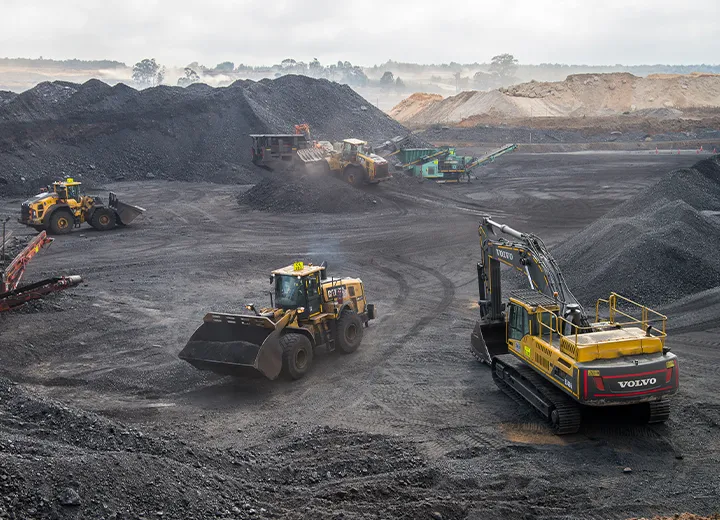
Exxaro delivers resilient half-year performance as diversification gains momentum
Exxaro has reported a resilient H2 performance, with CEO Ben Magara pointing to operational discipline, cash generation and a diversified portfolio as key strengths in navigating a volatile economic environment.
Wednesday, January 7, 2026
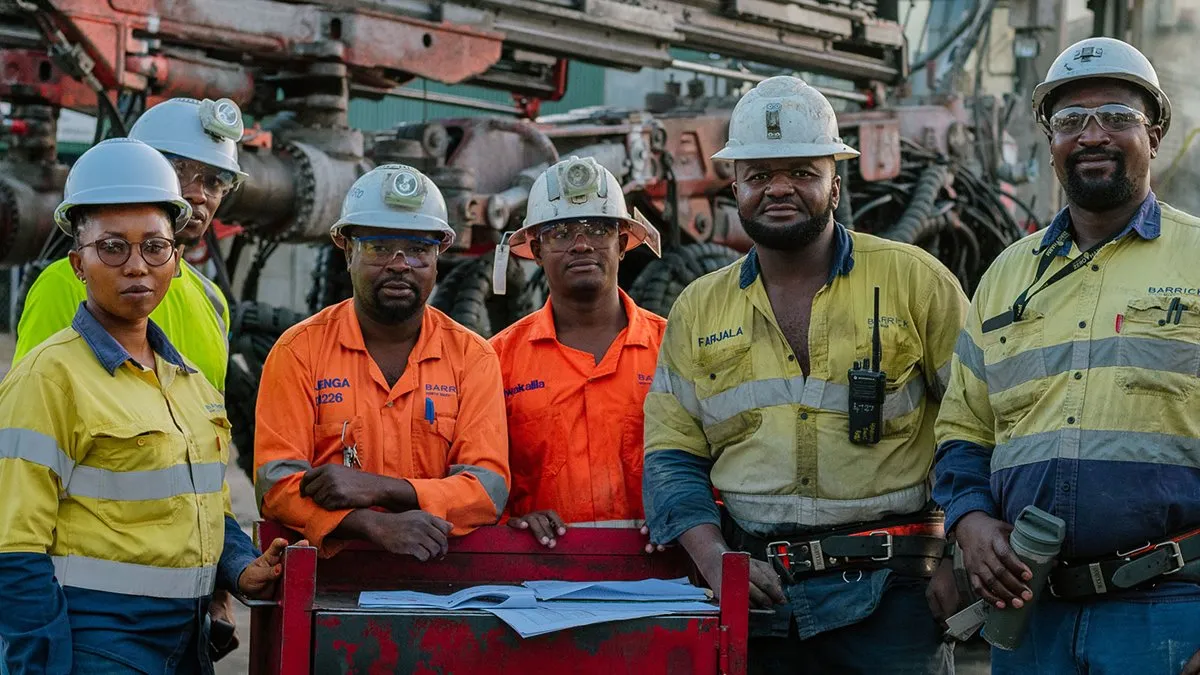
Barrick: strength through partnership, performance and a global vision for value
Barrick continues to demonstrate the depth and resilience of its global portfolio, underpinned by operational discipline, long-term partnerships, and a clear strategic focus on shareholder value creation.






-ltd-a325b1d3-6414-476b-9b7e-20c2285d5a51.webp?language=en)

-Primary-Logo.webp?language=en)