News & Media
Featured
Marikana: Mining industry urged to turn remembrance into renewal
Wednesday, August 19, 2026
What's in this article
- a.Stewart: Trust begins with how mining companies engage
- b.Makgoba: Mining must measure what it restores
- c.Fakude: Marikana changed the industry's understanding of mining
- d.The lesson from Marikana: compliance is not the same as social licence
- e.From consultation to co-creation
- f.Marikana's lesson extends beyond social investment
- g.Fourteen years on, Marikana remains a warning about stakeholder disconnect
- h.Economic sustainability is part of the social compact
- i.From Marikana to a new model of mining-community partnership
- j.The next test is whether renewal can outlast the mine
Sibanye-Stillwater says the legacy of Marikana must be measured through trust, dignity and shared economic opportunity.
Fourteen years after 44 people lost their lives during the Marikana tragedy, Sibanye-Stillwater has called for the mining industry to move beyond commemoration towards deeper stakeholder engagement, shared responsibility and tangible economic renewal in mining communities. The company hosted its seventh Annual Marikana Commemoration Lecture in Johannesburg on August 18, bringing together Anglican Archbishop of Cape Town Dr Thabo Makgoba, Anglo American South Africa chair Nolitha Fakude and Sibanye-Stillwater CEO Richard Stewart.
The lecture, held as part of Sibanye-Stillwater's Marikana Renewal Programme, comes at a time when South Africa's mining industry continues to grapple with community unrest, social licence to operate, infrastructure constraints, unemployment and the effectiveness of mining companies' SLPs. Since acquiring Lonmin in 2019, Sibanye-Stillwater has sought to address the legacy of the tragedy through the Marikana Renewal Programme, built around three pillars: Honour, Engage and Create.
The company also unveiled the design of the Koppie Memorial at this year's event, marking another milestone in its efforts to establish a lasting site of remembrance.
Stewart: Trust begins with how mining companies engage
Stewart said Sibanye-Stillwater had inherited more than a mining operation when it acquired Lonmin. “We knew we were inheriting far more than a mining asset. We were inheriting grief, mistrust and unfinished conversations. But we were also inheriting an opportunity – an opportunity to help build a different future.” He said the three pillars of the Marikana Renewal Programme were intended to provide a framework for that process.
Importantly, Stewart argued that engagement itself needs to change.
“If we truly want to build trust, the most important question to ask ourselves is not what we are engaging on or what we must deliver, but rather how we are engaging. Do we arrive with answers, or are we prepared to listen?”
That question goes to the heart of one of the most enduring lessons from Marikana: formal consultation is not necessarily the same as meaningful participation. Research into South Africa's SLP system has found that the framework is intended to bring mines, municipalities and communities together, but that weak institutional capacity, distrust and a lack of accountability can undermine collaborative planning.
Makgoba: Mining must measure what it restores
In his keynote address, Archbishop Makgoba said Marikana had forced South Africa to confront failures extending beyond the mining industry. “It forced us to look at ourselves: at the conditions in which people lived and worked; at the relationships between workers, companies, unions, communities, government and the police; at our failures of listening; at our failures of compassion; and at our failure, at times, to recognise the full humanity of one another.”
Makgoba said the process of healing remained long and difficult, but pointed to evidence of progress, including greater engagement with affected families and the emergence of relationships between stakeholders who had previously stood apart. His broader message was that mining's contribution should not be judged solely by production, investment, taxes and jobs.
“Mining cannot be measured only by what is extracted from the earth, but also by what is restored to people, to communities and to the future.” The Archbishop said Marikana should ultimately be remembered not only for the tragedy itself, but as a place where South Africans confronted profound failures and attempted to build a different legacy.
Fakude: Marikana changed the industry's understanding of mining
For Fakude, the most important lesson from Marikana is that the industry's social and economic contribution cannot be separated from the lives of workers and communities. “Long before I understood mining through the language of business, I understood it through the language of people. I understood that behind every mineworker is a family.” She placed particular emphasis on women, saying that the story of Marikana was also a story of women who had carried families through grief and hardship.
Fakude described the tragedy as a wake-up call that changed how the industry understood its relationship with stakeholders. “It reminded us that mining is not only about the minerals we extract, but the investment also we attract, or the contribution we make to the economy. At its heart, mining is about people.” Her comments reflect a broader shift in South African mining, where community relationships and social licence have increasingly become operational and investment considerations rather than peripheral corporate-social-responsibility issues.
The lesson from Marikana: compliance is not the same as social licence
One of the clearest lessons from Marikana is that regulatory compliance cannot by itself guarantee social stability. SLPs are a statutory requirement under South Africa's mining legislation and cover areas including human-resource development, community development, housing and living conditions, employment equity and plans for managing downscaling or mine closure.
But the experience around Marikana demonstrated the limits of treating these obligations primarily as regulatory deliverables. Research by Wits University's Centre for Applied Legal Studies found that Lonmin had not fulfilled obligations contained in its SLP in the years preceding the massacre. The implication for the industry is significant: a Social and Labour Plan should be regarded as a floor, not a ceiling, for a mine's relationship with its host community.
This also means that companies need to understand local expectations continuously rather than relying on periodic consultations tied to regulatory cycles.
From consultation to co-creation
Stewart's emphasis on listening points towards another lesson: mining companies increasingly need to move from consultation to co-creation. The Minerals Council has argued that SLPs should contribute meaningfully to the social and economic development of mining communities, while acknowledging that much more remains to be done to ensure communities are sustainable over the long term.
The challenge is particularly acute because mining companies often operate in municipalities already struggling with service delivery, infrastructure and unemployment. Research into collaborative planning in South African mining communities has found that the relationship between mines, municipalities and communities can be undermined by distrust and insufficient accountability.
The practical lesson is that mines cannot replace government, but neither can they treat community development as somebody else's responsibility. That requires clearer delineation of responsibilities, transparent targets, joint planning and mechanisms through which communities can see whether commitments have been delivered.
Marikana's lesson extends beyond social investment
The tragedy also exposed the interconnected nature of labour relations, living conditions, worker indebtedness, housing, community expectations and workplace grievances.
The Minerals Council has previously identified employee indebtedness as one of the issues that received greater industry attention following Marikana, with mining companies developing financial-wellness and indebtedness programmes. It has also argued that much more needs to be done to support the sustainability and wellbeing of mining communities.
That lesson remains relevant because disputes at mines rarely emerge from a single issue. Wages, housing, local procurement, unemployment, municipal service delivery, environmental impacts and perceptions of exclusion can reinforce one another. Consequently, a mine's social-risk management cannot sit solely within a corporate-affairs department. It needs to be connected to operations, human resources, procurement, security, sustainability and mine planning.
Fourteen years on, Marikana remains a warning about stakeholder disconnect
The continuing relevance of that lesson can be seen in developments around Marikana itself. In April 2026, communities near another mine in the Marikana area, Tharisa Minerals, raised concerns about blasting, environmental impacts and consultation, demonstrating that tensions between mining operations and host communities remain a live issue in the region.
The episode does not imply that the circumstances are equivalent to those of 2012. Rather, it illustrates why the underlying issues highlighted by Marikana, communication, trust, participation, environmental impacts and community expectations, remain central to the future of mining in the area.
For investors, this is increasingly material. A mine with weak community relationships faces greater risks of production disruption, legal action, reputational damage, additional costs and delays to projects.
The recent South African High Court proceedings involving Sibanye-Stillwater and a community unemployment forum, for example, illustrate how disputes over employment and access to mining operations can escalate into operational and legal issues.
Economic sustainability is part of the social compact
Stewart also stressed another lesson that is sometimes missing from discussions about social licence: a mine must remain economically viable if it is to sustain its contribution to workers and communities. “For us, profitability is not separate from social responsibility; it enables us to invest, partner and create value over time.”
That is an important consideration as South African mines face declining ore grades, rising costs, unreliable infrastructure, regulatory uncertainty and pressure to extend the lives of ageing operations. At Marikana, Sibanye-Stillwater is investing in the future of the asset through the K4 project. The R4.4-billion project is scheduled to reach steady-state production in 2033 and has an estimated 48-year economic life.
Long-life investment potentially provides an important foundation for community development because it creates a longer horizon over which employment, procurement, skills development and local economic activity can be built. But the lesson from Marikana is that economic contribution must be accompanied by credible mechanisms for communities to participate in and benefit from that development.
From Marikana to a new model of mining-community partnership
Sibanye-Stillwater's Marikana Renewal Programme reflects an attempt to institutionalise that approach. The company's sustainability reporting describes social compacting as involving formal and informal agreements and partnerships between the company, host communities, government entities and traditional leaders, with the objective of building trust, enabling benefit-sharing and strengthening the social licence to operate. The broader industry challenge is to make such approaches less exceptional.
Mining companies across South Africa operate in communities facing many of the same structural challenges found around Marikana: unemployment, weak municipal services, limited economic diversification and infrastructure deficits. That means the lessons from Marikana are relevant well beyond the platinum belt.
The next test is whether renewal can outlast the mine
The ultimate measure of Marikana's renewal may therefore not be the number of commemorations held, or the amount spent on community projects. It will be whether the area develops a more resilient economic and social base capable of surviving changes in mining production and, eventually, mine closure.
Stewart said that over the next 10 to 20 years, Marikana's development should be judged by what stakeholders collectively achieve in reliable infrastructure and services, economic opportunity and human dignity. That approach is consistent with a growing recognition across the industry that mining communities need development pathways that extend beyond the life of individual operations. It is also why the unveiling of the Koppie Memorial carries significance beyond remembrance.
The memorial provides a physical marker of the lives lost in 2012. The more difficult task is ensuring that the lessons of those deaths continue to influence how mining companies, government, labour and communities work together. As Makgoba put it, Marikana should not be defined only by tragedy. “Let it be remembered as the place where leaders learned again to listen. Let it be remembered as the place where a mining community began, slowly and imperfectly but sincerely, to build a new legacy.”
For South Africa's mining industry, that legacy will ultimately be judged not by what is extracted from Marikana's orebody, but by what remains when the mining is over.
Remembering the individuals killed in the days prior (August 12–14, 2012):
- Daluvuyo Bongo (striker)
- Hassan Fundi (Lonmin security)
- Sello Ronnie Lepaaku (SAPS warrant officer)
- Frans Mabelane (Lonmin security)
- Paulina Masuhlo
- Dumisani Mthinti
- Thapelo Eric Mabebe (Lonmin employee)
- Thembinkosi Gwelani
- Akhona Patrick Jijase
- Semi Jokanisi
- John Kutlwano Ledingoane
- Jackson Lehupa
- Janeveke Raphael Liau
- Hendrick Tsietsi Monene (SAPS constable)
- Thabiso Mosebetsane
- Isaiah Twala
Remembering the lives of the miners killed by police on August 16, 2012:
- Stelega Gadlela
- Mafolisi Mabiya
- Julius Tokoti Mancotywa
- Tembalakhe Mati
- Anele Mdizeni
- Bongani Mdze
- Makhosandile Mkhonjwa
- Telang Vitalis Mohai
- Khanare Elias Monesa
- Thabiso Mosebetsane
- Thobile Mpumza
- Babalo Mtshazi
- Michael Ngweyi
- Mphumzeni Ngxande
- Ntandazo Nokhamba
- Mgcineni Noki
- Bongani Ngqongophela
- Mongezeleli Ntenetya
- Andries Motlapula Ntsenyeho
- Molefi Osiel Ntsoele
- Henry Mvuyisi Pato
- Modisaotsile Van Wyk Sagalala
- Fezile Saphendu
- Pumzile Sokanyile
- Mzukisi Sompeta
- Thabiso Johannes Thelejane
- Mphangeli Thukuza
- Nkosiyabo Xalabile
- Cebisile Yawa
- Bonginkosi Yona
- Thobisile Zibambele
Leadership
Geopolitics
Market News
NextGen
Communities
Related articles
Digital Diaries
Wednesday, November 5, 2025
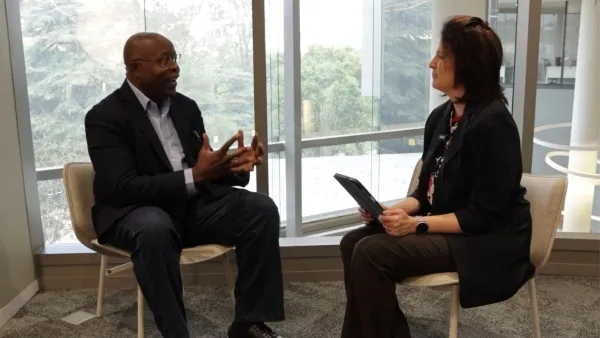
Digital Diary - Ben Magara, CEO of Exxaro Resources
In this exclusive conversation with Ben Magara, CEO of Exxaro Resources, our Product Director, Laura Nicholson, discusses Exxaro’s growth and diversification into manganese and renewable energy.

Wednesday, June 11, 2025
Championing the cause of women in mining
There can be no doubt that great strides have been made to ensure gender parity in the South African mining sector. This is largely underpinned by the initiatives that the Minerals Council has implemented in collaboration with its members.
.webp?language=en)
Articles
Thursday, May 25, 2023
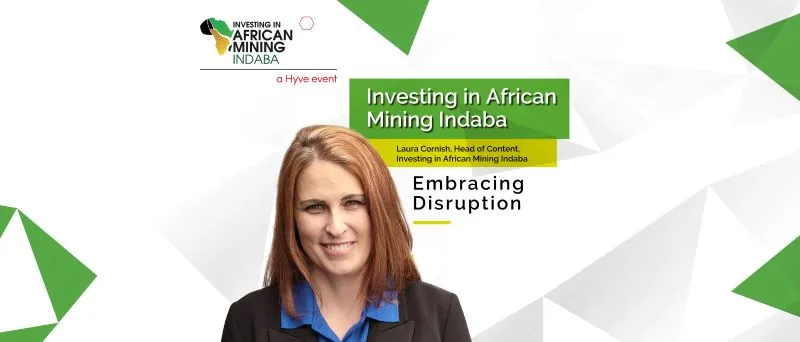
Embracing Disruption
In celebration of the Investing in African Mining Indaba’s 30th birthday, Laura Cornish spoke to Craig Sisterson about how the event is evolving to ensure it meets the needs of a sector that is undergoing significant change.













-ltd-a325b1d3-6414-476b-9b7e-20c2285d5a51.webp?language=en)


-Primary-Logo.webp?language=en)