News & Media
Rainbow Rare Earths advances Phalaborwa towards PFS with Neo partnership
Wednesday, September 30, 2026
What's in this article
South African rare earths developer Rainbow Rare Earths is moving its Phalaborwa project closer to development after securing Neo Performance Materials as a technology and offtake partner, clearing a key hurdle for the project’s next-stage feasibility work.
Rainbow plans to publish a PFS for Phalaborwa in the fourth quarter of 2026, with a DFS targeted for the first half of 2027 and first production still planned for 2028. The development comes as governments and industrial companies seek alternative sources of rare earths used in permanent magnets, amid continued concentration of the global supply chain in China.
Neo partnership addresses Phalaborwa's processing challenge
Under a MoU, Canadian industrial materials company Neo will provide technical support and design input for the final solvent extraction (SX) separation circuit at Phalaborwa. In return, Rainbow has granted Neo offtake rights to 40% of annual separated neodymium-praseodymium (NdPr) oxide production and 65% of annual mixed SEG+ heavy rare earth carbonate production.
The SEG+ product contains samarium, europium and gadolinium, together with magnet-related heavy rare earths including dysprosium and terbium. Neo's facilities in Estonia will provide a route for further separation of the mixed heavy rare earth material.
Rainbow CEO George Bennett said the partnership resolved an important remaining technical issue for the project.
“Finalizing our technology partner for the SX separation process was the remaining step required to complete our process to extract REEs from phosphogypsum waste.”
He added:
“We are delighted that Neo has agreed to partner with us. Their deep understanding and experience in rare earth separation and magnet materials is invaluable.”
The companies are already conducting test work in Estonia, followed by an integrated pilot-scale campaign in Johannesburg.
From waste to magnet materials
Phalaborwa differs from conventional rare earth projects because Rainbow intends to recover the minerals from stockpiled phosphogypsum, a waste product generated during phosphate fertiliser production.
The material is already above ground, meaning the project does not require conventional mining of a new orebody.
Neo CEO Rahim Suleman said this could have implications for the project's development profile.
“Because the material is already at the surface and requires no new mining, the Project has the potential for a lower development risk profile than many greenfield projects.”
Neo has completed technical due diligence on Rainbow's process and described Phalaborwa as a potential secondary source of magnetic rare earths. The company will also provide technical input into the SX circuit intended to produce high-purity NdPr oxide and a mixed heavy rare earth carbonate.
Rainbow's pilot work has already produced a high-grade mixed rare earth product. The company reported in February that its Johannesburg pilot plant had produced about 2 kg of mixed rare earth hydroxide at approximately 55% total rare earth oxide (TREO), compared with mixed rare earth carbonate specifications of around 42–44% TREO in China.
PFS to incorporate new separation route
The Neo agreement is particularly important because the final SX circuit has been one of the outstanding elements in defining the project's development plan. Rainbow said in July that 75% of the Phalaborwa flowsheet was already in the engineering phase of the DFS, while optimisation of the SX circuit was continuing. The company is now targeting a PFS in Q4 2026, followed by the DFS in H1 2027.
The schedule represents a delay from earlier development plans, but Rainbow continues to target first commercial production in 2028. The latest published capital estimate for Phalaborwa is about $326 million, although that figure predates subsequent changes to the processing flowsheet. An updated capital requirement is therefore expected to emerge through the new study work.
US support adds strategic dimension
Phalaborwa has also attracted US government-backed support as Washington seeks to develop alternative rare earth supply chains. Rainbow has a $50 million funding option from the US International Development Finance Corporation (DFC) through strategic shareholder TechMet. Rainbow describes the project as a strategic and near-term source of both light and heavy rare earths for alternative supply chains. The potential funding is particularly relevant because Phalaborwa's planned output includes both NdPr and heavy rare earth elements such as dysprosium and terbium.
Rare earth supply chains remain heavily concentrated in China. Reuters reported last week that US production of key rare earths has increased substantially since 2025, but still meets only part of domestic demand, with heavy rare earths remaining particularly challenging for the US to secure.
That supply-chain concentration has increased the strategic value attached to projects capable of producing separated rare earth products outside China.
Connecting South African resources to European magnet production
The Neo agreement also gives Phalaborwa a direct connection to an established European rare earth processing and magnet manufacturing platform. Neo operates a light and heavy rare earth separation facility and a sintered magnet manufacturing facility in Estonia. Its European operations therefore provide a potential downstream route from Rainbow's South African feedstock towards the production of magnet materials.
Suleman said the partnership was intended to create a more diversified raw-material supply chain.
“This partnership with Rainbow advances Neo’s strategy to build a secure and resilient rare earth magnetics supply chain supported by diverse and sustainable sources of rare earth feedstock.”
He added that combining Rainbow's expertise in recovering rare earths from phosphogypsum with Neo's separation and magnet-manufacturing experience could provide customers with “secure, traceable supply chains”.
Funding remains the next major test
With the processing route and offtake framework advancing, Rainbow's focus now turns towards demonstrating the project's technical and economic parameters through the PFS and DFS. The company has already attracted US government-backed support and appointed BMO Capital Markets as financial adviser and joint corporate broker in July. BMO is also supporting Rainbow's evaluation of a potential US stock-exchange listing.
The sequencing is significant: a defined processing route, an industrial technology partner, potential offtake and feasibility-stage engineering can collectively provide the information required to advance discussions with prospective financiers and strategic investors. For Rainbow, the immediate milestone is therefore the Q4 PFS. For the broader African rare earths sector, Phalaborwa offers a development model based not on opening a conventional rare earth mine, but on recovering strategic minerals from an existing industrial waste stream and connecting that material to established downstream separation and magnet capacity in Europe.
With first production targeted for 2028, the next stage will be to determine whether the technical progress achieved to date can translate into a financeable commercial project.
Investors
Downstream Buyers
Market News
Critical & Strategic Minerals
Related articles
Articles
Monday, August 31, 2026
Governments are becoming mining dealmakers in the race for critical minerals
Governments are moving deeper into the mining deal room, shifting from traditional lenders and regulators to investors, customers, price-setters and strategic partners as countries race to secure critical mineral supply chains.

Monday, November 10, 2025
All eyes on Anglo Teck following “once-in-a-generation” agreement
The announcement that Anglo American and Teck Resources will merge in a $53 billion transaction marks one of the most consequential mining deals of the 21st century.
Digital Diaries
Wednesday, November 5, 2025
Digital Diary - Ben Magara, CEO of Exxaro Resources
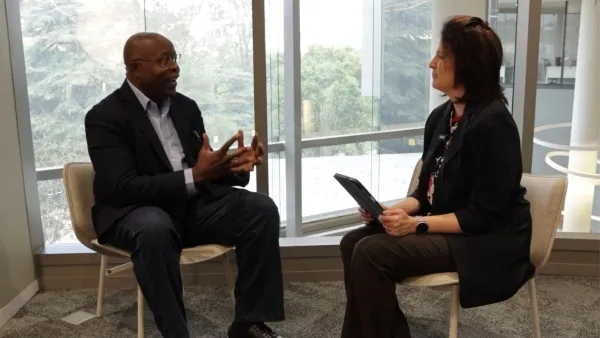
In this exclusive conversation with Ben Magara, CEO of Exxaro Resources, our Product Director, Laura Nicholson, discusses Exxaro’s growth and diversification into manganese and renewable energy.









-ltd-a325b1d3-6414-476b-9b7e-20c2285d5a51.webp?language=en)


-Primary-Logo.webp?language=en)