News & Media
South Africa puts $2.7 billion manganese corridor on the market
Tuesday, September 29, 2026
What's in this article
- a.From mine to port: rebuilding the manganese supply chain
- b.A two-SPV model puts private capital across the corridor
- c.Terminal concession could run for at least 25 years
- d.Why manganese makes this strategically important
- e.12 Mtpa initially, with a route towards 16 Mtpa
- f.Producers are already pushing for a more integrated system
- g.The corridor is part of a wider rail reform
- h.The infrastructure opportunity extends beyond manganese
- i.What comes next?
South Africa is taking one of its most significant mineral-logistics projects to the private sector, with state-owned rail and ports company Transnet seeking a strategic partner to develop, operate and maintain the Ngqura Manganese Export Corridor (NMEC).
Transnet issued a request for qualifications on 25 September for a private-sector consortium to participate in the development of the corridor, which will connect manganese-producing areas of the Northern Cape with the Port of Ngqura in the Eastern Cape.
The proposed investment could reach R44 billion, including as much as R20 billion for rehabilitation and maintenance of the supporting rail infrastructure. The corridor is expected initially to handle about 12 Mtpa of manganese, with potential to increase towards 16 Mtpa, subject to market demand and further investment. The transaction is significant not only for manganese producers, but for South Africa's broader attempt to bring private capital into mineral freight infrastructure.
The country's Transport Minister Barbara Creecy identified the Ngqura Manganese Export Corridor as one of the major private-sector participation projects being brought to market during 2026.
From mine to port: rebuilding the manganese supply chain
The project is being driven by a fundamental problem in South Africa's manganese industry: the country has extensive resources and a globally significant production base, but the logistics system connecting mines to export markets has become increasingly constrained.
Manganese exports through the Eastern Cape have historically been handled through a combination of facilities at Port Elizabeth and Ngqura, supported by back-of-port storage facilities and road movement. Transnet says the existing configuration has become fragmented, involving multiple handling points and significant road haulage. The company has linked this to higher logistics costs and growing environmental and social impacts in the Nelson Mandela Bay metropolitan area.
The proposed corridor is intended to consolidate exports through Ngqura and integrate the rail and port components into a single logistics system. Transnet's RFQ describes the rationale as an "integrated solution that aligns rail and port investment, operations and performance outcomes."
That is an important distinction. The project is not simply a new manganese terminal.
It is being structured as a mine-to-port logistics corridor, encompassing the rail infrastructure, rail operations, rolling stock, terminal development and terminal operations required to move the commodity to international markets.
A two-SPV model puts private capital across the corridor
Transnet's proposed structure is particularly significant for mining and infrastructure investors. The transaction would use two special-purpose vehicles (SPVs) under a single consortium. The first would be responsible for the terminal development and operation, as well as rail operations, rolling-stock management and corridor operations. Transnet would hold 51% of this SPV, with the private-sector consortium holding the balance.
The second SPV would be responsible for financing, rehabilitating and maintaining the rail infrastructure supporting the corridor. This SPV would be 100% privately owned, according to the RFQ structure reported by Business Day.
The division is designed to separate the infrastructure and operational businesses while allowing the private consortium to manage the overall corridor. The rail-infrastructure SPV could require up to R20 billion of investment.
Prospective bidders will also need to demonstrate financial backing. Business Day reported that bidders for the terminal operation would need financing commitments of at least R10 billion, while the rail-infrastructure SPV requires at least R3.5 billion in financial commitment before a consortium can proceed to the bidding stage.
For investors, the model creates exposure to two different but interconnected businesses: long-term infrastructure availability and mineral-handling operations.
Terminal concession could run for at least 25 years
The private-sector role is also intended to be long term. The RFQ process is expected to result in a private operator taking responsibility for the terminal for at least 25 years, creating a substantially different model from conventional state-funded infrastructure procurement. The private partner would therefore have an interest in both the upfront capital programme and the long-term operational performance of the corridor.
This could bring mining companies, infrastructure investors, logistics operators, engineering groups and institutional capital into the same transaction. For Transnet, the attraction is that the private sector can provide capital and operational expertise while taking on defined infrastructure and performance risks.
For mining companies, the central question will be whether the new structure can provide the reliable, predictable and competitively priced logistics capacity required to support future production.
Why manganese makes this strategically important
South Africa is a major global manganese producer and exporter, while the Northern Cape hosts some of the world's most important manganese deposits. Transnet estimates that South Africa holds approximately 80% of known global manganese resources and more than 36% of global economically mineable reserves.
The country's manganese industry therefore represents an unusually strong intersection between mineral endowment and export infrastructure. But the scale of the resource base makes logistics performance increasingly important.
As Transnet puts it:
“Maintaining and expanding export market share will depend on the efficiency, reliability and competitiveness of the rail and port logistics system.”
That puts rail capacity directly into the investment equation for manganese producers.
A mining company can expand a pit or processing plant, but additional production has limited commercial value if there is insufficient rail and port capacity to move the material to customers.
12 Mtpa initially, with a route towards 16 Mtpa
The current NMEC proposal envisages approximately 12 Mtpa of throughput, with the potential to increase this to around 16 Mtpa if market demand and investment support the expansion. The distinction between the two figures is important.
The 12 Mtpa figure represents the proposed initial throughput, while 16 Mtpa is an expansion potential rather than guaranteed capacity from day one. For producers, that creates a direct link between future mine plans and the development timetable for the corridor. The project will need to balance the capacity requirements of existing producers with potential future production growth, while also ensuring that the terminal and rail system can operate efficiently at different volumes.
Producers are already pushing for a more integrated system
The manganese industry has been engaging with Transnet on logistics reform. The Manganese Producers Committee, which represents four major producers accounting for more than 60% of South Africa's manganese exports, has been working with Transnet on measures to improve rail performance.
One example is an increase in wagon payload capacity to Saldanha from 63 t to 67 t, which the MPC said added approximately 350,000 t a year of combined rail and port capacity. The industry has therefore been pursuing incremental efficiency improvements while the much larger Ngqura project moves through procurement. The longer-term objective is to create greater certainty around the movement of manganese from the Northern Cape to export markets.
The corridor is part of a wider rail reform
The Ngqura project should also be viewed within South Africa's broader freight-rail reform.
Creecy said in July that the country had approved its first 11 private train operating companies to access the national freight rail network, with operations expected to begin from April 2027. Collectively, those operators plan to move up to 24 Mtpa of freight. The government has also established the Transnet Rail Infrastructure Manager (TRIM) to focus specifically on maintaining and revitalising rail infrastructure while providing third-party operators with network access.
The Transport Minister has set a sector target of 250 Mtpa on the national rail network by 2030, compared with an estimated market demand of about 280 Mtpa. The manganese corridor therefore represents a practical test of whether the emerging model of open-access rail, private capital and integrated port operations can translate into additional mineral-export capacity.
The infrastructure opportunity extends beyond manganese
The proposed transaction is also part of a much wider shift in how South Africa is approaching mining infrastructure.
Other private-sector participation projects moving through the system include the Richards Bay Dry Bulk Terminal and the Gauteng–eThekwini container corridor, while the Durban Container Terminal Pier 2 concession has already reached financial close. The implication for mining is that infrastructure development is increasingly being treated as an investment opportunity in its own right. Rather than government funding every element of the mineral supply chain, private investors are being asked to participate in:
- rail infrastructure;
- rolling stock;
- port terminals;
- bulk handling;
- corridor operations;
- maintenance; and
- long-term logistics services.
That potentially changes the relationship between mining companies and infrastructure providers.
What comes next?
The RFQ marks the beginning rather than the conclusion of the transaction. The current procurement timetable provides for a briefing session on 28 October 2026, with submissions due by 26 February 2027. The eventual consortium could bring together mining companies, infrastructure funds, logistics operators, engineering companies and other strategic investors.
The structure will also determine how risk is allocated between Transnet, private investors and users of the corridor. For the manganese industry, the key issue will ultimately be whether the project delivers sufficient capacity, reliability and cost competitiveness to support both existing exports and future production.
For investors, meanwhile, the opportunity is broader: the transaction provides a test case for whether private capital can be deployed at scale into the infrastructure connecting Africa's mineral resources with global markets.
As Transnet states:
“Continued investment in export infrastructure is therefore required to support future demand, improve supply chain performance and sustain South Africa’s position as a leading global manganese exporter.”
The Ngqura project thus places the mine-to-market value chain, rather than the mine alone, at the centre of South Africa's next phase of manganese development.
Major & Mid-Tier Mining Companies
Investors
Downstream Buyers
Market News
Investment
Infrastructure
Related articles

Wednesday, November 12, 2025
Africa’s Critical Minerals: the decade that will define global power
As the US–China rivalry deepens, Africa’s mineral wealth is emerging as both opportunity and leverage. The next ten years will determine whether the continent remains a source of raw materials - or becomes an industrial power in its own right.
Articles
Thursday, September 17, 2026
What does the BRICS summit mean for Africa’s mining value chains?
The BRICS summit has sharpened the race to secure critical minerals – but for Africa, the bigger opportunity is capturing more of the value created after extraction.
Articles
Tuesday, September 15, 2026
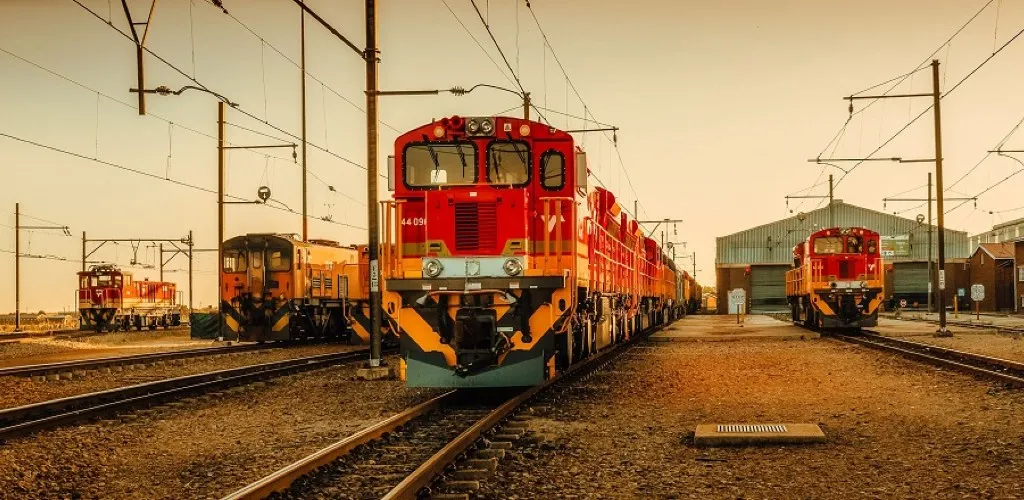
Transnet gains momentum as rail reform and investment reshape mining logistics
Return to profitability signals progress, but logistics recovery remains a work in progress.










-ltd-a325b1d3-6414-476b-9b7e-20c2285d5a51.webp?language=en)


-Primary-Logo.webp?language=en)