News & Media
Featured
Thungela strengthens coal platform with rail recovery and asset extensions
Tuesday, August 18, 2026
What's in this article
- a.South African production benefits from improved water management and rail
- b.Annea and Zibulo North extend the life of Thungela's South African portfolio
- c.Five years after listing, Thungela shifts from survival to growth
- d.Rail recovery changes the investment case
- e.Thungela targets assets rather than commodities
- f.Coal outlook remains volatile but Thungela sees longer-term support
- g.Full-year guidance maintained
Thungela Resources has reported a stronger first half of 2026, with improved South African production, better rail performance and higher thermal coal prices supporting cash generation and enabling the company to increase shareholder returns.
The South African coal producer recorded group export saleable production of 8.5-million tonnes in the six months to June 30, up 6% year on year, while adjusted operating free cash flow increased to R1.9-billion. Net cash stood at R6.1-billion at the end of June, giving Thungela greater flexibility to invest in its portfolio while maintaining shareholder distributions. The company declared an interim ordinary cash dividend of R5.50 a share. Earnings per share increased 467% to R10.95, although this included a R1-billion noncash gain associated with the disposal of the Kleinkopje mining right. Adjusted EBITDA increased to R1.3-billion, while profit for the period reached R1.4-billion.
CEO Moses Madondo said the results demonstrated the resilience of the business after a difficult coal market in 2025. “The foundations of the business are very strong. That’s what’s giving this business the resilience to respond, whether it’s in down markets, as we saw in 2025, or in markets that are slightly buoyant this year.” He added that the improvement was not simply the result of stronger coal prices, pointing instead to higher production and sales, improved performance at the Ensham operation in Australia and better rail conditions in South Africa.
South African production benefits from improved water management and rail
South Africa remains central to Thungela’s production base, with its domestic operations delivering 6.3-million tonnes of export saleable production during the period. Improved performance at Khwezela, particularly through enhanced water management, combined with the continued contribution from Mafube, supported the increase. South African FOB costs, including royalties, were R1,374/t, within the company's full-year guidance range.
The more significant change, however, came on the logistics side.
Thungela sold 7.4-million tonnes into the export market during the first half, including 600,000 tonnes of third-party coal. Export sales exceeded production, with the company able to leverage additional rail allocation opportunities alongside an improvement in Transnet Freight Rail's performance. TFR's annualised run rate increased to 59.9-million tonnes from 56.8-million tonnes in 2025. The improvement is significant for South African coal producers, which have for several years faced severe constraints on the coal export corridor to Richards Bay.
For Thungela, improved rail availability is also allowing newly extended operations to ramp up without the same level of uncertainty over access to export markets. CFO Deon Smith said the improved rail access meant the company could increase production from Annea and Zibulo North without having to question whether additional coal could be transported to export markets.
Annea and Zibulo North extend the life of Thungela's South African portfolio
Thungela is simultaneously reshaping its South African asset base through life-extension projects. The Annea Colliery and Zibulo North Shaft projects were delivered on time and within budget and are now ramping up. The developments are important to Thungela's longer-term strategy because the company was originally spun out of Anglo American in 2021 with an asset portfolio that had a comparatively short weighted-average life.
Five years later, Madondo says the company's outlook has changed materially. “The geographic diversification provided by Australia was one example, while the company’s ability to deliver projects on time and within budget was another source of resilience.”
Thungela's South African environmental liabilities are also being progressively addressed. The disposal of the Kleinkopje mining right was completed during the period, while the expected completion of the Goedehoop North sale in the second half of 2026 should result in the group's South African environmental liabilities being fully cash-collateralised by year end.
Five years after listing, Thungela shifts from survival to growth
The first-half results come as Thungela marks five years as a listed company. Since its listing, the company says it has returned more than R23-billion to shareholders through dividends and share buybacks. Madondo said the company had built its current position around operational excellence, financial discipline and consistent value delivery.
“As Thungela marks five years as a listed company, we do so from a foundation built on operational excellence, financial discipline and consistent value delivery.” He added that the company remained focused on safety, operational excellence and disciplined capital allocation.
Rail recovery changes the investment case
The improvement in South African rail performance is particularly important from an investor perspective because logistics constraints have historically limited Thungela's ability to convert production into export revenue. Market expectations, however, remain mixed. Analyst consensus data currently shows a wide range of views on Thungela, with four analysts tracked by Investing.com producing an average 12-month target of about R12,625, although the overall consensus is rated “Sell”.
Earlier analysis from FNB placed a substantially higher fair value on the company at R156.30 a share, while arguing that the acquisition of Ensham could add around R40 to that valuation over time through additional stable export production and free cash flow. FNB nevertheless highlighted thermal coal demand, commodity-price volatility, the rand exchange rate and access to finance as important risks.
The divergence reflects the central question facing Thungela and other coal producers: how much value can be extracted from a coal market that remains strategically important for energy security in the near term, while facing structural pressure from the energy transition over the longer term?
For Thungela, the immediate investment proposition is increasingly centred on operational execution, logistics and capital discipline rather than simply higher coal prices.
Thungela targets assets rather than commodities
Madondo has signalled that Thungela's next phase will not necessarily be limited to its existing geographic or commodity footprint. The company's strategy review concluded that the business should continue to maximise value from existing assets, pursue selective growth opportunities and build optionality for longer-term growth.
That potentially represents a significant shift from the company's origins as a pure-play South African thermal coal producer. The acquisition of Ensham has already increased its international exposure, while Thungela is now assessing opportunities according to whether it can add value and generate an appropriate return on capital.
Coal outlook remains volatile but Thungela sees longer-term support
Thungela expects thermal coal markets to remain volatile during the remainder of the year. The company says the prolonged conflict in the Middle East has contributed to volatility across global energy markets and helped strengthen benchmark thermal coal prices, alongside higher oil and gas prices and concerns around energy security.
However, downside risks remain. Higher energy costs, inflation and supply-chain pressures could weaken industrial activity and thermal coal demand. The company expects seasonal inventory rebuilding in Europe and Asia ahead of the northern hemisphere winter to provide some support, although subdued demand growth in major consuming regions could limit the upside.
Thungela nevertheless believes the longer-term outlook is more resilient than previously expected, pointing to delays in the anticipated global gas supply surplus and a slower-than-expected pace of the energy transition.
Full-year guidance maintained
Thungela has reaffirmed its full-year production and cost guidance. South African export saleable production remains guided at 13.0-million to 13.6-million tonnes, with FOB costs of R1,330/t to R1,380/t. Ensham is expected to contribute 3.9-million to 4.2-million tonnes at FOB costs of R1,650/t to R1,740/t. The company expects South African production to improve during the second half as Zibulo transitions to the North Shaft and Annea continues its ramp-up. For investors, that creates a potentially important test for Thungela: whether improved rail performance, extended mine lives and disciplined capital allocation can translate into sustainable cash generation through the coal cycle.
Madondo said the company's priorities remained clear.
“We will continue to place safety and health at the centre of everything we do, while maintaining our focus on operational excellence, disciplined capital allocation and sustainable value creation.”
With a stronger balance sheet, improving logistics and longer-life assets, Thungela is positioning itself not simply to manage the decline of its original South African portfolio, but to build a business capable of navigating a more volatile energy market and pursuing growth beyond its traditional footprint.
Energy
Critical & Strategic Minerals
Market News
Major & Mid-Tier Mining Companies
Investors
Related articles
Articles
Wednesday, July 1, 2026
South32's US$5.6 billion Alcoa deal reshapes its future
Landmark transaction strengthens partnership with Alcoa as South32 sharpens focus on copper, zinc and long-term growth.
Digital Diaries
Wednesday, November 5, 2025
Digital Diary - Ben Magara, CEO of Exxaro Resources
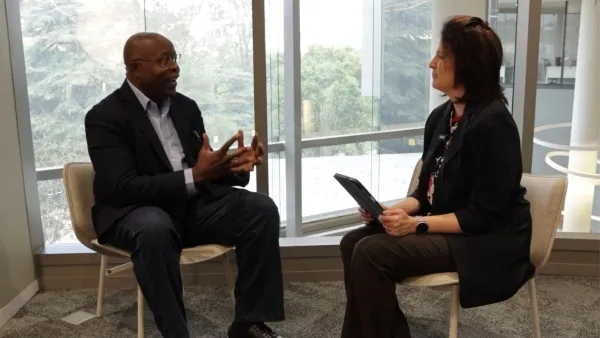
In this exclusive conversation with Ben Magara, CEO of Exxaro Resources, our Product Director, Laura Nicholson, discusses Exxaro’s growth and diversification into manganese and renewable energy.

Articles
Tuesday, September 29, 2026
Glencore deepens US critical minerals ties with $500m EXIM-backed VaultCo deal
Glencore's VaultCo agreement comes against a broader expansion of US engagement with its African critical-minerals portfolio.













-ltd-a325b1d3-6414-476b-9b7e-20c2285d5a51.webp?language=en)


-Primary-Logo.webp?language=en)