News & Media
Turning partnerships into delivery
Caroline Obure
Monday, September 28, 2026
What's in this article
- a.2. How can Africa’s mining financing gap be closed?
- b.3. What regional cooperation is required to build competitive African mineral value chains?
- c.4. How can the African Development Bank help structure more balanced partnerships?
- d.5. What would demonstrate meaningful movement from dialogue to delivery at Mining Indaba 2027?
As Africa seeks to convert its mineral wealth into sustainable industrial growth, effective partnerships will be measured by their ability to move projects from ambition to implementation. Jerry Ahadjie, Chief Minerals Officer at the African Development Bank, discusses how governments, development finance institutions and private investors can close financing gaps, strengthen regional value chains and deliver measurable outcomes.
1. What does “partnership in practice” look like?
Partnership in practice begins where shared ambition becomes shared responsibility. It requires committed financing and credible project sponsors, a clear allocation of risks and responsibilities, agreed implementation timelines, binding commitments to local value creation, and transparent mechanisms for measuring progress.
The Lobito Corridor offers an emerging example. It brings together Angola, the Democratic Republic of Congo, Zambia, the African Development Bank and international financing partners around a shared economic and infrastructure vision. In August 2026, the African Development Bank approved a US$255 million loan and a US$10 million grant to support Zambia’s participation in the Lobito Integrated Economic Corridor Development Programme. Through further resource mobilisation, the Bank’s overall support could reach US$500 million. The programme is expected to create approximately 5,000 temporary jobs and 500 permanent positions, while providing training for at least 350 people. (African Development Bank)
The corridor will fully embody Mining Indaba’s 2027 theme, “Stronger Together: Partnerships in Practice,” if it does more than transport minerals to international markets. It must connect mining operations with African power systems, processing facilities, industrial zones, local suppliers, farmers and communities. Its success should ultimately be measured by the economic activity it enables along the corridor, not simply by the volume of raw materials it carries.
An agreement remains largely aspirational when it lacks committed financing, accountable institutional leadership, implementation deadlines, procurement arrangements and transparent public reporting. Partnership in practice is therefore not defined by the number of agreements signed, but by the quality and durability of the outcomes delivered.
2. How can Africa’s mining financing gap be closed?
Closing the financing gap requires each partner to perform the role it is best equipped to undertake.
Governments must establish the foundations for investment by providing reliable geological data, transparent licensing systems, predictable fiscal frameworks and coordinated access to land, power, water and transport infrastructure.
Development finance institutions can help projects progress through their most difficult early stages by financing project preparation, feasibility studies, engineering work and environmental and social assessments. They can subsequently deploy guarantees, concessional resources, blended-finance structures and political-risk instruments to improve bankability and mobilise private capital.
Private investors bring equity, technology, operational expertise and commercial discipline. Industrial buyers can provide the demand certainty required to unlock investment through long-term offtake agreements, minimum-volume commitments and appropriate price-support mechanisms.
The need for this coordination is becoming increasingly urgent. S&P Global found that mines entering production between 2020 and 2024 took an average of 17.8 years to progress from discovery to production. The International Energy Agency also estimates that capital costs for projects in regions seeking to diversify global mineral supply are typically around 50% higher than those faced by established producers. (S&P Global; IEA Global Critical Minerals Outlook 2025)
The African Development Bank-led Alliance for Green Infrastructure in Africa illustrates the type of platform required. It aims to raise US$500 million in early-stage project-development capital to help generate as much as US$10 billion in green infrastructure investment. In August 2025, the Bank committed US$40 million to the Alliance’s Project Development Fund. This platform can help develop the power, transport, water and logistics infrastructure needed to support competitive mineral value chains. (African Development Bank)
Partnerships in practice must therefore include a coordinated financing pathway capable of moving projects from geological potential and early-stage preparation to financial close, construction and production.
3. What regional cooperation is required to build competitive African mineral value chains?
The African Green Minerals Strategy provides a continental framework for using Africa’s mineral resources to support industrialisation, energy security and inclusive growth. The priority now is coordinated implementation.
Countries need to develop shared geological information and regional mineral-infrastructure maps. They should establish effective corridor institutions with transparent, open-access arrangements and work towards harmonising customs procedures, product standards, rules of origin, environmental requirements and traceability systems.
Regional cooperation should also support the pooling of mineral feedstock and the development of shared processing clusters based on comparative advantage. This must be accompanied by coordinated investment in power generation and transmission, water, transport and logistics.
The African Continental Free Trade Area is central to this ambition. It provides a framework for building African markets for processed minerals, battery materials, components and manufactured products. Yet intra-African trade remains a relatively small share of the continent’s total trade, underlining the distance still to be travelled.
The opportunity becomes clearer when viewed through specific mineral value chains. The IEA estimates that Madagascar, Mozambique and Tanzania together hold approximately one-quarter of global graphite resources. Through partnerships with countries and companies that possess finance, technology and established markets, these resources could support competitive regional industries in graphite processing and anode-material production. (IEA Global Critical Minerals Outlook 2025)
“Stronger Together” does not mean that every country must undertake every stage of a mineral value chain. It means building a regional system in which countries specialise according to their respective strengths while sharing infrastructure, markets and economic benefits. That regional scale will be essential if African industries are to compete globally.
4. How can the African Development Bank help structure more balanced partnerships?
The African Development Bank can bring together several instruments that are too often deployed separately: country diagnostics and policy reform, sovereign financing for enabling infrastructure, private-sector loans and guarantees, concessional resources, regional coordination, trade facilitation, and environmental, social and governance safeguards.
A balanced partnership must connect government incentives and development financing to measurable commitments from investors. These should include local processing, employment, skills development, African procurement, technology transfer, community development, opportunities for women and young people, traceability, environmental performance and responsible mine closure.
Such incentives should be time-bound, transparent and linked to delivery. Where investors do not meet agreed obligations, appropriate review or recovery provisions should apply.
The cobalt value chain illustrates why this balance matters. The Democratic Republic of Congo accounted for approximately 76% of global mined cobalt production in 2024, while China is expected to retain a dominant position in refined cobalt under the current project pipeline. Africa’s strength in extraction has therefore not yet translated into an equivalent position in processing and manufacturing. (IEA Cobalt Outlook)
The Bank is increasingly approaching mining investment through complete value chains rather than isolated projects. The April 2026 joint statement by six multilateral development banks provides a framework for shared diagnostics, co-financing, infrastructure development, capital mobilisation and progress reporting across critical-minerals-to-manufacturing value chains. (Joint MDB Statement)
This is what partnerships in practice should deliver: commercially viable projects that generate appropriate investor returns while also advancing African industrialisation and producing independently verifiable development outcomes.
5. What would demonstrate meaningful movement from dialogue to delivery at Mining Indaba 2027?
The most credible outcomes would be practical, focused and verifiable, rather than simply a long list of new announcements.
First, I would look for a prioritised pipeline of investment-ready projects, with indicative capital requirements, clearly identified infrastructure needs, accountable sponsors and realistic target dates for financial close.
Second, meaningful progress would include at least one value-addition project such as a refinery, precursor-material facility or regional processing plant reaching financial close and advancing towards construction or site preparation.
Third, public institutions and development finance partners should make specific commitments to project preparation, financing or risk mitigation that can mobilise additional private investment and African institutional capital.
Finally, governments and investors should incorporate enforceable and measurable development commitments into investment agreements. These should address local procurement, employment, skills development, community participation, technology transfer and environmental performance.
Mining and processing projects require considerable time to develop, and progress must therefore be assessed realistically. The immediate test is whether the projects presented at Mining Indaba have credible sponsors, defined financing pathways, clear implementation milestones and transparent accountability arrangements.
That would demonstrate that Mining Indaba is helping move the sector beyond dialogue and towards durable partnerships that deliver measurable value for investors, governments and African communities.
Investors
Market News
Investment
Leadership
Critical & Strategic Minerals
Related articles
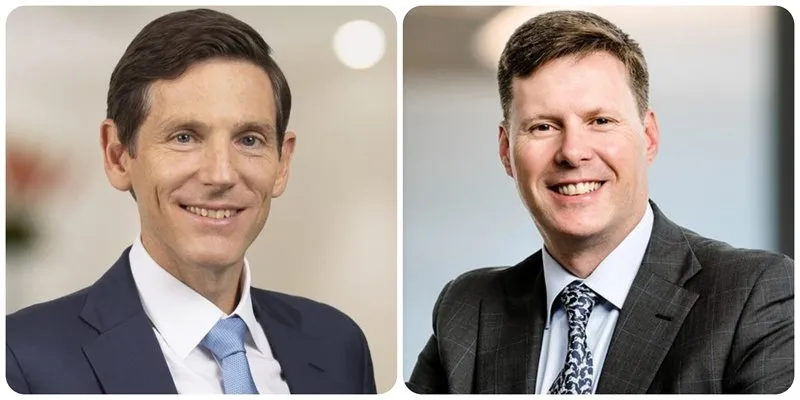
Monday, November 10, 2025
All eyes on Anglo Teck following “once-in-a-generation” agreement
The announcement that Anglo American and Teck Resources will merge in a $53 billion transaction marks one of the most consequential mining deals of the 21st century.

Articles
Monday, September 21, 2026
Zambia’s Konkola reopens Chingola copper mine after 18-year shutdown
Restart of historic mine adds momentum to Zambia’s push to more than triple copper production by 2031.

Articles
Wednesday, September 9, 2026
State mining companies and the new architecture of mineral sovereignty
A growing number of mineral-producing governments are acquiring assets, activating marketing rights and building institutions that can intervene across the value chain.








-ltd-a325b1d3-6414-476b-9b7e-20c2285d5a51.webp?language=en)

-Primary-Logo.webp?language=en)