News & Media
Featured
“We’re in the foothills of a major copper shortage"
Tuesday, October 21, 2025
What's in this article
Some of the key messages from Friedland recently
He warns the world is in “the foothills of a major shortage of copper” that may materialise before 2030. He frames copper not only as a commodity but as a strategic material tied to both energy transition and national security. For example:
“We’re seeing a breakdown in the international order … These tensions are Balkanising the world economy, and we see it in the copper industry.”
He emphasises the scale of the challenge:
"We need to mine as much copper in the next 18 years as our species has mined in the last 10,000 years [just] to maintain ~3 % economic growth."
He points to rising costs and delays: supply chain issues, rising lead-times for equipment, and increasing project costs in mining.
Why this matters
- If Friedland is right about a looming supply deficit, then copper prices could face strong upward pressure. Lower availability + increasing demand = tight market
- Because he links copper to not just the energy transition but also to security/defence, the metal’s price moves might be influenced by geopolitics more than usual
- Mining companies, project developers and investors may need to rethink timelines, costs and risk assumptions: Friedland is pointing to longer lead times and higher CAPEX
- For end-users the risk of copper supply bottlenecks means material cost inflation or sourcing challenges
- For countries and regulators, the strategic message is that raw-material security is part of the national economic/industrial policy, not just commodity cycles
“The world is in the foothills of a major shortage of copper.”
What to watch
Supply pipeline: Are major new copper mines getting built on time? Lead-times are stretching, costs rising. If they don’t come online as planned, the shortage may deepen.
Demand shocks: Acceleration in EVs, renewables, grid upgrades, and defence spending may push demand higher quicker.
Geopolitical risk: Trade restrictions, export controls, supply-chain fragmentation (as Friedland flagged) may further tighten market.
Price levels: If the market acknowledges a structural shortage, price ceilings may shift higher; companies may need higher price assumptions to justify investment.
Investor decision-making: For mining sector investors or companies contemplating copper projects, risk/reward may look more favourable now - if you accept higher risk of delays/costs.
Supply / security risk
Friedland warns of deepening geopolitical disturbances disrupting copper supply chains:
“We’re seeing a breakdown in the international order … these tensions are Balkanising the world economy, and we see it in the copper industry.”
He noted rising lead times for procurement of equipment and structural increases in cost for putting new mines into production.
He contends the world is already on the cusp of (or in the early stages of) a serious copper shortage:
“The world is in ‘the foothills of a major shortage of copper’ expected before 2030.”
He has also stated that for modest global growth (~3 %) the quantity of copper required over the next ~18 years equals all the copper mined in the last 10,000 years.
Policy and strategic shifts
On U.S. policy:
“Without it (critical raw materials), you can’t do anything about global warming or greening the world economy and you have a critical vulnerability in national security.”
He supported high tariffs on copper imports as a wake-up call to domestic supply vulnerabilities.
On technology and production: he co-founded I‑Pulse to develop new processing and mining technologies - underscoring his belief that supply constraints are not just geological but technological.
In general
“We’re seeing a breakdown in the international order … these tensions are Balkanising the world economy, and we see it in the copper industry.”
“The world is in ‘the foothills of a major shortage of copper’ expected before 2030.”
“There is no rational price for something you absolutely must have.”
“Copper is not just a commodity; it is becoming a national-security issue.”
“Without it (critical raw materials), you can’t do anything about global warming or greening the world economy…”
Why this matters
Supply constraints: Friedland is signalling that just relying on new mines and expansions may not suffice - lead times are longer, costs higher, geopolitics riskier.
Price pressure upward: If his thesis is correct then copper prices may need to move significantly higher than current levels to incentivise new supply.
Shift in paradigm: Copper is increasingly framed as a strategic metal rather than simply an industrial commodity - meaning policy, national security and technology become key drivers.
Investment lens: For mining companies, investors and end-users the message is: act early. Supply risk may not be years away; it may already be beginning.
Technology and innovation influence: The need for new processing, refined efficiency and cleaner production may differentiate which projects succeed and which falter.
Market News
Critical & Strategic Minerals
Exploration & Junior Mining Companies
Governments
Investors
Major & Mid-Tier Mining Companies
Mining Service Providers
Downstream Buyers
Related articles
Digital Diaries
Wednesday, November 5, 2025
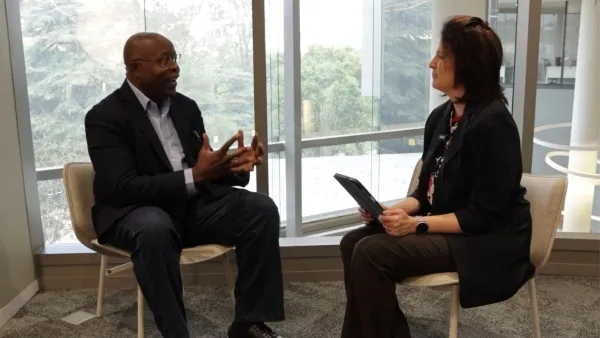
Digital Diary - Ben Magara, CEO of Exxaro Resources
In this exclusive conversation with Ben Magara, CEO of Exxaro Resources, our Product Director, Laura Nicholson, discusses Exxaro’s growth and diversification into manganese and renewable energy.
Friday, October 31, 2025
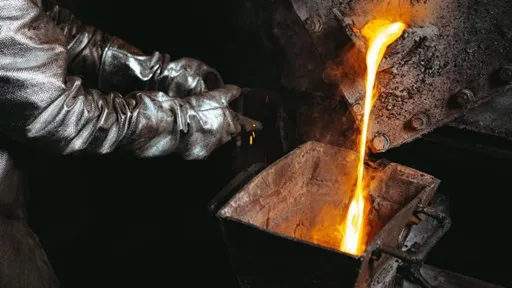
Commercial production begins at Newmont’s Ahafo North
This establishes the company's second operational site in the country, expanding Newmont’s existing footprint with four open pit mines and a stand-alone mill.

Articles
Tuesday, August 12, 2025
Botswana’s pivot to critical minerals powered by diamonds
Botswana isn’t just riding out its diamond boom, it’s proactively expanding into critical minerals.













-ltd-a325b1d3-6414-476b-9b7e-20c2285d5a51.webp?language=en)


-Primary-Logo.webp?language=en)