News & Media
Featured
Mine 2026: Ambition to action
Thursday, July 2, 2026
What's in this article
This is an excerpt from PwC's Mine 2026: Ambition to action report.
The pressure is on the global mining industry. The world is navigating an era of energy security challenges, geopolitical fragmentation, the impacts of a technology-fuelled fourth industrial revolution and rising societal expectations.
To meet the growing demand for metals and minerals, the industry needs to deliver more of them and do so more efficiently. As we look to the future of mining, there’s a clear need to diversify production and processing.
And that means working more effectively in an ecosystem that’s credible, investable, and resilient. Meeting these challenges and capturing value from evolving global supply chains is a central imperative. To succeed, the many players and participants in the mining ecosystem, which includes mining and processing firms, policymakers, investors, end users, and companies in adjacent industries, need to collaborate as they move from ambition to action across three broad areas.
First, governments need to set policy in motion, developing the incentives and regulatory frameworks that support stable investment and mining profitability.
Second, while geology determines who can participate in mining, the ability to make projects investable and the positioning of capital providers ultimately dictate who captures the most value. As a result, the ecosystem must set capital in motion to make projects operational and create greater upstream and midstream production capacity.
Third, operating companies must adopt technological solutions, notably AI, to enhance productivity at the mine face, while also improving efficiency and performance at a broader strategic level. The challenges throw into stark relief the need for greater collaboration across sector and industry boundaries.
These pressures come as the industry reports what was in many respects a solid year for the top 40 mining companies (by market capitalisation) that we analyse. Total revenues grew 3.3% to US$909 billion from US$880 billion in 2024, while earnings before interest, taxes, depreciation, and amortisation surged 23% to US$248 billion and net profit rose to US$120 billion.
The improvement reflects two key factors: first, sharply higher prices for precious metals (including gold and silver), platinum group metals, and energy metals such as copper; and second, improved operational leverage and disciplined cost management.
Profitability recovers
The aggregate EBITDA margin for the top 40 increased to 27% in 2025 from 23% the previous year. Net profit margins rose to 13% from 11% over the same period. Gold producers recorded an aggregate EBITDA margin of approximately 71%.
Aggregate EBITDA for the gold subsector rose by US$22 billion, representing the year’s single largest commodity-level earnings improvement. Copper companies’ aggregate EBITDA grew 80% to US$13.3 billion from US$7.4 billion in 2024. By contrast, coal saw a decline in revenues, down 10.7% to US$101.9 billion, while EBITDA increased 5% to US$32.7 billion.
Gold companies on the rise
Precious metals companies mining gold, silver, and platinum group metals accounted for six of the eight new entrants to the top 40. The remaining two new entrants were copper companies. Several gold-focused companies advanced significantly in the rankings.
Gold miners Newmont and Agnico Eagle Mines jumped four places, to fifth and sixth respectively, while Barrick Mining (gold and copper) climbed ten places to rank seventh.
Operating cash flow surges
Higher commodity prices flowed through to cash conversion for both the pureplay and diversified miners. Aggregate net operating cash flows of the top 40 increased 12% to US$173.6 billion. Top earners were BHP, which generated operating cash flows of US$19.8 billion (up 49% from US$13.3 billion in 2024), followed by Zijin Mining Group at US$10.5 billion (up 128% from US$4.6 billion in 2024) and Newmont at US$10.3 billion (up 61% from US$6.4 billion in 2024).
But the rising cash flow hasn’t necessarily translated into tangible increases in capital expenditure. Capital velocity, the pace at which companies use capital to invest in growth, of the top 40 was flat in 2025. The strategic question for 2026 is whether management teams can channel these cash surpluses into M&A, organic growth, debt reduction, or continued shareholder returns.
Shareholder buyback resurgence
Share buybacks grew 252% in 2025, driven by gold companies, to reach US$5.8 billion. The substitution of buybacks for dividends among gold producers may represent a strategic shift in capital return philosophy, one that’s more flexible and tax-efficient or that may reflect uncertainty about future commodity prices. Other companies are likely to adopt similar approaches as free cash-flow generation improves.
Prudent debt management
Borrowings increased marginally by US$2.6 billion to reach US$251 billion, while net debt-driven by higher cash generation in 2025, decreased by US$10 billion. The increase in equity relative to debt suggests improving gearing ratios across the top 40. This is an overall positive signal for credit ratings and the cost of capital. But we see a clear distinction, again, between gold and copper miners on the one hand and coal companies on the other.
Tax contributions grow
The effective tax rate for the top 40 reached 30% in 2025 from 28% the year before. Total tax expense was US$52 billion, which was 37% higher than in 2024 due to higher.
Gold, silver, copper and lithium drive deals
Deal volume declined in 2025, with the number of completed deals falling 20% in 2025 from 2024. But the value of the deals rose significantly, topping US$70 billion.
Gold, silver, copper, and lithium accounted for 70% of overall deal value. The largest transaction to close in 2025 was Rio Tinto’s US$6.7-billion acquisition of Arcadium Lithium.
Mine 2026: Ambition to action
The full report can be downloaded here
AUTHOR: Sacha Winzenried I Energy, Utilities, and Resources, PwC Indonesia
Contributors:
Andrew Jenkins, Partner , PwC Indonesia
Matthew Williams, Director , PwC United Kingdom
Market News
Related articles

Articles
Wednesday, September 30, 2026
Rainbow Rare Earths advances Phalaborwa towards PFS with Neo partnership
Rainbow Rare Earths is moving its Phalaborwa project closer to development after securing Neo Performance Materials as a technology and offtake partner.
Articles
Tuesday, September 29, 2026
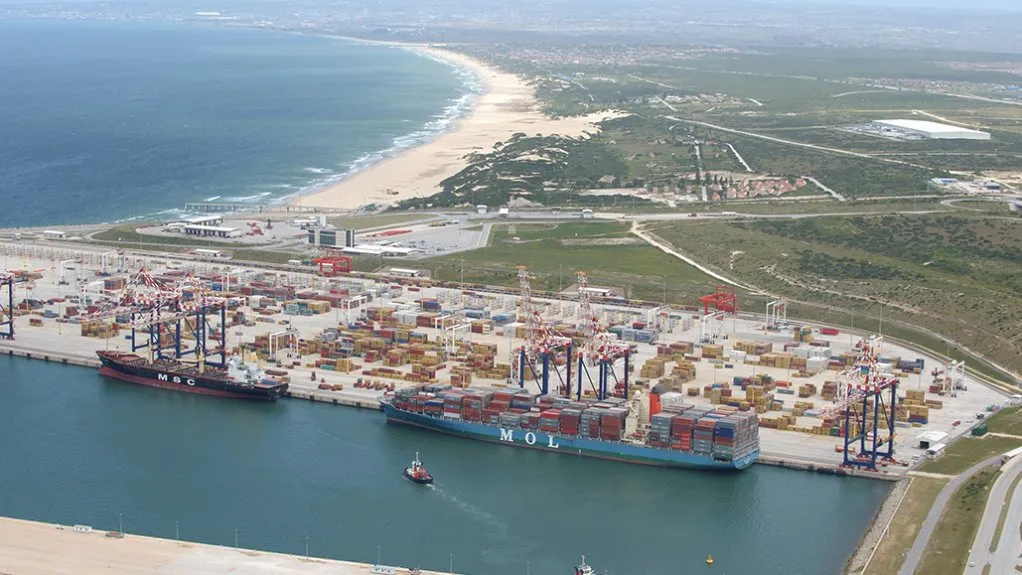
South Africa puts $2.7 billion manganese corridor on the market
Transnet has launched the next stage of its plan to consolidate South Africa’s manganese exports through Ngqura.

Articles
Tuesday, September 29, 2026
Glencore deepens US critical minerals ties with $500m EXIM-backed VaultCo deal
Glencore's VaultCo agreement comes against a broader expansion of US engagement with its African critical-minerals portfolio.









-ltd-a325b1d3-6414-476b-9b7e-20c2285d5a51.webp?language=en)


-Primary-Logo.webp?language=en)