News & Media
Featured
Mintek: Collaboration with PGM producers can unlock processing performance
Tuesday, July 7, 2026
What's in this article
As South Africa's platinum group metals (PGM) industry faces mounting pressure to improve productivity, reduce costs and maximise value from existing operations, state-owned minerals research organisation Mintek is calling for stronger collaboration with mining companies to unlock hidden efficiencies in processing plants.
Speaking during Mintek's PGM Day, Dr Sandile Nkwanyana, Senior Engineer in Mintek's Minerals Processing Division, invited PGM producers to work more closely with the organisation through detailed comminution circuit surveys designed to identify production bottlenecks and improve plant performance.
The appeal reflects a broader shift across Africa's mining industry, where partnerships between research institutions, technology providers and mining companies are increasingly viewed as essential to improving competitiveness, a key theme that aligns with Mining Indaba 2027's focus on "Stronger Together: Partnerships in Practice."
Research and industry partnership to improve plant performance
Rather than developing new technologies in isolation, Mintek is encouraging miners to collaborate directly with its engineers and scientists to optimise existing processing infrastructure. "We'd really like to get some invites to come and conduct surveys," said Nkwanyana during his presentation.
The proposed partnerships centre on comprehensive comminution circuit surveys that examine every stage of a milling circuit to identify where throughput is constrained and where operational improvements can be made.
According to Nkwanyana, the primary milling stage, whether using a run-of-mine ball mill, semi-autogenous grinding (SAG) mill or autogenous grinding (AG) mill, is frequently the limiting factor preventing plants from increasing throughput.
"What I want to stress is that the primary mill, which is either the run-of-mine ball mill, SAG mill, or AG mill, is usually the bottleneck when you're trying to increase throughput in your circuits," he explained.
By working alongside plant operators, Mintek aims to generate data-driven recommendations that enable producers to increase production without major capital investment.
Building on decades of collaborative innovation
Founded in 1934, Mintek has long served as South Africa's national minerals research organisation, working with mining companies, equipment suppliers, universities and government to develop technologies spanning mineral processing, metallurgy, analytical services and critical minerals.
Its role has become increasingly important as South African PGM producers seek to remain globally competitive while operating increasingly deep, energy-intensive and lower-grade ore bodies.
The country's platinum sector, home to the world's largest reserves of platinum group metals, has experienced significant volatility over the past several years as prices for palladium and rhodium have declined sharply while operational costs continue to rise.
Against this backdrop, improving plant efficiency has become one of the fastest and most cost-effective ways to protect margins.
Combining in-house expertise with global modelling platforms
Mintek's optimisation programme combines on-site operational surveys with advanced modelling techniques.
Engineers conduct detailed measurements across entire processing circuits before generating a "signature grind curve" that identifies the operating conditions delivering peak milling performance. One of the key findings from years of research, Nkwanyana noted, is that increasing mill load does not automatically result in higher throughput.
Instead, each circuit has an optimal operating point beyond which additional loading becomes counterproductive.
A modelling process enables engineers to evaluate alternative operating scenarios, identify hidden capacity and ensure accurate mass balancing throughout the circuit.
A partnership model with industry-wide potential
Mintek's invitation comes at a time when collaboration between research institutions and industry is becoming increasingly important across Africa's mining sector.
Rather than relying solely on new mine development, producers are investing in partnerships that improve productivity at existing operations through digital technologies, advanced modelling and process optimisation.
The approach mirrors wider trends across the mining industry, where operators are increasingly partnering with research organisations to accelerate innovation while reducing technical risk.
For South Africa's PGM sector, such collaborations could play an important role in sustaining production, extending mine life and improving the competitiveness of existing assets.
What comes next?
Mintek is now seeking greater engagement with platinum producers willing to undertake comprehensive comminution circuit surveys at their operations.
The organisation believes wider industry participation would not only improve individual plant performance but also strengthen South Africa's broader mineral processing capability through shared technical knowledge and continuous innovation.
As mining companies pursue productivity gains in an increasingly competitive global market, partnerships between research organisations and industry are likely to become an increasingly important driver of operational excellence.
For Mintek, the next step is straightforward. As Nkwanyana concluded: "We'd really like to get some invites to come and conduct surveys."
For the country's PGM producers, the opportunity may lie in transforming research collaboration into measurable production gains.
WATCH: Ferrochrome, Policy, and Global Competition: Lessons for Beneficiation | MITV
Market News
Related articles
.webp?language=en)
Articles
Monday, October 5, 2026
A new partnership for the DRC’s critical minerals future
What does the Buenassa Deal signal for the DRC’s critical minerals strategy?

Articles
Wednesday, September 30, 2026
Rainbow Rare Earths advances Phalaborwa towards PFS with Neo partnership
Rainbow Rare Earths is moving its Phalaborwa project closer to development after securing Neo Performance Materials as a technology and offtake partner.
Articles
Tuesday, September 29, 2026
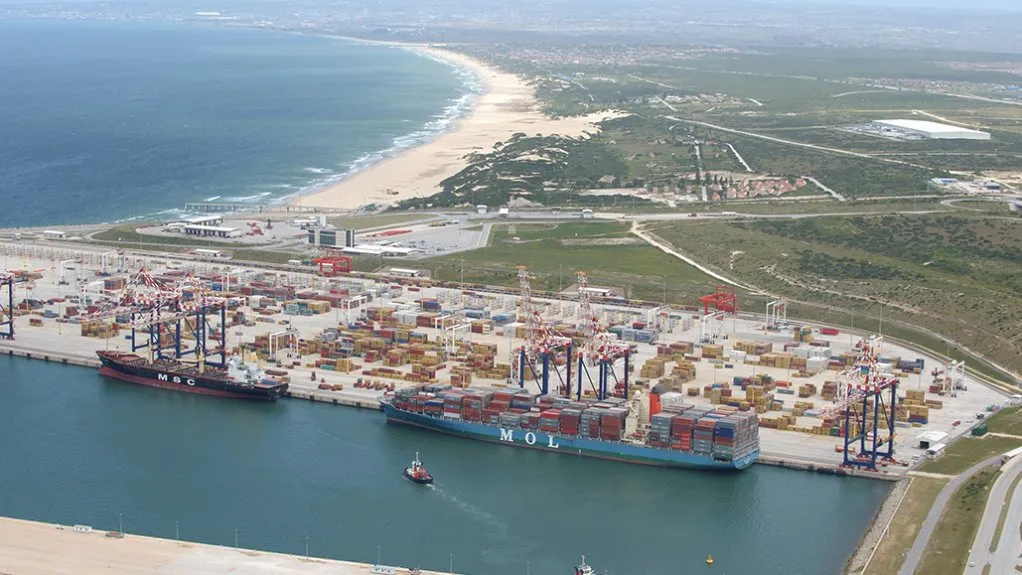
South Africa puts $2.7 billion manganese corridor on the market
Transnet has launched the next stage of its plan to consolidate South Africa’s manganese exports through Ngqura.








-ltd-a325b1d3-6414-476b-9b7e-20c2285d5a51.webp?language=en)

-Primary-Logo.webp?language=en)