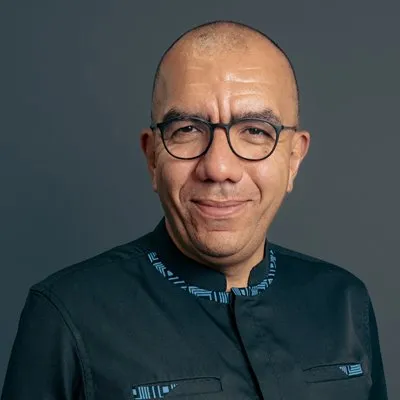
Samuel Gahigi
Head of Government Relations for Africa Rio Tinto
Samuel Gahigi joined Rio Tinto at the end of 2022 and is currently the Head of Government Relations for Africa. From April 2023 to the end of August 2024, he held in parallel the role of Head of Country for Rio Tinto in Guinea, where he was involved in the negotiations of the Simandou project. He previously served the United Nations for over 20 years in various managerial positions. His most recent position was Political Director at the UN Regional office for Central Africa based in Libreville, Gabon, where he was in charge of supporting the UN’s diplomatic engagement in eleven countries in the region, including Angola, the DRC and Rwanda. Prior to this assignment, Samuel served successively as Deputy-Director for West Africa and the Sahel and for Eastern Africa (2015-2020) at the UN Headquarters, overseeing strategic engagement and supervising the teams in charge of backstopping multi-billion USD field operations in post-conflict environments (Cote d’Ivoire, Liberia, Mali, Sudan and South Sudan). Samuel also served in West Africa (2010-2013) successively as Head of Political Affairs of the UN peacebuilding office in Guinea-Bissau and Deputy-Head of the Political section of the UN Office for West Africa.
2026 Agenda Sessions
Powering the future – The World Bank Group’s support to Africa’s minerals and metals
This Industry Intel Session will spotlight the World Bank Group’s minerals and metals approach and its holistic, multisectoral support to Africa’s mining and energy transition priorities. The discussion will explore how Africa’s mineral endowment can be transformed into broad-based and lasting development through responsible exploration and production, improved governance, investment in critical infrastructure, value addition, skills development, and meaningful private-sector engagement.
Through a high-level dialogue between government representatives, industry leaders, investors, and the World Bank Group, the session will examine practical pathways to collaboration and delivery. Panelists will discuss what success looks like from their perspectives, where support is most needed, and how public and private actors can jointly shape competitive, resilient, and inclusive mineral value chains across the continent.
The session will feature a forward-looking conversation informed by real implementation experience, case examples, and market developments. It will help define priorities, highlight opportunities, and reinforce partnerships that position Africa as a leader in the global energy transition.
Monday 09 February 13:45 - 15:15 Serengeti Stage (CTICC2 - Level 3)
This Industry Intel Session will spotlight the World Bank Group’s minerals and metals approach and its holistic, multisectoral support to Africa’s mining and energy transition priorities. The discussion will explore how Africa’s mineral endowment can be transformed into broad-based and lasting development through responsible exploration and production, improved governance, investment in critical infrastructure, value addition, skills development, and meaningful private-sector engagement.
Through a high-level dialogue between government representatives, industry leaders, investors, and the World Bank Group, the session will examine practical pathways to collaboration and delivery. Panelists will discuss what success looks like from their perspectives, where support is most needed, and how public and private actors can jointly shape competitive, resilient, and inclusive mineral value chains across the continent.
The session will feature a forward-looking conversation informed by real implementation experience, case examples, and market developments. It will help define priorities, highlight opportunities, and reinforce partnerships that position Africa as a leader in the global energy transition.
Is resource nationalism paving the way for equitable global partnerships in critical minerals supp
Those practising resource nationalism often seek to maximise revenue, stimulate industrial development and secure strategic control over strategic minerals. Often nations have much to gain during a commodity boom but are left in a weak bargaining position during a slump.When the world is looking for transition minerals, this can often scare foreign investors. Resource nationalism rebalancing traditional global trade partnerships; is it for the better of Africa?
Tuesday 10 February 13:30 - 14:15 Ngorongoro Crater Stage (CTICC1 - Level 2)
Critical minerals
Governance, regulation and policy
Those practising resource nationalism often seek to maximise revenue, stimulate industrial development and secure strategic control over strategic minerals. Often nations have much to gain during a commodity boom but are left in a weak bargaining position during a slump.When the world is looking for transition minerals, this can often scare foreign investors. Resource nationalism rebalancing traditional global trade partnerships; is it for the better of Africa?
Ngorongoro Crater Stage (CTICC1 - Level 2) Africa/Johannesburg


-Logo_CMYK_1.jpg?width=1000&height=500&ext=.jpg)


.png?width=300&height=208&ext=.png)

_mi25-weblogo.png?ext=.png)

_1.png?ext=.png)


_logo.png?ext=.png)


_mi25-weblogo.png?ext=.png)