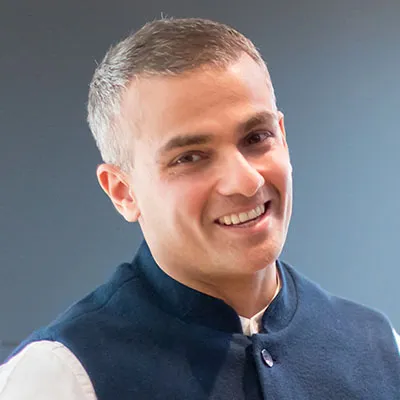
Rohitesh Dhawan
CEO International Council on Mining and Metals (ICMM)
Rohitesh “Ro” Dhawan is the President and Chief Executive Officer of the International Council on Mining and Metals (ICMM). He leads the Council of 26 CEOs of the world’s largest mining & metals companies in voluntary leadership actions that raise the standards of responsible mining. Under his leadership, ICMM has undertaken landmark commitments and action on critical sustainable development issues, including the first industry-wide commitment to achieving net zero greenhouse gas emissions, the first collective commitment of any sector on nature positive, pioneering actions on diversity, equity and inclusion, and significant steps towards transparency of the industry’s contribution and performance, including on tax and contract disclosure. Ro is a Fellow and faculty member of the Africa Leadership Initiative and a Raisina fellow at the Asian Forum on Global Governance. He serves on the Advisory Boards of the Columbia Centre for Sustainable Investment, Concordia, and Resolve. He has served on the UK Government’s Partnering for Accelerated Climate Transitions (PACT) Programme and was named one of South Africa’s climate change leaders for his work with the country’s mining sector. Ro hold a Master’s in Environmental Change & Management from the University of Oxford in the UK and an undergraduate degree in Economics from Rhodes University in South Africa.
2026 Agenda Sessions
Debate: Africa is a winner from current geopolitical disruption
Conventional wisdom suggests that Africa is negatively impacted by the current geopolitical forces. Tariffs, immigration curbs, reduced development funding and a more nationalist agenda in traditional allies are risks to Africa's growth, particularly in minerals. But could the opposite be true? Could the geopolitical (dis)order have more upside than downside for the continent, through for instance - new investment and trade routes, extra focus on intra-Africa trade, and a push for local beneficiation and industrialisation?
This debate will see two teams argue the case in opposite directions relating to Africa's place in the current geopolitical order. The views they express may not represent their personal or organisational view, but they assume the side they've been given so we can benefit from a diversity of perspectives.
Tuesday 10 February 10:20 - 11:05 Table Mountain Stage (CTICC1 - Ground Floor - Exhibition Hall)
Governance, regulation and policy
Leadership
Conventional wisdom suggests that Africa is negatively impacted by the current geopolitical forces. Tariffs, immigration curbs, reduced development funding and a more nationalist agenda in traditional allies are risks to Africa's growth, particularly in minerals. But could the opposite be true? Could the geopolitical (dis)order have more upside than downside for the continent, through for instance - new investment and trade routes, extra focus on intra-Africa trade, and a push for local beneficiation and industrialisation?
This debate will see two teams argue the case in opposite directions relating to Africa's place in the current geopolitical order. The views they express may not represent their personal or organisational view, but they assume the side they've been given so we can benefit from a diversity of perspectives.
Table Mountain Stage (CTICC1 - Ground Floor - Exhibition Hall) Africa/Johannesburg


-Logo_CMYK_1.jpg?width=1000&height=500&ext=.jpg)


_mi25-weblogo.png?ext=.png)

_1.png?ext=.png)


_mi25-weblogo.png?ext=.png)