News & Media
Featured
Strategic partnerships drive Giyani’s path to Botswana manganese development
Tuesday, June 23, 2026
What's in this article
Backing from the IDC, African Rainbow Capital and engagement with Botswana's Minerals Development Company are helping Giyani Metals advance its K.Hill project as it pursues offtake agreements, project financing and a targeted 2027 construction start.
Strategic partnerships and long-term financing support are expected to play a pivotal role in advancing Giyani Metals' K.Hill high-purity manganese project in Botswana, as the company moves from FS towards project financing and development. Executive Chair Nigel Robertson says Giyani's progress to date has been underpinned by backing from South Africa's Industrial Development Corporation (IDC) and investment company African Rainbow Capital. Together they have contributed approximately US$26 million towards the company's demonstration plant and DFS.
As the company prepares for the next phase of development, Robertson says attracting additional strategic partners will be critical to bringing the project into production. “This is an innovative project in a developing market, and projects of this scale require partners with long-term capital and strategic interest.” Giyani is also engaging with the Minerals Development Company Botswana (MDCB) regarding potential collaboration as Botswana seeks to increase downstream mineral beneficiation and capture more value from its mineral resources.
The focus on partnerships comes as Giyani advances plans to develop what could become one of Africa's first integrated producers of battery-grade manganese products following the completion of a positive DFS for the K.Hill project.
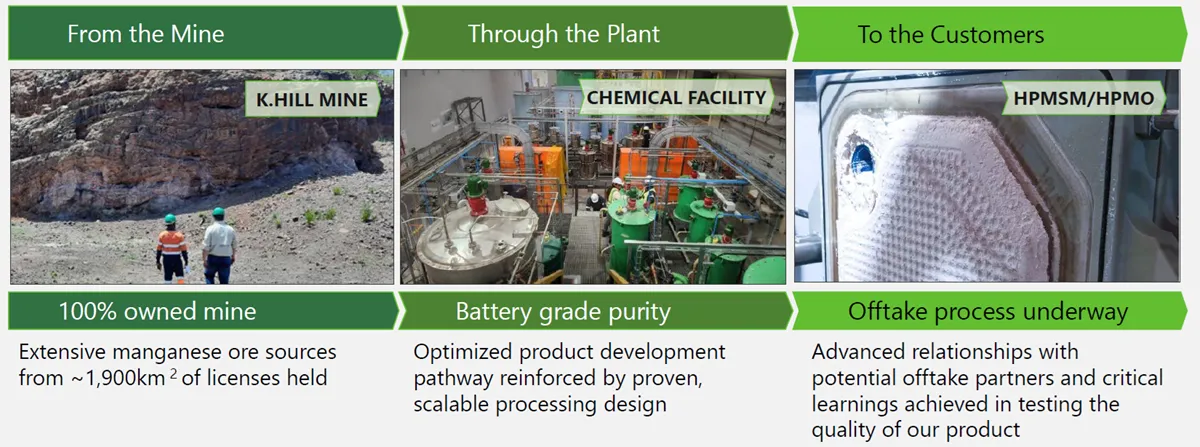
"We were delighted to announce the results of the DFS at the end of May this year," says Robertson. "It's taken considerable work over the past 18 months, but we now have a strong foundation for taking the project forward.” The study outlines an after-tax net present value (NPV) of US$482 million, based on a capital expenditure requirement of approximately US$535 million, and an internal rate of return (IRR) of 20.3%. The K.Hill deposit contains approximately 5.35 Mt of ore grading around 12% manganese. The operation is expected to process about 220,000 t of ore annually, producing high-purity manganese products for use in lithium-ion batteries over a projected 25-year LoM.
Demonstration plant helps de-risk project
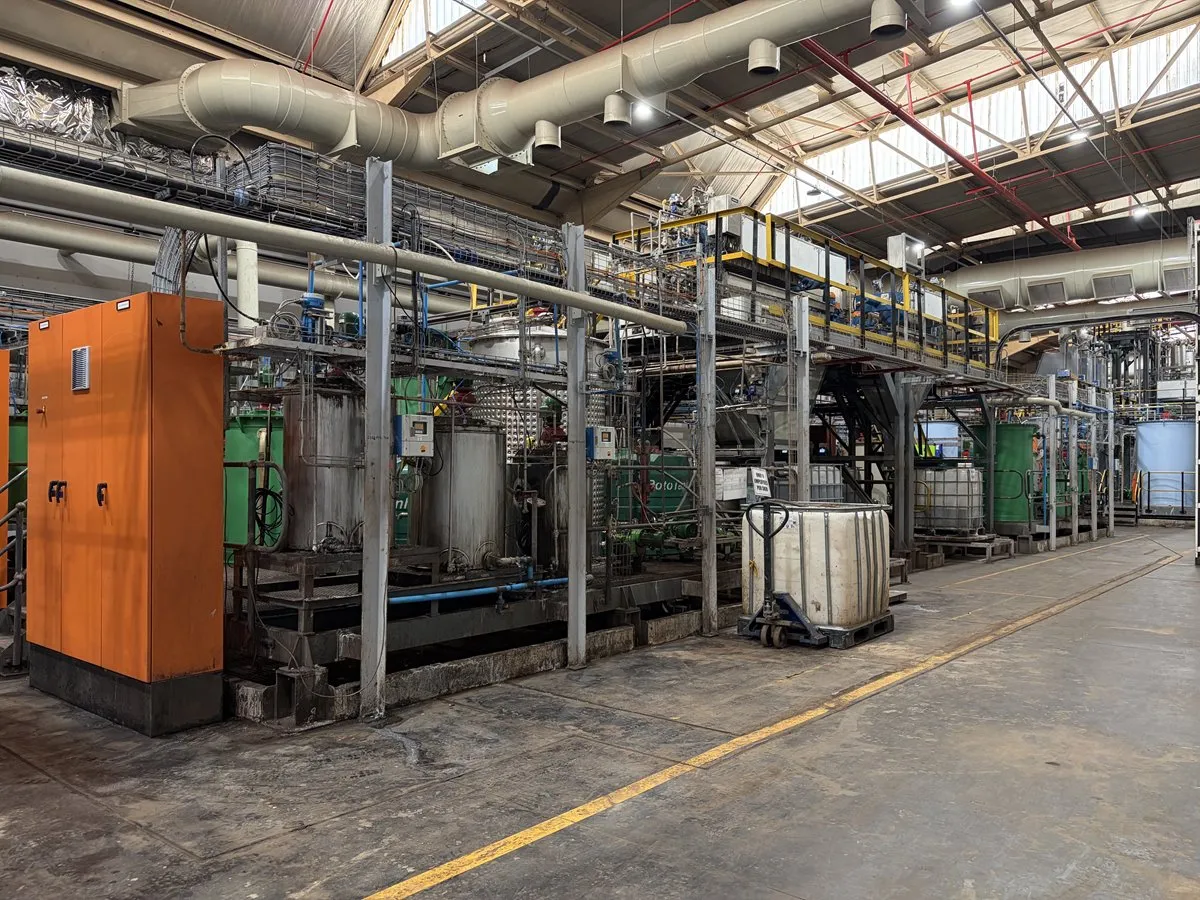
A key differentiator for Giyani has been its investment in a demonstration plant in Johannesburg, South Africa, which has operated for approximately 12 months and enabled the company to test its processing flowsheet at near-commercial scale.
.webp?language=en "Strategic partnerships drive Giyani’s path - Pipe")
The facility produced around seven tonnes of high-purity manganese oxide (HPMO) and high-purity manganese sulphate monohydrate (HPMSM), both of which have been supplied to potential customers for qualification testing.
Robertson said the demonstration plant played a critical role in validating the process ahead of full-scale development. "The project is probably only 10% to 15% mining. The rest is process-driven," he explained. "We needed to test the process at a meaningful scale to ensure it performs as expected and to de-risk future investment in the commercial plant."
Positioning for the EV supply chain
Unlike traditional manganese producers focused on steel and ferroalloy markets, Giyani has positioned itself within the rapidly growing battery materials sector. Robertson notes that while manganese is widely mined across Africa and Australia, China currently dominates approximately 95% of global high-purity manganese processing capacity. "The opportunity lies in beneficiation," he explains. "The raw material exists in many places, but most of the value is created through processing. That's where we believe Giyani can play an important role."
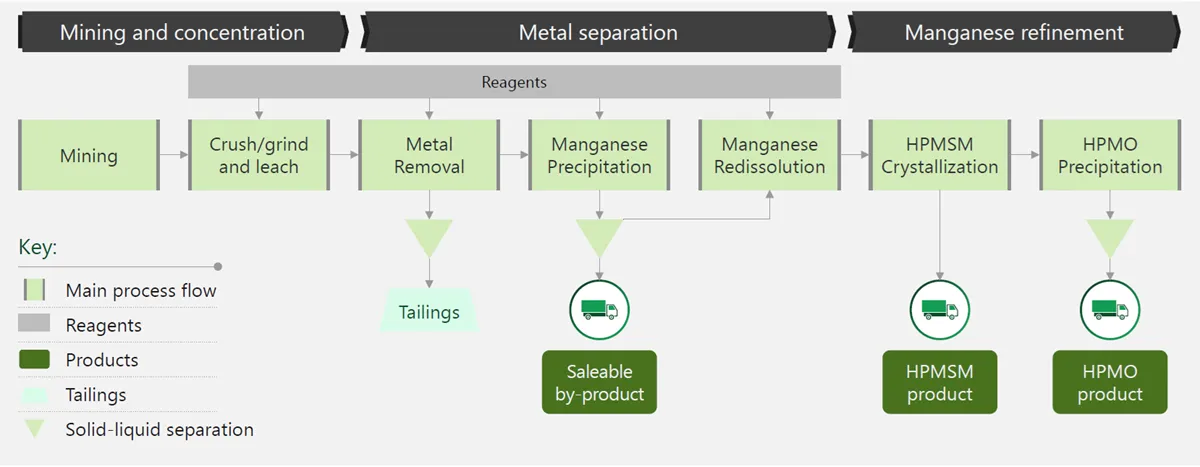
The company believes HPMSM, a key battery precursor material, will become increasingly important as battery manufacturers seek lower-cost chemistries with higher manganese content. It is is currently engaging with battery manufacturers, precursor cathode active material (PCAM) producers and automotive OEMs across Europe and North America as it seeks to secure long-term offtake agreements.
Focus shifts to offtake and financing
With the DFS complete, Giyani's immediate priorities include securing customer commitments, advancing front-end engineering design (FEED) work and selecting engineering, procurement and construction management (EPCM) partners.
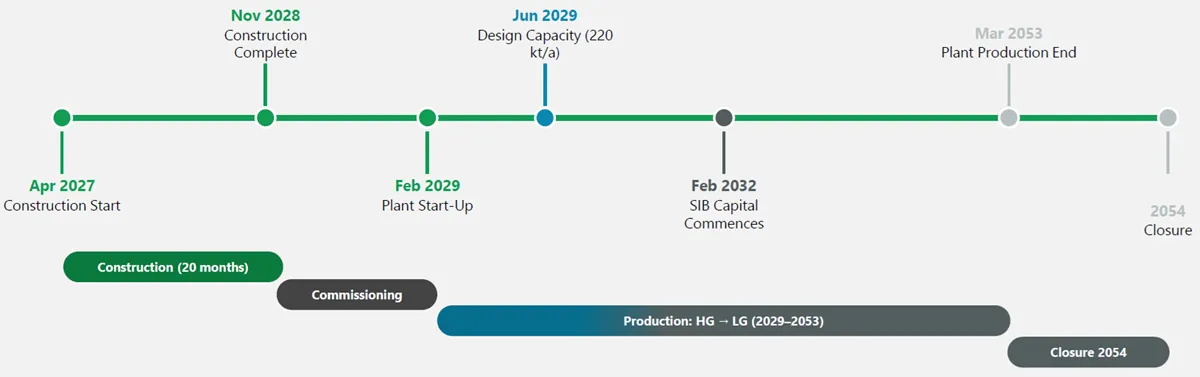
Robertson says obtaining an offtake agreement would represent a major milestone for the project. "In this market, you can't simply produce material and sell it through an exchange. You need qualified customers and long-term offtake agreements." The company is also evaluating opportunities to optimise the project design and potentially reduce capital costs through further engineering studies. Current development plans target the start of construction in April 2027, followed by an 18-month build programme and first production in 2029.
Botswana infrastructure supports development
While Botswana's landlocked position creates logistical challenges for importing reagents and exporting finished products, Robertson said the K.Hill project benefits from relatively strong infrastructure foundations.
Additional investment will be required to enhance power and water supply, while renewable energy solutions, including solar generation, have been incorporated into the DFS as part of the project's sustainability strategy.
Building an African battery materials future
Looking beyond K.Hill, Robertson believes Africa has an opportunity to play a much larger role in global battery supply chains through beneficiation and downstream processing. "There is no reason why Africa, Europe and North America cannot develop competitive supply chains for critical minerals," states Robertson. "The continent has the resources, and increasingly there is recognition that more value should be captured through local beneficiation rather than exporting raw materials."
As governments and industry seek to diversify critical mineral supply chains away from China, Giyani is aiming to position Botswana as a future supplier of battery-grade manganese products to global electric vehicle markets. If successful, K.Hill could become one of Africa's first integrated producers of high-purity manganese materials specifically designed for the rapidly expanding battery sector.
Market News
Related articles
Articles
Monday, September 21, 2026
Zambia’s Konkola reopens Chingola copper mine after 18-year shutdown
Restart of historic mine adds momentum to Zambia’s push to more than triple copper production by 2031.

Articles
Thursday, September 17, 2026
What does the BRICS summit mean for Africa’s mining value chains?
The BRICS summit has sharpened the race to secure critical minerals – but for Africa, the bigger opportunity is capturing more of the value created after extraction.

Articles
Wednesday, September 16, 2026
What does Dangote’s refinery mean for Africa’s mining ambitions?
The value of a resource can change dramatically when processing, capital and ownership move closer to the point of production.








-ltd-a325b1d3-6414-476b-9b7e-20c2285d5a51.webp?language=en)

-Primary-Logo.webp?language=en)