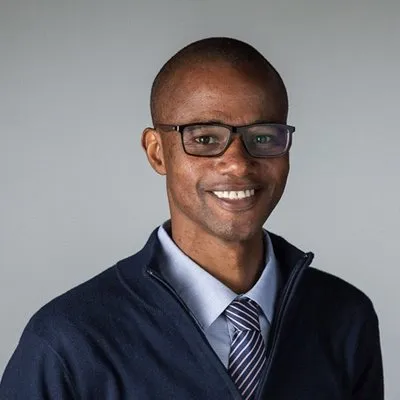
Driving sustainable investment in African Mining

Bady Baldé

Deputy Executive Director EITI International Secretariat

Bady Baldé has served as Deputy Executive Director of the EITI since 2020, leading a global team that supports the implementation of the EITI Standard across all member countries. As a member of the senior management team, he oversees financial management and guides global policy development on key issues such as transparency in commodity trading, state-owned enterprises (SOEs), artisanal and small-scale mining (ASM), and public financial management (PFM). He has over 20 years of experience in public financial management, international development, and government policy in the energy, mining, oil, and gas sectors. Prior to joining the EITI in 2010, Bady worked with the World Bank, the Central Bank of Guinea, and the German development cooperation agency (GIZ). From 2012 to 2013, he took a two-year sabbatical to work with the African Development Bank. Bady has held several board and advisory roles and currently serves on the Board of the Global Battery Alliance, the Sustainability Committee of Mining Indaba, promoting responsible investment in Africa, and the Stakeholder Advisory Group for the Consolidated Mining Standard, a joint initiative of the International Council on Mining and Metals (ICMM), the World Gold Council, Copper Mark, and Towards Sustainable Mining (TSM).

2026 Agenda Sessions

What lessons can we learn from Guinea’s use of partnerships in realising its iron ore potential?

Guinea holds some of the largest untapped high-grade iron ore reserves in the world, particularly in the Simandou range, a deposit that has long been seen as a game-changer for the global steel industry and for West Africa’s economic future. But unlocking this potential has proven complex, with decades of delays, geopolitical entanglements, infrastructure challenges, and shifting global demand. This session will examine lessons learnt, the power of partnerships, and what lessons can be extrapolated?

Tuesday 10 February 15:45 - 16:30 Ngorongoro Crater Stage (CTICC1 - Level 2)

Add to calendar 02/10/2026 15:45 02/10/2026 16:30 What lessons can we learn from Guinea’s use of partnerships in realising its iron ore potential?

Guinea holds some of the largest untapped high-grade iron ore reserves in the world, particularly in the Simandou range, a deposit that has long been seen as a game-changer for the global steel industry and for West Africa’s economic future. But unlocking this potential has proven complex, with decades of delays, geopolitical entanglements, infrastructure challenges, and shifting global demand. This session will examine lessons learnt, the power of partnerships, and what lessons can be extrapolated?

Ngorongoro Crater Stage (CTICC1 - Level 2) Africa/Johannesburg

WHAT IF partnerships could finally deliver a global standard CEOs truly trust?

This session pressure tests the Consolidated Mining Standard Initiative (CMSI) – led by four partners: the Copper Mark, ICMM, the Mining Association of Canada and the World Gold Council – as it combines their existing standards into a single framework with an assurance process and claims policy shaped by two rounds of public consultation. We’ll examine what this could mean for board level risk, audit burden, market access and cost of capital, and how its governance model formalises balanced oversight from mine site to value chain. Senior voices from industry, civil society and downstream will debate pragmatic adoption pathways in Africa and beyond – including how alignment on claims and site level implementation can unlock permitting confidence, offtake optionality and investor trust. 

Wednesday 11 February 10:40 - 11:40 Table Mountain Stage (CTICC1 - Ground Floor - Exhibition Hall)

Add to calendar 02/11/2026 10:40 02/11/2026 11:40 WHAT IF partnerships could finally deliver a global standard CEOs truly trust? This session pressure tests the Consolidated Mining Standard Initiative (CMSI) – led by four partners: the Copper Mark, ICMM, the Mining Association of Canada and the World Gold Council – as it combines their existing standards into a single framework with an assurance process and claims policy shaped by two rounds of public consultation. We’ll examine what this could mean for board level risk, audit burden, market access and cost of capital, and how its governance model formalises balanced oversight from mine site to value chain. Senior voices from industry, civil society and downstream will debate pragmatic adoption pathways in Africa and beyond – including how alignment on claims and site level implementation can unlock permitting confidence, offtake optionality and investor trust.  Table Mountain Stage (CTICC1 - Ground Floor - Exhibition Hall) Africa/Johannesburg

Can Africa’s battery minerals market keep pace with technology shifts and global tensions?

Battery mineral markets are complex and ever changing. In a world where technological advancement can make a mineral no longer needed for a battery and geopolitical volatility can cause nations to rethink the immediate needs of the next energy transition, how can you know what mineral to invest in, and does this pose an existential threat to Africa’s critical minerals market?

Wednesday 11 February 14:35 - 15:20 Ngorongoro Crater Stage (CTICC1 - Level 2)

Add to calendar 02/11/2026 14:35 02/11/2026 15:20 Can Africa’s battery minerals market keep pace with technology shifts and global tensions?

Battery mineral markets are complex and ever changing. In a world where technological advancement can make a mineral no longer needed for a battery and geopolitical volatility can cause nations to rethink the immediate needs of the next energy transition, how can you know what mineral to invest in, and does this pose an existential threat to Africa’s critical minerals market?

Ngorongoro Crater Stage (CTICC1 - Level 2) Africa/Johannesburg