News & Media
Botswana and Ghana lead Africa’s shift from extraction to economic ownership
Wednesday, January 14, 2026
- Botswana’s approach embeds ownership and value capture for citizens through equity and beneficiation requirements, signalling a move beyond traditional resource export models.
- Ghana’s reforms focus on accountability and revenue sharing with host communities, addressing historical concerns about mining benefits bypassing local economies.
Across Africa, mining policy is undergoing a profound shift - from simple extraction of raw materials for export to proactive strategies designed to create economic value within national borders. Two leading examples of this trend are Botswana and Ghana, whose recent reforms and strategic policy choices are reshaping how mining contributes to domestic development rather than serving merely as a conduit for foreign investment.
For decades, Africa’s mining sector has been dominated by foreign companies that extract resources with limited local participation or value addition. But policymakers in several African capitals are now deliberately rebalancing the relationship between international capital and national benefit, encouraging local ownership, beneficiation, and downstream investment. Botswana and Ghana stand out as case studies in this emerging continental agenda.
In Botswana, a country long known for its diamond wealth, the government is laying legal and institutional groundwork to ensure a greater share of mining proceeds stays at home. In October 2025, the Mines and Minerals (Amendment) Act No. 14 of 2024 came into force, introducing a requirement that mining companies offer a 24 % stake in new mining concessions to local investors if the State decides not to exercise its own interest. This is a significant recalibration of policy: previously, the government had the discretionary right to acquire just a 15 % share.
This shift reflects Botswana’s determination to deepen national participation in mineral wealth. As one policy analyst noted, it signals “an economic evolution from raw export dependency toward integrated growth within the domestic economy,” tightening the alignment between mining and broader development objectives. While this requirement retains flexibility to accommodate investment flows, it underscored a new local empowerment ethos in Botswana’s mineral governance.
The government has also paired ownership reforms with other provisions aimed at encouraging value addition inside Botswana. These include expectations for beneficiation where feasible, environmental rehabilitation funds sourced from domestic institutions, and measures to strengthen governance and compliance in mining operations.
Ghana, Africa’s top gold producer, is pursuing parallel reforms targeted at tightening accountability and rooting mining benefits more visibly in local economies. In late 2025, the country announced a comprehensive overhaul of its mining law, the most far-reaching revision in nearly 20 years, designed to shift how revenues are shared and how licenses are structured.
Under the new framework, mining licenses will be time-bound with renewals contingent on environmental, social, and production performance, replacing open-ended permits. Additionally, revenue that was once centralised will now be redistributed through fixed-percentage flows to host communities, ensuring that local economies tangibly benefit from mining activity.
As one Ghanaian mining official remarked, “We are anchoring mining benefits more visibly in local economies, tightening accountability and ensuring stronger local participation in the gains from mineral wealth.” This quote underscores the logic behind the reforms: mining is no longer just about resource extraction but about **shared prosperity and broad-based development. Ghana also continues to enforce its local content law that prescribes ownership thresholds for surface and underground mining activities, ensuring that Ghanaian entities play a meaningful role in the sector.
Both Botswana and Ghana illustrate how African countries are reasserting control over their mineral assets and redefining mining as a catalyst for national industrialisation, job creation, and economic diversification. By focusing inward, on local participation, value addition, and equitable benefit sharing - they are carving out a new African mining agenda that is equitable, sustainable, and strategically aligned with long-term development goals.
HAVE YOU DOWNLOADED ISSUE 3 OF THE DIGITAL MINING PULSE?
Market News
Industrialisation
Infrastructure
Related articles
Articles
Thursday, September 17, 2026
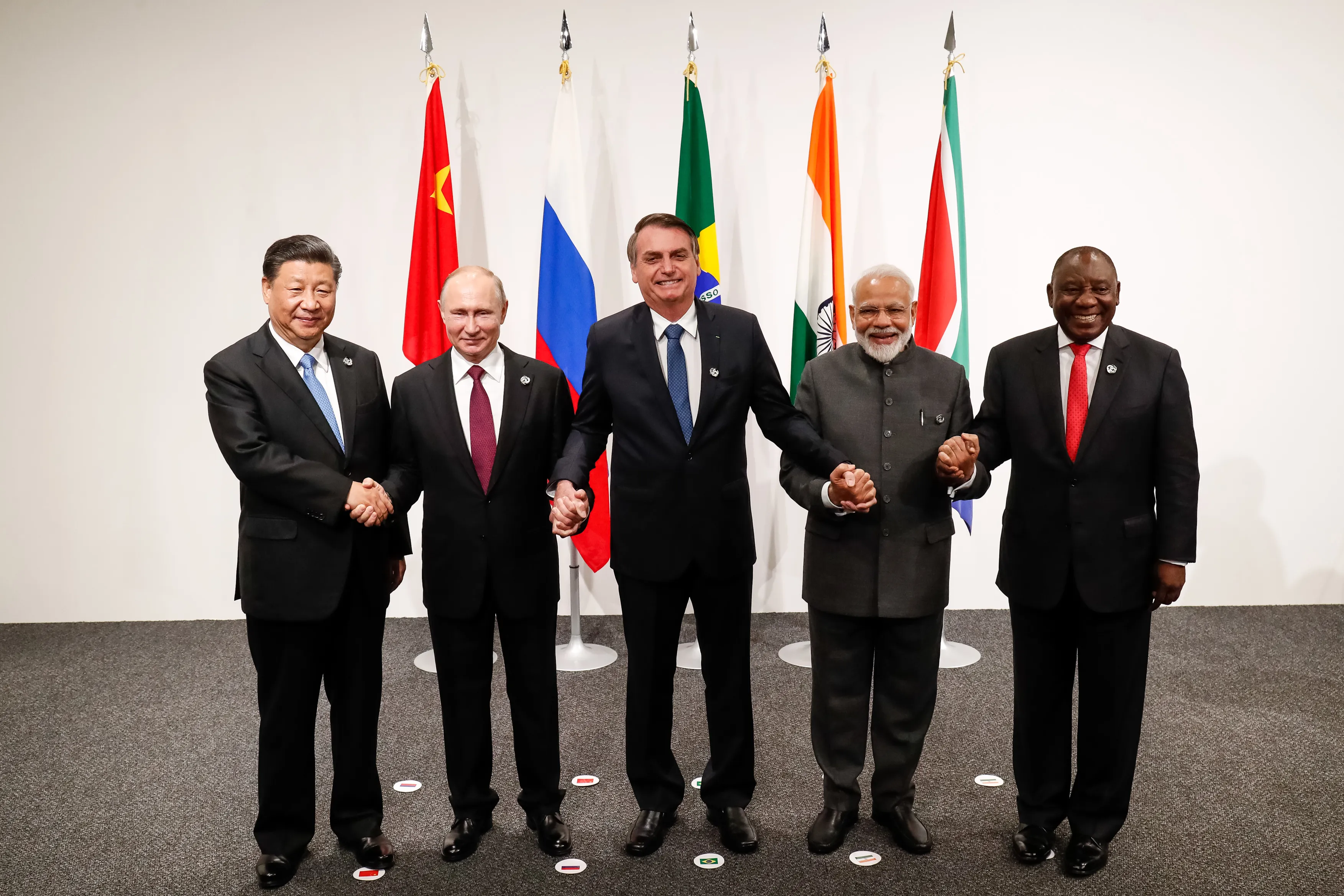
What does the BRICS summit mean for Africa’s mining value chains?
The BRICS summit has sharpened the race to secure critical minerals – but for Africa, the bigger opportunity is capturing more of the value created after extraction.

MITV ( Onsite)
Wednesday, February 18, 2026
How Public–Private Collaboration is Securing Water for Communities and Mining
In this Mining Indaba TV interview, Dr Sean Phillips, Director-General of the Department of Water and Sanitation, and Dr Kobus Duvenhage, CEO of the Badirammogo Water User Association (BWUA), reveal how innovative public–private partnerships are transforming water infrastructure delivery in

Wednesday, November 12, 2025
Africa’s Critical Minerals: the decade that will define global power
As the US–China rivalry deepens, Africa’s mineral wealth is emerging as both opportunity and leverage. The next ten years will determine whether the continent remains a source of raw materials - or becomes an industrial power in its own right.









-ltd-a325b1d3-6414-476b-9b7e-20c2285d5a51.webp?language=en)

-Primary-Logo.webp?language=en)