News & Media
Featured
Championing the cause of women in mining
Gerard Peter
Wednesday, June 11, 2025
What's in this article
In 2020, Minerals Council South Africa introduced its Women in Mining programme. The aim is to identify the systemic barriers that are in place that specifically preclude women from fully participating in mining and advocate for the increased participation of women in the sector.
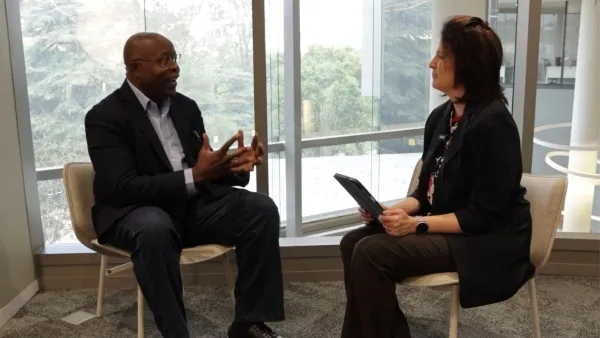
Gerard Peter finds out more from Boitumelo Nkomo, Women in Mining Project Specialist.
“We work with our members to collaboratively develop and implement strategies that drive transformation in mining so that we can ensure a diverse, equitable and inclusive sector. We also make sure that these initiatives are sustainable so that we can tap into the human capital that is available based on the country’s demographics. The spirit behind collaboration is to amplify the transformation of the mining industry at a faster rate,” Nkomo states.
The work that the Minerals Council does is in line with the South African regulatory policies as well as international organisations such as the International Council on Mining and Metals (ICMM) and the International Labour Organisation’s (ILO’s) Decent Work programme. The latter aims to create opportunities for work that is productive and delivers a fair income, security in the workplace and social protection for all, better prospects for personal development and social integration. It also aims to allow freedom for people to express their concerns, organise and participate in the decisions that affect their lives and equality of opportunity and treatment for all women and men.
To address the challenges that women face, the Minerals Council put foundational measures in place. “Each of the foundational measures dealt with a specific objective. The main challenges that are faced include gender-based violence (GBV), the built physical environment that does not cater to women’s needs, PPE and unconscious bias in the workplace that hinder women’s progression at the different occupational levels, thereby negatively contributing to their experience in the workplace,” Nkomo adds.
She states that, thus far, the Women in Mining initiative has been successful in amplifying the voices of women and getting the sector to understand their challenges and put programmes and measures in place to empower women. One of the initiatives that the Minerals Council has implemented is an unconscious bias booklet. “This is a tool that our members use to increase the awareness of biases that may exist, which negatively impact women within an organisation,” Nkomo states.
Addressing GBV
GBV is an ongoing concern in South Africa, and often victims feel helpless when subjected to this crime. To that end, the Minerals Council has implemented an annual 16 Days of Activism campaign. Nkomo elaborates: “The campaign has gained a lot of traction as we educate people on what GBV is and how it manifests. We also make them aware of their rights and how to get assistance both inside and outside the workplace.
“Furthermore, in 2022 we set up a national partnership with the NPA and the GBV Response Fund to assist victims who go to Thuthuzela Care Centres for help. These centres provide support in the form of medical care, counselling, legal advice and police assistance.”
The organisation has also developed a Gender Diversity and Inclusion (GDI) portal where members submit data on, amongst other, GBV-related cases. This allows the Minerals Council to identify where challenges persist and what needs to be addressed from a policy perspective.
Another major concern is bullying and harassment in the workplace. According to Nkomo, this can only be remedied if the correct policies are in place. “In 2023, South Africa became a signatory to the ILO Convention 190. After that, we amended our code of good practice on the elimination of bullying and harassment. Since then, we have been on a drive to make members aware of what is contained in the code of good practice. This has increased the obligation on the employer to deal with instances of bullying and harassment in the workplace.”
In addition, the Mine Health and Safety Council has also released guidelines for the management of GBV and workplace bullying and harassment. “We’ve been working closely with our members to support them and get them to understand what is contained in those guidelines as well as the roles of all employees in eradicating these issues. Most of our members have completed their implementation plans and have submitted them to the Mine Health and Safety Council and the Department of Mineral Resources and Energy (DMRE),” Nkomo states.
While GBV mostly affects women and children, men are also victims. It is for this reason that the Women in Mining programme has been redefined to incorporate males into its initiatives. “We cannot fight GBV in a vacuum. We need to include the male voice so that the awareness is across the board of what is acceptable behaviour and what is unacceptable and intolerable behaviour in the workplace,” Nkomo states.
She adds that there has been significant progress in providing opportunities for women in mining. “When we started the Women in Mining programme, female representation in the sector was 12%. This has since increased to between 16 and 19%. There has also been a realisation that there’s an opportunity to accelerate the progress.
“As part of the redefining process of our strategy, we have engaged CEOs and executive leadership of our member companies. They have said that there is a need for more visible leadership and have committed to integrating our objectives into company strategies and operational practices. As part of our new strategy, we have added inclusive and accountable leadership. From that perspective, you can see that there is a commitment from leaders to drive transformation within their companies,” she concludes.
RELATED: The unlikely collaborations
Communities
Downstream Buyers
Exploration & Junior Mining Companies
Investors
Major & Mid-Tier Mining Companies
Mining Service Providers
NextGen
Governments
Communities
Energy
Investment
Leadership
Sustainability
Market News
Related articles
.webp?language=en)
Articles
Thursday, May 25, 2023
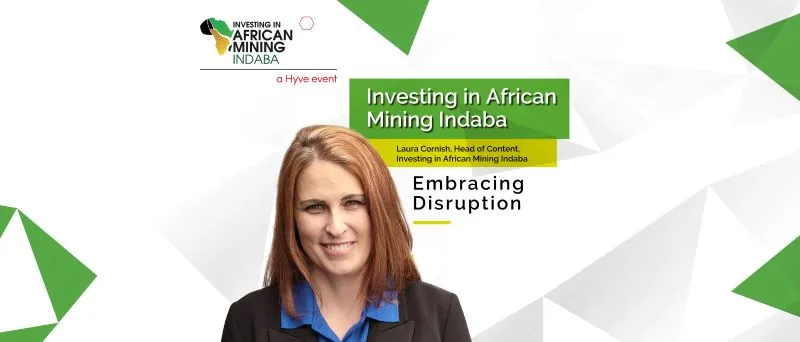
Embracing Disruption
In celebration of the Investing in African Mining Indaba’s 30th birthday, Laura Cornish spoke to Craig Sisterson about how the event is evolving to ensure it meets the needs of a sector that is undergoing significant change.
Digital Diaries
Wednesday, November 5, 2025
Digital Diary - Ben Magara, CEO of Exxaro Resources
In this exclusive conversation with Ben Magara, CEO of Exxaro Resources, our Product Director, Laura Nicholson, discusses Exxaro’s growth and diversification into manganese and renewable energy.
Wednesday, November 12, 2025
Africa’s Critical Minerals: the decade that will define global power
As the US–China rivalry deepens, Africa’s mineral wealth is emerging as both opportunity and leverage. The next ten years will determine whether the continent remains a source of raw materials - or becomes an industrial power in its own right.


-ltd-a325b1d3-6414-476b-9b7e-20c2285d5a51.webp?language=en)

-Primary-Logo.webp?language=en)