News & Media
Featured
Coal mining, leadership and the next chapter for zero harm
Wednesday, March 18, 2026
What's in this article
That was the message from Mike Teke, chief executive of Seriti Resources, speaking during a leadership interview with MITV on the evolving safety landscape in coal mining at the Investing in African Mining Indaba 2026.
Under the theme “Coal mining, leadership and the next chapter for Zero Harm,” Teke argued that the industry’s safety gains must now be consolidated through stronger leadership accountability and consistent safety culture on mine sites. “The progress the mining industry has made on safety shows what is possible when leadership commits to Zero Harm.”
South Africa’s mining sector has seen a steady decline in fatalities over the past two decades as companies implemented stricter safety standards, improved training and invested in better operational controls. However, Teke cautioned that maintaining momentum requires continuous engagement from senior leadership. According to Teke, safety performance ultimately reflects the tone set at the top of mining organisations. “Leadership sets the tone, when leaders live the safety culture, the workforce follows.”
For coal mining companies operating large underground and opencast operations, the challenge is embedding safety as a daily operational discipline, rather than treating it as a compliance exercise. Teke said the next stage of the industry’s safety journey will rely heavily on structured systems that focus on managing the highest-risk activities on mines. “Strong systems and critical controls are essential if we want to eliminate the highest-risk events in mining.”
Across the global mining industry, companies are increasingly adopting critical control management frameworks, digital monitoring tools and real-time safety data to better identify hazards before incidents occur. Teke said these approaches are becoming increasingly important as mines grow more complex and production environments become more technologically advanced. Another major shift in the safety landscape has been the growing willingness of mining companies to share lessons and best practices across the industry.
Historically, safety knowledge was often confined within individual companies. Today, industry forums and collaborative platforms are helping to accelerate learning between mining houses. “The industry is learning faster because companies are sharing what works.” The coal sector has been active in participating in industry safety initiatives aimed at reducing serious injuries and fatalities. Teke said the sector’s experience demonstrates how cooperation between mining companies, labour and regulators can drive sustained improvements in safety performance. “Coal mining’s experience with safety improvements can guide other commodities.”
Looking ahead, Teke said the industry’s ambition of Zero Harm will depend not only on technology and systems, but also on maintaining a strong culture of accountability at every level of the organisation. For mining leaders, he said, the challenge is ensuring that safety remains the priority even as companies face increasing pressure to boost productivity, manage energy transitions and meet rising demand for resources.
“The next chapter of Zero Harm,” Teke concluded, “will be written by leaders who are prepared to make safety the foundation of every decision they take.” For coal producers like Seriti Resources, that commitment is likely to remain central as the sector navigates both operational risks and the broader transformation of the global energy system.
Speaking in the same discussion was Dushendra Naidoo, head of safety and sustainable development at the Minerals Council South Africa, who said the next phase of South Africa’s mining safety journey will depend on stronger leadership engagement, improved data-driven systems and deeper collaboration across the industry. Naidoo said the industry has made notable progress in reducing fatalities and serious injuries but must now focus on embedding safety practices more consistently across mine sites. “Zero Harm must be reinforced as a non-negotiable standard across the industry.”
South Africa’s mining sector has recorded steady improvements in safety outcomes over the past three decades, with fatalities falling dramatically as companies introduced stronger operational controls, improved training and shared safety learnings. However, Naidoo said progress will only be sustained if companies maintain strong leadership visibility and accountability for safety performance.
According to Naidoo, leadership engagement, particularly at executive level, plays a decisive role in translating safety strategies into operational reality. “Safety leadership must be visible and felt at every level of the organisation.” He pointed to the importance of initiatives such as the industry-wide Khumbul’ekhaya safety strategy, which focuses on leadership accountability, operational discipline and worker wellbeing.
The programme, whose name means “remember home” in isiZulu, emphasises that every worker should return home safely after each shift. “It is a solemn promise that every mineworker must return home safely.” Naidoo said the renewed Khumbul’ekhaya 2.0 strategy places stronger emphasis on collaboration between companies and the use of data to identify emerging risks before incidents occur.
Central to the approach is the growing adoption of critical control management frameworks, which focus on identifying and managing the highest-risk hazards in mining operations. “Data-driven safety systems allow us to identify risk earlier and intervene sooner.” Another key priority for the industry, Naidoo said, is strengthening cross-company learning so that lessons from incidents or near-misses are rapidly shared across the sector.
South Africa’s mining industry already operates several collaborative platforms where companies exchange insights on safety performance, operational controls and best practice interventions.These forums, often led through the Minerals Council South Africa, are designed to ensure that knowledge gained from incidents is used to prevent similar events elsewhere in the industry.
Naidoo said the coal sector’s experience demonstrates the value of these partnerships. “Industry collaboration is one of the most powerful tools we have to accelerate safety improvement.”
Looking ahead, Naidoo argued that achieving Zero Harm will require a combination of leadership accountability, stronger safety systems and a culture where workers feel empowered to raise concerns and participate in risk management. For the mining industry, he said, the challenge is maintaining safety progress while operations become increasingly complex and technologically advanced.
“The journey towards Zero Harm,” Naidoo said, “requires every leader, every company and every worker to take shared responsibility for safety.” As the sector navigates changing operational and economic pressures, Naidoo added that sustaining safety gains will remain a defining test of leadership across the global mining industry.
WATCH THEIR MITV INTERVIEW
Event News
Related articles
Digital Diaries
Friday, August 21, 2026
Inside the Kabanga Nickel Project with Lifezone Metals CFO Ingo Hofmaier
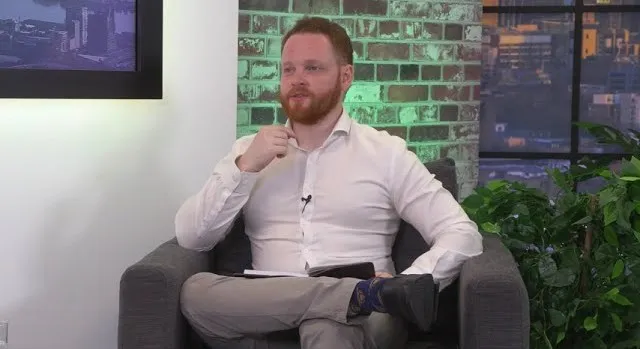
In this Mining Indaba interview, Connel Rogers, Senior Content Manager at Mining Indaba, sits down with Ingo Hofmaier, CFO of Lifezone Metals, to explore the story behind Kabanga, Lifezone Metals’ flagship nickel project in Tanzania, and the partnerships that have been key to its success.
PR Releases
Thursday, June 4, 2026
Mining Indaba unveils 2026 theme
‘Stronger Together: Progress through partnerships’
Articles
Tuesday, April 14, 2026
A Bold New Chapter for Mining Indaba
A refreshed identity that reflects our evolving role in connecting the industry, shaping progress, and driving lasting change.








-ltd-a325b1d3-6414-476b-9b7e-20c2285d5a51.webp?language=en)

-Primary-Logo.webp?language=en)