News & Media
Featured
Exceptional stones drive Gem Diamonds Q1/2026 revenue
Thursday, May 21, 2026
What's in this article
Highlights:
- Letšeng’s first production export of the year comprised 16 727 carats that were sold during Q1/2026, achieving a dollar per carat of US$1 501
- Post Export 1, an additional parcel of 10 larger than 10.80 carat diamonds totalling 363 carats (including a 191.82 carat Type IIa white diamond) from the next production period was exported and sold in the period, generating revenue of US$7.0 million. The remaining carats from this production period, which would typically have been sold in the period, will be sold in Q2/2026
- Total revenue achieved in the period, including the additional parcel of 10 diamonds amounted to US$32.1 million
- Two +100 carat diamonds were recovered in the period; a 100.71 carat Type I faint yellow diamond that will be sold in Q2 and the 191.82 carat diamond
- The highest price achieved in the period was US$32 908 per carat for a 52.24 carat white diamond
- Four diamonds sold for more than US$1 million each, generating aggregate revenue of US$9.9 million during the period
- All operational and financial metrics, including carats sold, are trending within issued guidance for 2026
Gem Diamonds delivered a resilient first-quarter performance in 2026, generating $32.1 million in revenue as exceptional large diamonds from its flagship Letšeng mine continued to command premium prices despite persistent weakness across the broader global diamond sector.
The Africa-focused miner said its first export sale for the quarter totalled 16,727 carats at an average price of $1,501 per carat, a 17% increase on the previous quarter, underlining the sustained demand for rare, high-quality stones even as mid-market polished diamond prices remain under pressure. A further parcel of 10 diamonds larger than 10.8 carats, including a 191.82-carat Type IIa white diamond, generated an additional $7 million in revenue during the period.
“Large exceptional diamonds continue to underpin Letšeng’s value proposition,” the company said, noting that four stones sold for more than $1 million each, contributing a combined $9.9 million in revenue. The highest price achieved during the quarter was $32,908 per carat for a 52.24-carat white diamond.
Rare diamonds remain Letšeng’s competitive edge
Analysts say the results reinforce Letšeng’s position as one of the world’s premier producers of high-value large diamonds at a time when much of the global diamond industry continues to grapple with weaker consumer demand, lab-grown diamond competition and softer luxury spending in key markets such as China and the United States.
Independent diamond analyst Paul Zimnisky has previously noted that “top-quality large natural diamonds remain among the most resilient segments of the market,” as wealthy collectors and luxury buyers continue to prioritise rarity and provenance.
The recovery of two stones larger than 100 carats during the quarter, including a 100.71-carat faint yellow Type I diamond and the 191.82-carat white diamond, further strengthened investor confidence that Letšeng’s ore body continues to deliver exceptional recoveries. Mining investors also viewed the pricing performance positively given broader industry conditions. Luxury goods and mining investor Anish Aggarwal said operations capable of consistently producing rare stones remain better insulated from cyclical downturns. “High-quality large diamonds continue to attract a scarcity premium even during softer market cycles. Producers with unique assets like Letšeng are structurally differentiated from volume-based producers,” he said.
Production mix weighs on volumes
Operationally, the quarter reflected a planned shift toward mining the lower-grade main pipe at Letšeng, reducing the contribution from the higher-value satellite pipe. Ore treated declined 3% q-o-q to 1.33 Mt, while waste stripping increased significantly to 70,943 t from 48,304 t in the previous quarter. Although total carats recovered increased 3% to 21,605 carats, carats sold fell 21% to 16,727 carats as part of the production was deferred into the second quarter.
The company said all operational and financial metrics remain on track to meet full-year 2026 guidance. CEO Clifford Elphick has consistently maintained that Letšeng’s long-term strategy centres on maximising value recovery rather than production volumes, with the mine historically renowned for producing some of the world’s highest dollar-per-carat diamonds.
African diamond sector navigating structural shifts
Gem Diamonds’ latest performance comes as African diamond producers navigate a rapidly evolving global market shaped by changing consumer behaviour, synthetic diamond growth and supply chain restructuring.
While major producers including De Beers Group and Lucara Diamond Corp. continue to focus on premium natural stones and traceability, investors remain increasingly selective about assets capable of generating consistent margins through market volatility. For southern African producers, the continued appetite for rare natural diamonds is increasingly viewed as a strategic differentiator.
Industry observers say Letšeng’s ability to regularly recover large Type IIa stones, among the purest and most valuable diamonds globally, continues to position the mine as one of Africa’s most strategically important premium diamond assets.
RELATED:
Ensuring the Survival of the Diamond Industry | MITV
Market News
Related articles

Articles
Wednesday, September 30, 2026
Rainbow Rare Earths advances Phalaborwa towards PFS with Neo partnership
Rainbow Rare Earths is moving its Phalaborwa project closer to development after securing Neo Performance Materials as a technology and offtake partner.
Articles
Tuesday, September 29, 2026
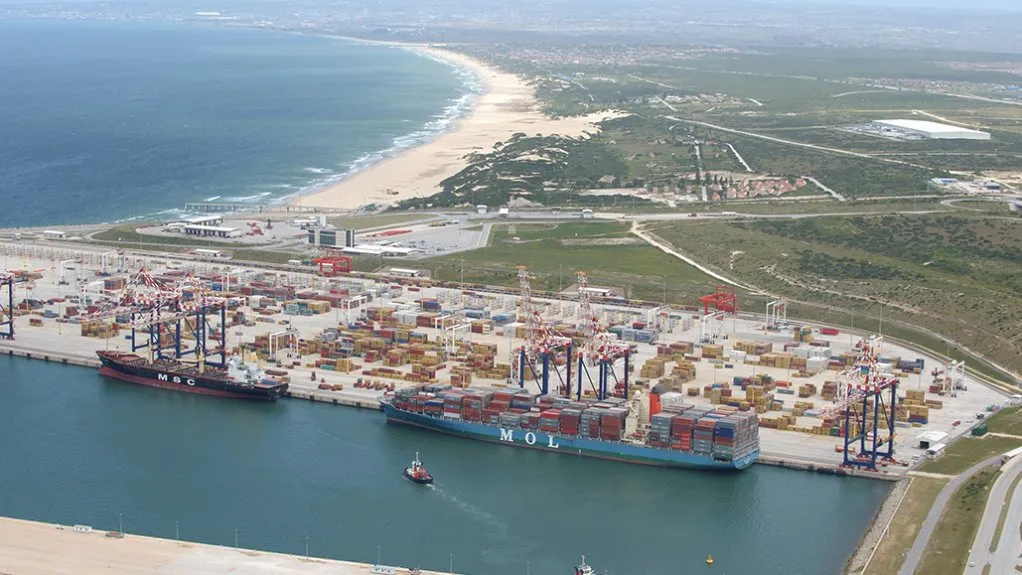
South Africa puts $2.7 billion manganese corridor on the market
Transnet has launched the next stage of its plan to consolidate South Africa’s manganese exports through Ngqura.

Articles
Tuesday, September 29, 2026
Glencore deepens US critical minerals ties with $500m EXIM-backed VaultCo deal
Glencore's VaultCo agreement comes against a broader expansion of US engagement with its African critical-minerals portfolio.












-ltd-a325b1d3-6414-476b-9b7e-20c2285d5a51.webp?language=en)


-Primary-Logo.webp?language=en)