News & Media
Featured
From G20 momentum to Africa’s minerals future: all roads lead to Mining Indaba 2026
Monday, November 24, 2025
What's in this article
- 1.Minister Mantashe sets the tone: “The world is changing fast, and Africa must act as a team”
- 2.A G20 framework with a distinctly African imprint
- 3.Anglo American: “Reconfiguring supply chains will require more than bilateral deals”
- 4.Ahunna Eziakonwa (UNDP): “For whom are these minerals considered ‘critical’?”
On 18 November 2025, the Department of Minerals and Petroleum Resources (DMPR), in partnership with UNDP and Mining Indaba, hosted a high-level dialogue in Johannesburg. The event brought together CEOs, development partners, and key stakeholders across the mineral value chain. Framed under the theme “Harnessing Critical Minerals for Inclusive Growth and Sustainable Development,” the dialogue set the tone for a week of intense discussions on Africa’s mineral sovereignty, the future of its value chains, and the continent’s competitiveness in a rapidly evolving global minerals economy.
Minister Mantashe sets the tone: “The world is changing fast, and Africa must act as a team”
South Africa’s Minister of Minerals and Petroleum Resources, Hon. Gwede Mantashe, delivered one of his most forceful speeches yet on Africa’s position within the fast-moving global minerals race. “The global economy is undergoing a profound structural shift,” he declared. “Critical minerals now lie at the centre of geopolitics and industrial policy — and if managed well, this demand can be a game-changer against global inequality.”
Mantashe reminded delegates that Africa holds no less than 30% of the world’s known reserves of strategic minerals - PGMs, manganese, iron ore, chrome, cobalt, lithium, graphite and rare earths. Yet the continent continues to export ore in its rawest form, only to import processed products at far higher cost.
“We cannot continue along pit-to-port models,” he warned, echoing the 2026 Mining Indaba theme, “Stronger Together, Progress Through Partnerships.”
“Africa must act as a team if we want to move up the value chain.”
A G20 framework with a distinctly African imprint
Under South Africa’s leadership, the G20 adopted a Critical Minerals Framework, marking one of the clearest moments in which African priorities shaped global mineral governance.
Structured around six pillars — exploration financing, governance and standards, value addition, resilient supply chains, innovation and circularity, and skills development — the framework aims to reposition Africa as a partner in manufacturing and green industrialisation, rather than a mere raw-materials source.
A highlight was South Africa’s presentation of its Junior Mining Exploration Fund, designed to de-risk early-stage exploration and stimulate new discoveries across the continent.
Anglo American: “Reconfiguring supply chains will require more than bilateral deals”
In an anticipated fireside chat, Duncan Wanblad, CEO of Anglo American, described the global mining industry as standing at “one of the most pivotal and complex moments in its history.”
Fragmented geopolitics, competing definitions of “critical minerals,” and volatile supply chains were all major challenges. But Wanblad stressed that the real test lay elsewhere:
“No country holds all the minerals it needs, nor all the processing or manufacturing capacity. Reconfiguring deeply entrenched value chains will require coordinated policy, multilayer partnerships and a Pan-African industrial approach.”
Ahunna Eziakonwa (UNDP): “For whom are these minerals considered ‘critical’?”
UNDP Regional Director for Africa, Ahunna Eziakonwa, opened the dialogue with a pointed reflection.
“Africa holds 30% of global mineral deposits — likely far more, given unexplored terrain. Yet the real question is: for whom are these minerals considered critical?”
She reminded delegates of Africa’s long history of commodity booms — oil, gold, diamonds, bauxite, cobalt, which rarely translated into shared prosperity. With global demand for critical minerals projected to increase by up to 600% by 2050, she argued that the current wave could either repeat historical patterns or rewrite them.
Her example of cobalt was striking:
“For every $100 of value in the final product, Zambia captures less than $3 when exporting raw cobalt. With local refining, that value increases tenfold.”
Eziakonwa warned that without governance reforms, transparency in pricing, and regional industrial cooperation, Africa risked repeating past mistakes. “Battery manufacturing is too complex for any single African country to undertake alone. Collaboration is not optional; it is the only path to meaningful industrialisation.”
From Johannesburg to Cape Town: A direct line to Mining Indaba 2026
With the G20 Presidency now wrapped, South Africa turns to its next major platform: Mining Indaba 2026, where many of the same issues- beneficiation, exploration, regional value chains, governance and supply-chain transparency, will dominate ministerial dialogues and boardroom engagements.
In a media interview, Collen Dlamini, Head of Public Affairs South Africa said, “This is a defining moment for South Africa to shape the G20 agenda, especially as critical minerals take centre stage globally. Our task is to ensure that today’s conversations become tomorrow’s actionable outcomes. That’s exactly what Mining Indaba 2026 stands for: Stronger Together, Progress Through Partnerships - because only collective effort can turn opportunity into impact.”
The Johannesburg engagement made clear what African leaders hope to advance at Indaba:
- A united African position on critical minerals
- Partners willing to co-invest in regional value chains
- A shift from extraction to industrialisation
- A stronger African voice in global minerals governance
As the dust settles on the G20 Summit, the road now leads directly to Cape Town, where governments, CEOs and development partners will test whether “Stronger Together” can translate into new factories, new supply corridors, new skills ecosystems and a new industrial trajectory for the continent.
RELATED: G20 on African soil: Can South Africa deliver a fairer deal for Africa?
Market News
Related articles
.webp?language=en)
Articles
Thursday, October 15, 2026
Fortescue’s Bélinga project tops $600 m in spending as Gabon iron-ore ambitions advance
Fortescue has significantly increased its investment and exploration activity at Gabon’s Bélinga iron-ore project.
.webp?language=en)
Articles
Wednesday, October 14, 2026
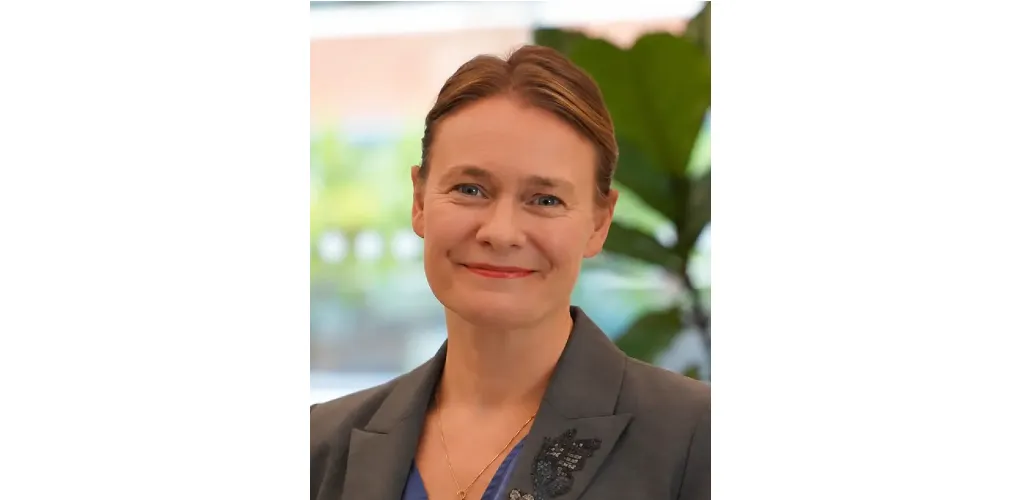
A new chapter for ICMM as Froydis Cameron-Johansson takes the helm
The mining and sustainability leader will take over as President and CEO of the ICMM on 23 November, succeeding Rohitesh Dhawan after more than five years at the helm.

Articles
Thursday, October 8, 2026
Mintek SCi 2026 puts emerging researchers at the forefront of Africa’s future
More than 300 emerging researchers, students, academics and industry stakeholders participated in Mintek SCi 2026, a weeklong innovation programme.






-ltd-a325b1d3-6414-476b-9b7e-20c2285d5a51.webp?language=en)

-Primary-Logo.webp?language=en)