News & Media
Featured
Gold breaks $4,000, proving real value never rusts
Thursday, October 9, 2025
What's in this article
This caps a remarkable 12-month rally that has seen bullion prices climb more than 50% year-on-year, driven by a convergence of macroeconomic anxiety, persistent inflation, currency weakness, central bank buying, and investor momentum. As traders and analysts recalibrate what constitutes a “fair value” for the precious metal, the milestone is being hailed as both a symptom of global uncertainty and a signal of structural change in how capital seeks safety.
Spot gold snapshot
Spot gold vaulted to $4,050.24/oz yesterday, marking the first time in history that the metal has crossed the $4,000 threshold. Futures followed suit, reflecting deep investor conviction and heavy inflows into bullion-backed exchange-traded funds (ETFs).
Gold’s rise has been anything but incremental. Over the past 12 months, the metal has rallied roughly 52%, accelerating sharply from the second quarter of 2025 as geopolitical tensions flared, the U.S. dollar softened, and traders began pricing in imminent interest rate cuts by the Federal Reserve.
The twelve-month march to $4,000
The groundwork for gold’s record run was laid in late 2024, when cracks began to appear in the post-pandemic economic narrative. Inflation proved more persistent than expected, global growth softened, and fiscal pressures mounted in major economies.
Through early 2025, gold consolidated around the $2,700–$3,000 range as markets oscillated between inflation fear and recession worry. Then, midyear, sentiment flipped. Expectations of rate cuts by the Federal Reserve and other major central banks reignited interest in non-yielding assets, while U.S. government debt levels, surpassing $36 trillion, stirred concerns about long-term fiscal sustainability.
At the same time, central banks continued to expand their reserves. According to the World Gold Council, official sector purchases have remained near record highs for a third consecutive year, led by China, India, Turkey, and several Middle Eastern nations seeking to diversify away from the U.S. dollar.
By August, speculative flows and ETF inflows began reinforcing the rally. As spot prices breached resistance around $3,600, technical momentum accelerated. By early October, the psychological $4,000 line fell, a milestone not just for traders, but for the entire architecture of global finance.
A safe haven in a fractured world
Gold’s appeal in 2025 extends beyond inflation hedging or portfolio diversification. It’s increasingly being viewed as a neutral reserve asset in a world marked by financial fragmentation, shifting alliances, and geopolitical strain.
The escalation of geopolitical tensions in Eastern Europe and the South China Sea has amplified safe-haven demand. Add to that a series of debt downgrades, volatile equity markets, and the growing appeal of tangible assets - and the result is a potent mix of fear and FOMO.
Upside vs volatility
While some analysts warn the market is overheating, few are calling the rally over. Goldman Sachs has raised its December 2026 target to $4,900/oz, citing “continued strong central bank demand and upside surprises in ETF inflows.”
“Gold remains our highest-conviction long recommendation,” states a Goldman Sachs report. “We see significant hedging value in long gold positions because of the potential for renewed trade tensions and slower global growth.” HSBC has echoed that optimism, forecasting that gold could “trade above $4,000/oz near term” with official sector and institutional buying likely to sustain prices into 2026.
Still, not everyone is sanguine. Paul Ciana, a technical strategist at Bank of America, cautions that “a variety of multiple time-frame technical signals and conditions warn of uptrend exhaustion as gold nears $4,000.”
That risk of correction remains real. The metal has already moved far above long-term averages, leaving it vulnerable to sharp pullbacks if investor sentiment turns or if the Federal Reserve delays rate cuts. Yet, as past cycles show, even major corrections have historically set the stage for higher structural bases.
Why $4,000 might not be the ceiling
The longer-term story behind this surge is less about short-term inflation or rate expectations, and more about the evolving structure of the global monetary system. Central banks’ growing preference for gold reflects a deeper distrust of fiat currencies and the weaponisation of financial systems. The de-dollarisation trend, while gradual, has created a sustained baseline of demand for gold that’s independent of speculative flows.
Moreover, the cost of mining new gold has risen significantly. With ore grades declining and permitting times stretching to nearly two decades, supply-side constraints add a floor to prices. This supply-demand imbalance, coupled with the rise of institutional gold holdings, underpins arguments that $4,000 may represent not a top, but a “new normal”.
Winners and losers
The rally’s beneficiaries extend beyond bullion investors. Gold miners, refiners, and logistics companies have seen profit margins surge, though operational bottlenecks and rising costs have tempered gains.
Producers in Australia, Canada, and the U.S. are enjoying windfall revenues, while South African miners, hampered by aging shafts, power instability, and policy uncertainty remain sidelined.
Ironically, while the world celebrates gold’s ascent, South Africa, once the planet’s preeminent producer, now accounts for less than 3% of global output. It’s a bittersweet moment for country. It has the legacy, but not the production muscle to benefit like it once did.
The road ahead
Whether gold can sustain its $4,000-plus status will depend on how the next phase of the global cycle unfolds. If inflation persists, the dollar weakens, and central banks keep buying, the rally could extend toward the $4,500–$5,000 range over the next year. But if economic growth stabilises, real yields rise, or investor appetite shifts back to equities and bonds, gold could correct sharply, perhaps testing support in the $3,500–$3,700 range.
Still, the overarching narrative remains clear: gold has reasserted itself as the anchor of global value amid uncertainty. This is not just about price, it’s about psychology. Gold has always represented trust, and when trust in the system weakens, gold strengthens.
For now, at least, investors around the world appear to agree. The world’s oldest currency has just set a new standard, and in the process, reminded markets that in times of doubt, real value never rusts.
Market News
Related articles
.webp?language=en)
Articles
Thursday, October 22, 2026
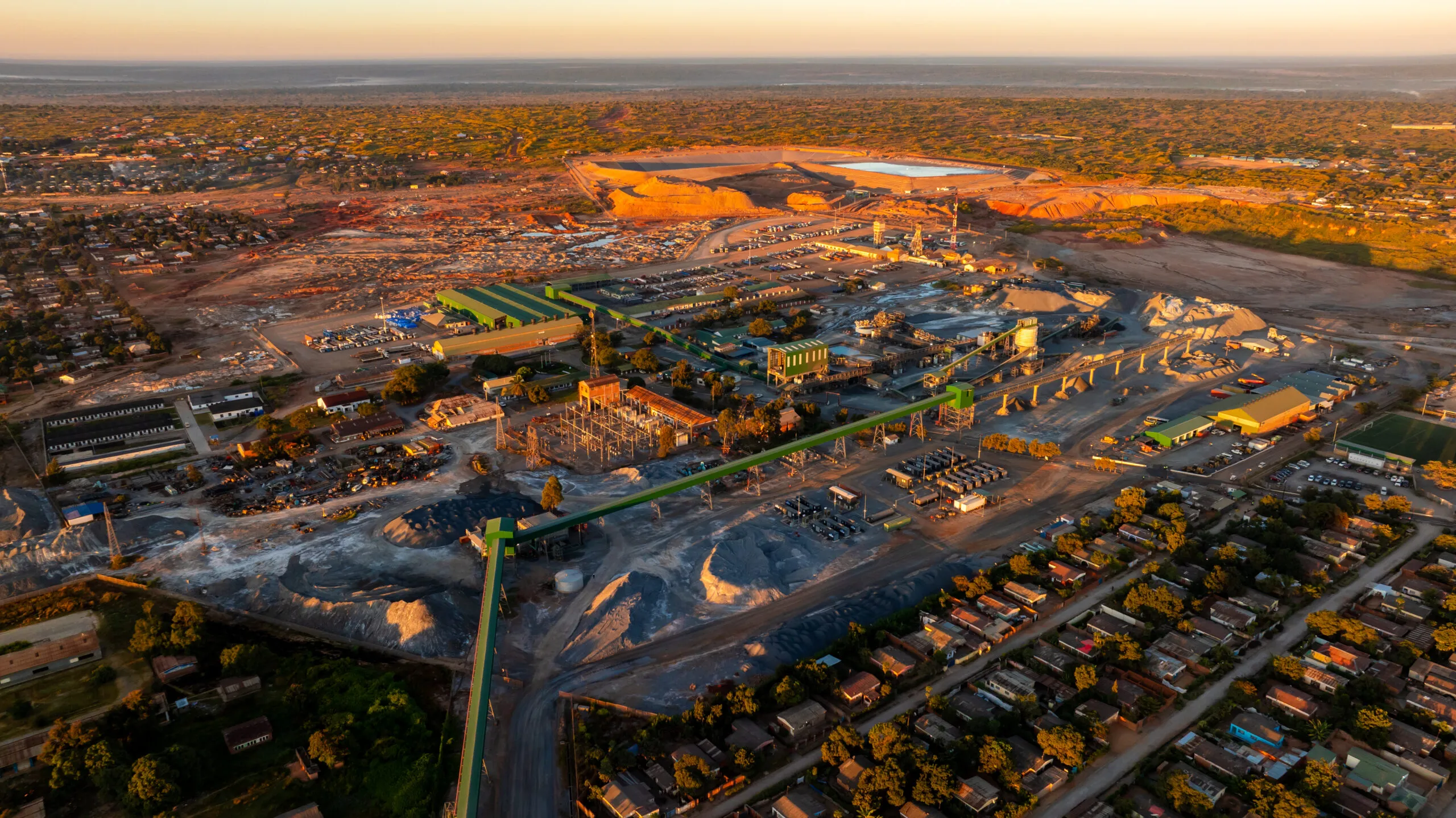
Building a competitive African automotive industry for the next generation
Africa’s mineral resources give the continent an important stake in the future of automotive manufacturing.
Articles
Tuesday, October 20, 2026
From century-old mine to global zinc powerhouse
Kipushi has demonstrated that an established mine can be revitalised through high-grade resources, new processing infrastructure and sustained investment.

Articles
Monday, October 19, 2026
Beyond the Mine- $300 Million Zambia–DRC Energy Deal to Drive Mineral Value Addition
Landmark cross-border electricity project could deliver up to 550 MW unlocking copper and cobalt production, mineral beneficiation and regional industrial development.













-ltd-a325b1d3-6414-476b-9b7e-20c2285d5a51.webp?language=en)


-Primary-Logo.webp?language=en)