News & Media
Featured
KoBold Metals breaks ground on $2.3 billion Mingomba mine
Tuesday, May 5, 2026
What's in this article
- 1.A flagship project for Zambia’s copper ambitions
- 2.AI meets mining: compressing timelines without cutting corners
- 3.Supply crunch looms as copper demand surges
- 4.Engineering complexity beneath the surface
- 5.From explorer to operator: a critical transition
- 6.Investor confidence and strategic implications
- 7.A test case for the future of mining
In a bold move that underscores the intensifying global race for critical minerals, KoBold Metals has officially broken ground on the Mingomba copper mine in Zambia. The mine is set to become the country’s largest mining project and one of Africa’s most significant new copper operations.
Backed by high-profile investors including Bill Gates and Sam Altman, KoBold is deploying artificial intelligence to accelerate exploration and development timelines in a sector traditionally defined by long lead times and high geological uncertainty.
With a capital cost exceeding $2.3 billion, Mingomba represents a defining test case for whether data-driven exploration can translate into rapid, large-scale mine development.
A flagship project for Zambia’s copper ambitions
Located in Zambia’s prolific Copperbelt region near the border with the Democratic Republic of Congo, the Mingomba project is expected to produce more than 300,000 tpa of copper at full capacity. For Zambia, the development aligns closely with President Hakainde Hichilema’s ambition to more than triple national copper output over the coming decade. “This is a demonstration that Zambia is open for business,” Hichilema said at the groundbreaking ceremony. “Where there was nothing here, now we’re talking of shafts.”
The project also complements expansion efforts by major industry players such as Barrick Mining and First Quantum Minerals, both of which are increasing their footprint in Zambia as part of a broader resurgence in African copper investment.
AI meets mining: compressing timelines without cutting corners
KoBold’s approach to Mingomba marks a departure from conventional mining project development. The company acquired the asset in December 2022 and rapidly identified a high-grade copper deposit using proprietary artificial intelligence tools designed to analyse vast geological datasets.
Traditionally, it can take more than 15 years to move from discovery to production. KoBold, however, is attempting to significantly compress this timeline, moving into construction even before completing full engineering studies. “We cannot afford to go slow,” said CEO Mfikeyi Makayi, speaking at the site. “We must go fast, we shall go fast, and we will not take shortcuts.” The statement reflects a broader shift in the mining sector, where digital technologies are being leveraged to de-risk exploration and accelerate project pipelines.
Industry analyst Rebecca Moore of ResourceTech Insights noted: “KoBold is effectively trying to do for mining what Silicon Valley did for software, iterate faster, learn faster and deploy capital more efficiently. The question is whether geology will cooperate.”
Supply crunch looms as copper demand surges
KoBold’s urgency is underpinned by mounting concerns over a looming global copper supply deficit. Demand is being driven by electrification trends, including electric vehicles, renewable energy systems and the rapid expansion of data centres.
“Copper is the metal of electrification,” said James Rutledge, a metals strategist at Green Transition Capital. “Every credible forecast points to a structural shortfall by the end of the decade unless new supply comes online quickly.” Mingomba’s projected output could therefore play a critical role in balancing markets at a time when existing mines are ageing, and ore grades are declining globally. However, Rutledge cautioned that timing will be crucial: “If KoBold can deliver on its accelerated schedule, it could capture peak pricing. If not, it risks entering a more competitive supply environment.”
Engineering complexity beneath the surface
Despite its promise, Mingomba presents formidable technical challenges. The orebody lies approximately 1,700 metres below surface, making it one of the deepest planned underground mines globally. The region is also known for its high groundwater inflows, with neighbouring operations among the wettest underground mines in the world. Managing water ingress will require extensive pumping infrastructure and advanced mine design.
KoBold President Josh Goldman acknowledged these complexities, noting that a final cost estimate will only be confirmed after engineering studies are completed in early 2027. “This is not a simple project,” Goldman said in an interview at the site. “Depth, water and infrastructure all add layers of complexity, but they are challenges we believe can be managed with the right engineering solutions.”
The company is also still evaluating options for processing Mingomba’s output, including whether to invest in local smelting and refining capacity or rely on existing regional infrastructure.
From explorer to operator: a critical transition
Mingomba represents a pivotal moment for KoBold, which has built its reputation as an exploration-focused company leveraging AI to identify new mineral deposits. To date, it has not developed or operated a producing mine.
“This is a step-change in risk profile,” said mining consultant Peter van der Merwe. “Exploration success doesn’t automatically translate into operational success. Building and running a deep, complex underground mine is a different discipline entirely.” Van der Merwe added that KoBold’s ability to attract top-tier engineering and operational talent will be critical: “They have the capital and the technology, but execution will determine whether this becomes a flagship success or a cautionary tale.”
Investor confidence and strategic implications
The scale and speed of the Mingomba project highlight growing investor appetite for critical minerals, particularly those linked to the energy transition. KoBold’s backers are betting that combining advanced analytics with traditional mining expertise can unlock new supply in a capital-efficient manner.
“Capital is flowing into mining again, but it’s coming with expectations of innovation,” said Laura Chen, a partner at Frontier Resources Advisory. “Projects like Mingomba are being watched closely because they could redefine how the industry approaches discovery and development.” For Zambia, the project reinforces its position as a key destination for mining investment in Africa, supported by policy reforms aimed at improving fiscal stability and investor confidence.
A test case for the future of mining
As construction begins, Mingomba stands at the intersection of technology, geopolitics and resource demand. It embodies both the opportunities and the risks facing the mining sector as it adapts to a rapidly changing global landscape.
KoBold’s decision to fast-track development reflects a broader industry imperative: the need to bring new supply online faster without compromising environmental and operational standards. “We will not take shortcuts,” Makayi reiterated. “But we also understand the urgency of the moment.”
Whether Mingomba delivers on its promise will have implications far beyond Zambia - potentially shaping how the next generation of mines is discovered, financed and built. For now, the groundbreaking marks the start of an ambitious journey, one that could redefine the role of technology in unlocking the world’s most critical resources.
WATCH
The Top Spot in the World for Copper | MITV
Market News
Related articles

Articles
Thursday, September 17, 2026
What does the BRICS summit mean for Africa’s mining value chains?
The BRICS summit has sharpened the race to secure critical minerals – but for Africa, the bigger opportunity is capturing more of the value created after extraction.

Articles
Wednesday, September 16, 2026
What does Dangote’s refinery mean for Africa’s mining ambitions?
The value of a resource can change dramatically when processing, capital and ownership move closer to the point of production.
Articles
Tuesday, September 15, 2026
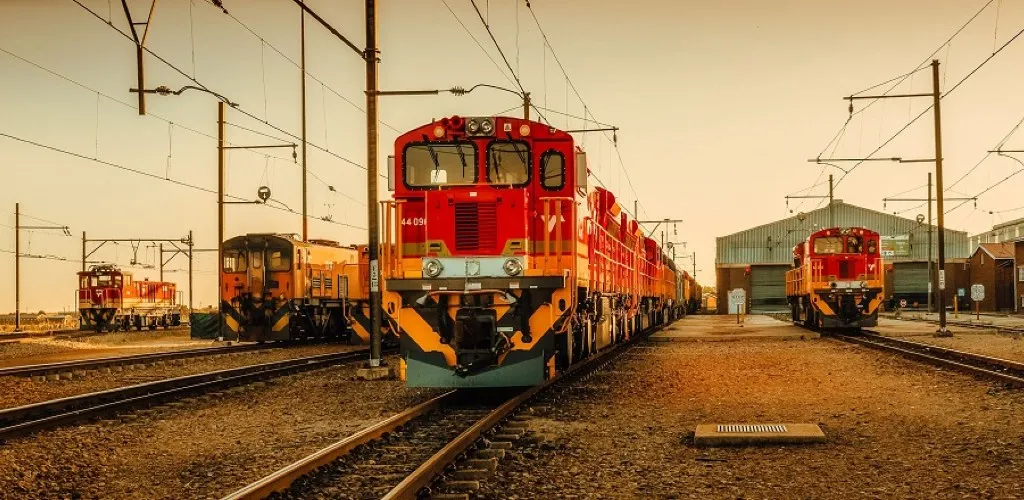
Transnet gains momentum as rail reform and investment reshape mining logistics
Return to profitability signals progress, but logistics recovery remains a work in progress.













-ltd-a325b1d3-6414-476b-9b7e-20c2285d5a51.webp?language=en)


-Primary-Logo.webp?language=en)