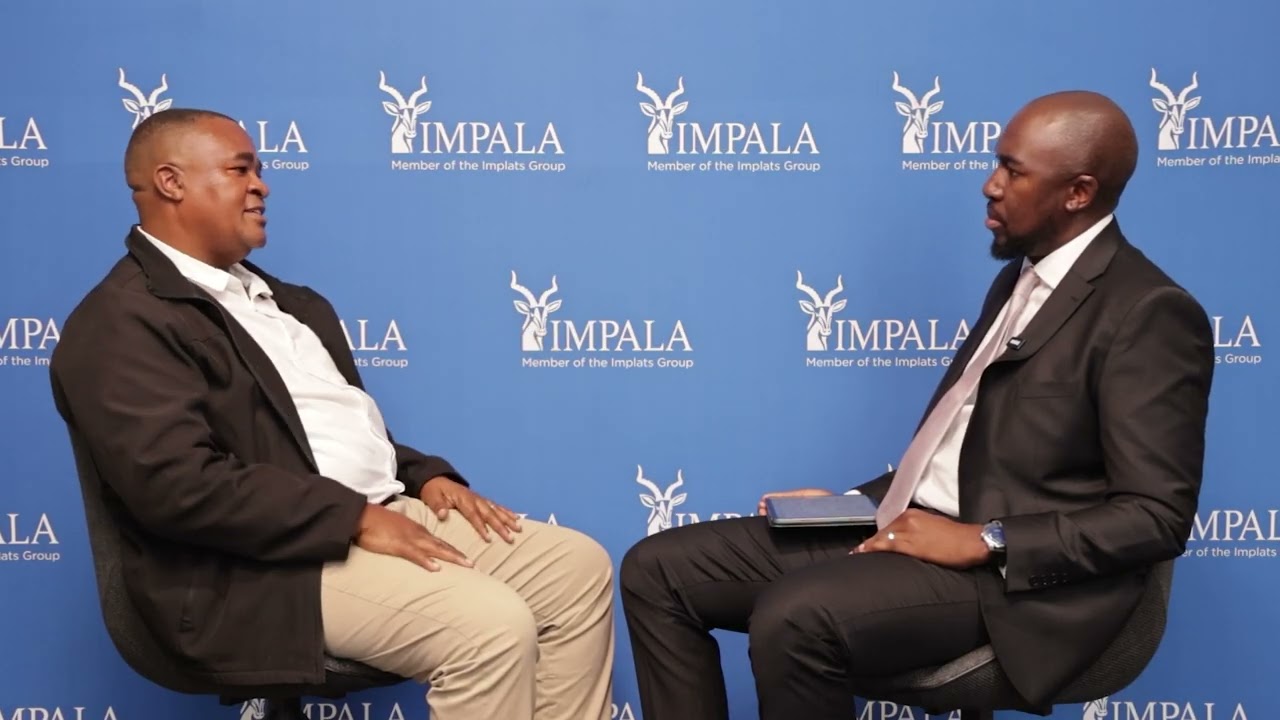
Q & A with Vusi Mabena, Executive Secretary Mining Industry Association of Southern Africa (MIASA).
As Mining Indaba 2027 prepares to spotlight the theme "Stronger Together: Partnerships in Practice," industry leaders are increasingly focused on how collaboration can drive investment, infrastructure development and sustainable growth across Southern Africa's mining sector.
In this Q&A, Vusi Mabena, Executive Secretary Mining Industry Association of Southern Africa (MIASA) shares his perspective on the partnerships shaping the region's mining future from public-private collaboration on logistics and energy to regional integration, beneficiation and community development. He also highlights the policy reforms and trust-based relationships needed to unlock Southern Africa's full mineral potential.
Q. Southern Africa is home to some of the world’s most significant mineral resources, yet many countries continue to face similar challenges around infrastructure, energy and investment. Where have you seen partnerships move beyond dialogue and begin delivering measurable results on the ground?

“Partnership” is a politically correct word, but it is very difficult to implement in practice. There are more examples of partnerships that have not worked than those that have succeeded. However, one positive example can be found in the SADC region, specifically in South Africa.
South Africa’s mining industry was almost brought to its knees by the failure of basic infrastructure. Rail infrastructure, which has historically been the backbone of mineral exports, gradually deteriorated due to lack of maintenance by the state monopoly, the running down of rail lines, electricity theft, loss of skills and other challenges.
As a result, Southern Africa was unable to export mineral volumes comparable to other mining regions. Across the North-South Corridor, from the DRC to South Africa, mining companies increasingly resorted to road freight, with unintended consequences such as road degradation and export delays. The South African mining industry declined slowly as a result.
Recognising these challenges, the private sector, state-owned companies and government worked together under the leadership of the Office of the President to establish the National Logistics Coordinating Committee. One outcome has been government concessions to private companies to revitalise and maintain mineral export rail lines. Recently, we have also seen an increase in coal export volumes. Transnet has also invited private companies and consortiums to bid for the management of the Port of Ngqura in the Eastern Cape.
Beyond South Africa, there has been progress in developing and improving the gas pipeline from the DRC to South Africa. Another important example is the Lobito Corridor, linking the Port of Lobito through the Benguela Railway to the DRC Copperbelt via Zambia. This project has been supported by the African Finance Corporation, which is funded by several African governments to finance infrastructure development.
Q. As competition for mining investment intensifies globally, what can Southern African jurisdictions do collectively through regional partnerships to position themselves as a preferred destination for capital?
The challenge facing Southern Africa’s mining industry in attracting investment is twofold. First, the industry is partly assessed through the Fraser Institute Survey, which ranks many participating Southern African countries near the bottom of the surveyed mining jurisdictions, with the exception of Botswana, which consistently ranks among the top ten countries for investment attractiveness. While the sample size for each country remains debatable, in the absence of another widely recognised tool, potential investors continue to use this survey.
The SADC Secretariat has developed Regional Mining Protocols, which now include principles from the Regional Mining Vision. These protocols outline policies that governments in the region should adopt to create greater policy alignment without compromising national sovereignty.
The region needs a unified investment strategy, similar to the European Union’s strategy for securing access to critical raw materials. Each SADC member state has at least two of the critical minerals currently in demand. This creates fertile ground for collaboration and regional integration, enabling countries to benefit from both raw critical mineral concentrates and beneficiated critical mineral products.
Most importantly, the region needs policy frameworks that actively promote mining investment. Policies such as demanding free-carried ownership without investment in a highly risky and cyclical sector can discourage investment. I am impressed by Namibia’s policy approach, which encourages investment in prospecting through full tax rebates on prospecting projects that lead to sustainable mining operations. Prospecting is inherently risky, but the assurance of full cost recovery if a viable project emerges, alongside government-led geological mapping, is encouraging for investors.
Q. The Mining Indaba 2027 theme is “Stronger Together: Partnerships in Practice.” In your view, what is the most successful example of a partnership currently transforming the mining landscape in Southern Africa, and why?
I hope the “Stronger Together: Partnerships in Practice” theme will give partners and stakeholders an opportunity to demonstrate what can be achieved when everyone cooperates and contributes meaningfully toward tangible objectives.
The industry is currently struggling with energy supply, which is essential for advancing mining projects and mineral processing. The recent announcement of special electricity rates for mineral smelters in South Africa has helped protect jobs and improve the long-term sustainability of smelters. Perhaps some smelters that relocated to other jurisdictions may reconsider investing again in South Africa, given the advantage of existing infrastructure.
There is no better opportunity to transform the industry than through collaboration among key stakeholders such as the Mining Industry Association of Southern Africa, mining departments, and trade and investment departments across SADC member states. These institutions should work together to achieve the objectives of the Mining Protocols and promote the SADC region as a mining investment destination. Institutions such as the African Finance Corporation, Afreximbank and the Industrial Development Corporation are also willing to partner with the private sector and governments to get mining projects off the ground.
Q. Mining companies often operate across multiple jurisdictions within the region. How important is regulatory harmonisation among SADC countries, and what practical steps are needed to make it a reality?
The concept of harmonisation is sometimes mistaken for requiring identical policies across all mining jurisdictions. This is not possible because mining development is at different stages across the region. However, there should be alignment on key areas such as mining taxation, ownership requirements, local content, environmental laws and tariffs.
One government should not impose extreme mining taxes or tariffs that drive investors away to neighbouring countries. Such policies can weaken the industry in one country when compared with other mining jurisdictions. High export tariffs on critical minerals and excessive free-carried interest requirements discourage investment and can damage the mining industry, even during a minerals boom.
Q. There is increasing pressure on mining companies to demonstrate local value creation. What role should partnerships play in advancing local procurement, skills development and beneficiation across Southern Africa?
There is general consensus that exporting raw mineral resources is equivalent to exporting jobs and economic growth. Governments are responding by calling for value addition in different ways, but often without fully considering the most practical and sustainable approach to beneficiation.
Some governments force mineral producers to sell a percentage of their production to local mineral processors before exporting. Others impose complete export bans, even where there is no local capacity to process raw critical minerals. In some cases, producers are expected to sell minerals to local processors below cost, which is unsustainable.
There is a need for creative policies that promote local value addition and are catalysed by governments. Governments could introduce attractive incentives for downstream industries, such as tax breaks for new manufacturing plants, joint investment between investors and mineral producers, skills development rebates for scarce mineral-processing skills, and investment in research and development. These ideas require further exploration to ensure they are implemented sustainably.
Q. Communities are increasingly demanding a greater share of mining benefits. How can governments and industry build partnerships that create lasting social licence while maintaining investor confidence?
The challenge with growing community demands for a greater share of mining benefits is that key stakeholders are often not listening carefully to one another. A lasting social licence to operate is found where there is strong communication between local communities, local governments and mining companies, supported by a clearly understood social compact.
Such a compact should include clear deliverables that are jointly monitored by all stakeholders. In areas with high unemployment and low economic growth, this is difficult because mining companies can only absorb a limited number of people, even where local communities have relevant skills.
An integrated approach is required, where all stakeholders work together to grow the local economy and create alternative employment opportunities. This reduces pressure on the mine and supports peaceful coexistence. A mine is more likely to coexist successfully with local communities when it forms part of an integrated development plan and helps attract further investment into the local economy.
Q. If we are to judge the success of “Partnerships in Practice” five years from now, what specific outcomes should stakeholders expect to see across Southern Africa’s mining sector?
The success of “Partnerships in Practice” over the next five years can be measured by progress in creating legislative frameworks that promote mining growth. This should include increased investment in prospecting, stronger investment in mining projects, more value-addition projects on the ground, growth in alternative industries, and peaceful coexistence between local communities and mining companies.
Q. What is the single most important partnership that Southern Africa’s mining sector needs today, but has not yet fully embraced, to unlock the region’s full mineral potential?
Where there is no trust, there can be no successful partnership. Governments and the private sector need to earn each other’s trust.
When governments develop legislative frameworks designed to catch mining operators out and impose heavy sanctions instead of encouraging corrective measures, trust is weakened. Similarly, when the private sector does the bare minimum to comply with legislation, trust is also undermined.
In such an environment, the full potential of the mining sector cannot be unlocked, and the region will continue to lag behind comparable mining jurisdictions. In short, Southern Africa needs a strong trust-based relationship between governments and the private sector.
In this Q&A, Vusi Mabena, Executive Secretary Mining Industry Association of Southern Africa (MIASA) shares his perspective on the partnerships shaping the region's mining future from public-private collaboration on logistics and energy to regional integration, beneficiation and community development. He also highlights the policy reforms and trust-based relationships needed to unlock Southern Africa's full mineral potential.
Q. Southern Africa is home to some of the world’s most significant mineral resources, yet many countries continue to face similar challenges around infrastructure, energy and investment. Where have you seen partnerships move beyond dialogue and begin delivering measurable results on the ground?
“Partnership” is a politically correct word, but it is very difficult to implement in practice. There are more examples of partnerships that have not worked than those that have succeeded. However, one positive example can be found in the SADC region, specifically in South Africa.
South Africa’s mining industry was almost brought to its knees by the failure of basic infrastructure. Rail infrastructure, which has historically been the backbone of mineral exports, gradually deteriorated due to lack of maintenance by the state monopoly, the running down of rail lines, electricity theft, loss of skills and other challenges.
As a result, Southern Africa was unable to export mineral volumes comparable to other mining regions. Across the North-South Corridor, from the DRC to South Africa, mining companies increasingly resorted to road freight, with unintended consequences such as road degradation and export delays. The South African mining industry declined slowly as a result.
Recognising these challenges, the private sector, state-owned companies and government worked together under the leadership of the Office of the President to establish the National Logistics Coordinating Committee. One outcome has been government concessions to private companies to revitalise and maintain mineral export rail lines. Recently, we have also seen an increase in coal export volumes. Transnet has also invited private companies and consortiums to bid for the management of the Port of Ngqura in the Eastern Cape.
Beyond South Africa, there has been progress in developing and improving the gas pipeline from the DRC to South Africa. Another important example is the Lobito Corridor, linking the Port of Lobito through the Benguela Railway to the DRC Copperbelt via Zambia. This project has been supported by the African Finance Corporation, which is funded by several African governments to finance infrastructure development.
Q. As competition for mining investment intensifies globally, what can Southern African jurisdictions do collectively through regional partnerships to position themselves as a preferred destination for capital?
The challenge facing Southern Africa’s mining industry in attracting investment is twofold. First, the industry is partly assessed through the Fraser Institute Survey, which ranks many participating Southern African countries near the bottom of the surveyed mining jurisdictions, with the exception of Botswana, which consistently ranks among the top ten countries for investment attractiveness. While the sample size for each country remains debatable, in the absence of another widely recognised tool, potential investors continue to use this survey.
The SADC Secretariat has developed Regional Mining Protocols, which now include principles from the Regional Mining Vision. These protocols outline policies that governments in the region should adopt to create greater policy alignment without compromising national sovereignty.
The region needs a unified investment strategy, similar to the European Union’s strategy for securing access to critical raw materials. Each SADC member state has at least two of the critical minerals currently in demand. This creates fertile ground for collaboration and regional integration, enabling countries to benefit from both raw critical mineral concentrates and beneficiated critical mineral products.
Most importantly, the region needs policy frameworks that actively promote mining investment. Policies such as demanding free-carried ownership without investment in a highly risky and cyclical sector can discourage investment. I am impressed by Namibia’s policy approach, which encourages investment in prospecting through full tax rebates on prospecting projects that lead to sustainable mining operations. Prospecting is inherently risky, but the assurance of full cost recovery if a viable project emerges, alongside government-led geological mapping, is encouraging for investors.
Q. The Mining Indaba 2027 theme is “Stronger Together: Partnerships in Practice.” In your view, what is the most successful example of a partnership currently transforming the mining landscape in Southern Africa, and why?
I hope the “Stronger Together: Partnerships in Practice” theme will give partners and stakeholders an opportunity to demonstrate what can be achieved when everyone cooperates and contributes meaningfully toward tangible objectives.
The industry is currently struggling with energy supply, which is essential for advancing mining projects and mineral processing. The recent announcement of special electricity rates for mineral smelters in South Africa has helped protect jobs and improve the long-term sustainability of smelters. Perhaps some smelters that relocated to other jurisdictions may reconsider investing again in South Africa, given the advantage of existing infrastructure.
There is no better opportunity to transform the industry than through collaboration among key stakeholders such as the Mining Industry Association of Southern Africa, mining departments, and trade and investment departments across SADC member states. These institutions should work together to achieve the objectives of the Mining Protocols and promote the SADC region as a mining investment destination. Institutions such as the African Finance Corporation, Afreximbank and the Industrial Development Corporation are also willing to partner with the private sector and governments to get mining projects off the ground.
Q. Mining companies often operate across multiple jurisdictions within the region. How important is regulatory harmonisation among SADC countries, and what practical steps are needed to make it a reality?
The concept of harmonisation is sometimes mistaken for requiring identical policies across all mining jurisdictions. This is not possible because mining development is at different stages across the region. However, there should be alignment on key areas such as mining taxation, ownership requirements, local content, environmental laws and tariffs.
One government should not impose extreme mining taxes or tariffs that drive investors away to neighbouring countries. Such policies can weaken the industry in one country when compared with other mining jurisdictions. High export tariffs on critical minerals and excessive free-carried interest requirements discourage investment and can damage the mining industry, even during a minerals boom.
Q. There is increasing pressure on mining companies to demonstrate local value creation. What role should partnerships play in advancing local procurement, skills development and beneficiation across Southern Africa?
There is general consensus that exporting raw mineral resources is equivalent to exporting jobs and economic growth. Governments are responding by calling for value addition in different ways, but often without fully considering the most practical and sustainable approach to beneficiation.
Some governments force mineral producers to sell a percentage of their production to local mineral processors before exporting. Others impose complete export bans, even where there is no local capacity to process raw critical minerals. In some cases, producers are expected to sell minerals to local processors below cost, which is unsustainable.
There is a need for creative policies that promote local value addition and are catalysed by governments. Governments could introduce attractive incentives for downstream industries, such as tax breaks for new manufacturing plants, joint investment between investors and mineral producers, skills development rebates for scarce mineral-processing skills, and investment in research and development. These ideas require further exploration to ensure they are implemented sustainably.
Q. Communities are increasingly demanding a greater share of mining benefits. How can governments and industry build partnerships that create lasting social licence while maintaining investor confidence?
The challenge with growing community demands for a greater share of mining benefits is that key stakeholders are often not listening carefully to one another. A lasting social licence to operate is found where there is strong communication between local communities, local governments and mining companies, supported by a clearly understood social compact.
Such a compact should include clear deliverables that are jointly monitored by all stakeholders. In areas with high unemployment and low economic growth, this is difficult because mining companies can only absorb a limited number of people, even where local communities have relevant skills.
An integrated approach is required, where all stakeholders work together to grow the local economy and create alternative employment opportunities. This reduces pressure on the mine and supports peaceful coexistence. A mine is more likely to coexist successfully with local communities when it forms part of an integrated development plan and helps attract further investment into the local economy.
Q. If we are to judge the success of “Partnerships in Practice” five years from now, what specific outcomes should stakeholders expect to see across Southern Africa’s mining sector?
The success of “Partnerships in Practice” over the next five years can be measured by progress in creating legislative frameworks that promote mining growth. This should include increased investment in prospecting, stronger investment in mining projects, more value-addition projects on the ground, growth in alternative industries, and peaceful coexistence between local communities and mining companies.
Q. What is the single most important partnership that Southern Africa’s mining sector needs today, but has not yet fully embraced, to unlock the region’s full mineral potential?
Where there is no trust, there can be no successful partnership. Governments and the private sector need to earn each other’s trust.
When governments develop legislative frameworks designed to catch mining operators out and impose heavy sanctions instead of encouraging corrective measures, trust is weakened. Similarly, when the private sector does the bare minimum to comply with legislation, trust is also undermined.
In such an environment, the full potential of the mining sector cannot be unlocked, and the region will continue to lag behind comparable mining jurisdictions. In short, Southern Africa needs a strong trust-based relationship between governments and the private sector.

_2.jpg?ext=.jpg)


-Logo_CMYK_1.jpg?width=1000&height=500&ext=.jpg)





.png?width=300&height=208&ext=.png)
_mi25-weblogo.png?ext=.png)
_1.png?ext=.png)





















_logo.png?ext=.png)

_mi25-weblogo.png?ext=.png)