News & Media
Featured
Partnerships in Practice: Collaboration turns Lobito Corridor from vision to reality
Monday, July 6, 2026
What's in this article
The Lobito Corridor Railway Project has reached its US$753 million financial close. This represents far more than the completion of a financing transaction. It marks the culmination of years of diplomatic engagement, commercial collaboration and innovative infrastructure financing that has transformed a long-held regional ambition into one of Africa's most strategically significant transport corridors.
Few projects better illustrate how governments, development finance institutions, private investors and the mining industry can align around a shared vision for regional growth.
Political partnerships (2002–2022)
Three governments aligning on a shared regional vision.
Financial partnership (2022–2026)
Development finance institutions and private investors creating one of Africa's most complex blended-finance infrastructure transactions.
Industrial partnership (2026 onward)
Mining companies, manufacturers and logistics providers using the corridor to build regional value chains rather than simply export ore.
The financial close provides the capital required to rehabilitate, upgrade and operate the approximately 1,300 km railway connecting Angola's Port of Lobito with the Democratic Republic of Congo (DRC) border, creating a faster Atlantic export route for copper, cobalt and other critical minerals produced in Central Africa. It also demonstrates that African infrastructure can attract complex blended finance when partnerships are built on shared commercial and development objectives.
From colonial railway to strategic minerals corridor
Although the Benguela Railway dates back more than a century, decades of conflict left much of the network in disrepair. For years, miners operating in the Copperbelt relied heavily on longer and more expensive routes through southern and eastern Africa to reach international markets.
The modern Lobito Corridor emerged as a new vision: reconnect Angola, the DRC and Zambia through an efficient logistics network capable of supporting growing demand for critical minerals essential to the global energy transition.
The concept rapidly evolved beyond rail infrastructure.
Today, the corridor encompasses ports, logistics facilities, customs modernisation, energy, agriculture and industrial development. It has attracted support from African governments, the private sector, the Africa Finance Corporation (AFC), the Development Bank of Southern Africa (DBSA), the US International Development Finance Corporation (DFC), the European Union and numerous international development partners.
A partnership model years in the making
The journey began in earnest in 2022 when Angola awarded a 30-year concession to Lobito Atlantic Railway (LAR), a consortium comprising Trafigura, Mota-Engil and Vecturis, to operate the railway and the mineral terminal at the Port of Lobito.
Rather than relying solely on public funding, the project adopted a blended finance approach that combined private investment with development finance. A breakthrough came when DFC committed up to US$553 million, complemented by a US$200 million contribution from DBSA. AFC acted as co-financial adviser alongside Eaglestone, helping structure one of the continent's most complex cross-border infrastructure financing packages.
That collaboration ultimately delivered the US$753 million financial close announced this month.
Financial close validates the partnership approach
The significance of the financial close extends well beyond the railway itself. The investment is expected to increase transport capacity to approximately 4.6 Mt annually, while reducing logistics costs for critical minerals by as much as 30%. Faster, lower-cost transport strengthens the competitiveness of mining operations across Angola and the Copperbelt while improving access to international markets.
For financiers, the transaction provides proof that African infrastructure projects involving multiple sovereign jurisdictions can successfully reach commercial close.
As Samaila Zubairu, President and CEO of the Africa Finance Corporation, said:
"As one of the continent's most strategic transport corridors, the project will strengthen regional connectivity, facilitate trade and unlock new opportunities for economic growth across Angola and the wider region."
Nuno Gil, Founding Partner of Eaglestone, highlighted the broader significance for infrastructure finance across Africa:
"Reaching financial close on the Lobito Corridor railway project is the culmination of years of work and a defining moment for infrastructure finance in sub-Saharan Africa. This transaction shows that complex, multi-lender, cross-border project financing can be structured and successfully closed on the continent."
Why the mining industry is watching closely
The corridor is rapidly becoming one of the world's most important logistics routes for copper and cobalt. Central Africa contains some of the world's richest critical mineral deposits, yet inadequate transport infrastructure has historically constrained production and increased export costs. By providing a direct Atlantic gateway, the corridor reduces dependence on congested alternative routes while improving supply chain resilience for global manufacturers.
For mining companies, improved logistics translate into shorter transit times, reduced freight costs and greater certainty around exports, factors that increasingly influence investment decisions alongside geology and mineral grades. The corridor is also expected to stimulate investment in processing, manufacturing, agriculture and logistics hubs along its route, broadening economic benefits beyond mineral exports.
Partnership beyond infrastructure
The Lobito Corridor has increasingly become a model for regional cooperation. It brings together three sovereign governments with international development institutions, private operators, engineering firms and mining companies around a common objective: creating infrastructure that enables economic development while strengthening regional integration.
Speaking during DFC's investment announcement, then DFC Chief Executive Scott Nathan described the broader ambition:
"DFC's significant investments along the Lobito Corridor are fostering sustainable economic development and advancing key U.S. strategic interests. Our projects in Angola and across the region reflect the U.S. government's commitment to enhancing infrastructure, promoting the free flow of commerce, and diversifying critical supply chains."
The European Union has similarly committed more than €2 billion across infrastructure, energy, value chains, skills development and community projects under its Global Gateway initiative, reinforcing that the corridor is intended to become an integrated development platform rather than simply a railway.
Challenges remain
- Despite the momentum, the corridor's long-term success will depend on more than engineering.
- Stakeholders must ensure customs harmonisation, efficient border operations, reliable railway performance and continued investment in connecting infrastructure, particularly the planned extension into Zambia.
- Social and environmental considerations will also remain under scrutiny as development accelerates, with communities expecting the project to generate jobs, local procurement opportunities and broader economic inclusion alongside increased mineral exports.
A blueprint for "Stronger Together"
The Lobito Corridor demonstrates that Africa's infrastructure ambitions are increasingly being realised through partnership rather than individual investment.
- Governments provided policy certainty.
- Private operators brought commercial expertise.
- Development finance institutions reduced investment risk.
- International partners mobilised long-term capital.
Together, they achieved a milestone that many considered unattainable only a few years ago.
As the mining industry increasingly looks beyond individual assets toward integrated regional value chains, the Lobito Corridor offers an important lesson: transformational infrastructure is built not only with steel and concrete, but through partnerships capable of aligning capital, policy and shared ambition.
Key voices
Nicholas Fournier, CEO, Lobito Atlantic Railway:
"This financing from the DFC and DBSA marks a major milestone in our vision to establish the Lobito Corridor as Africa's premier trade route."
Samaila Zubairu, President & CEO, Africa Finance Corporation:
"As one of the continent's most strategic transport corridors, the project will strengthen regional connectivity, facilitate trade and unlock new opportunities for economic growth across Angola and the wider region."
Nuno Gil, founding partner, Eaglestone:
"Reaching financial close... is the culmination of years of work and a defining moment for infrastructure finance in sub-Saharan Africa."
Scott Nathan, former CEO, DFC:
"DFC's significant investments along the Lobito Corridor are fostering sustainable economic development... and diversifying critical supply chains."
Market News
Related articles

Articles
Wednesday, September 30, 2026
Rainbow Rare Earths advances Phalaborwa towards PFS with Neo partnership
Rainbow Rare Earths is moving its Phalaborwa project closer to development after securing Neo Performance Materials as a technology and offtake partner.
Articles
Tuesday, September 29, 2026
South Africa puts $2.7 billion manganese corridor on the market
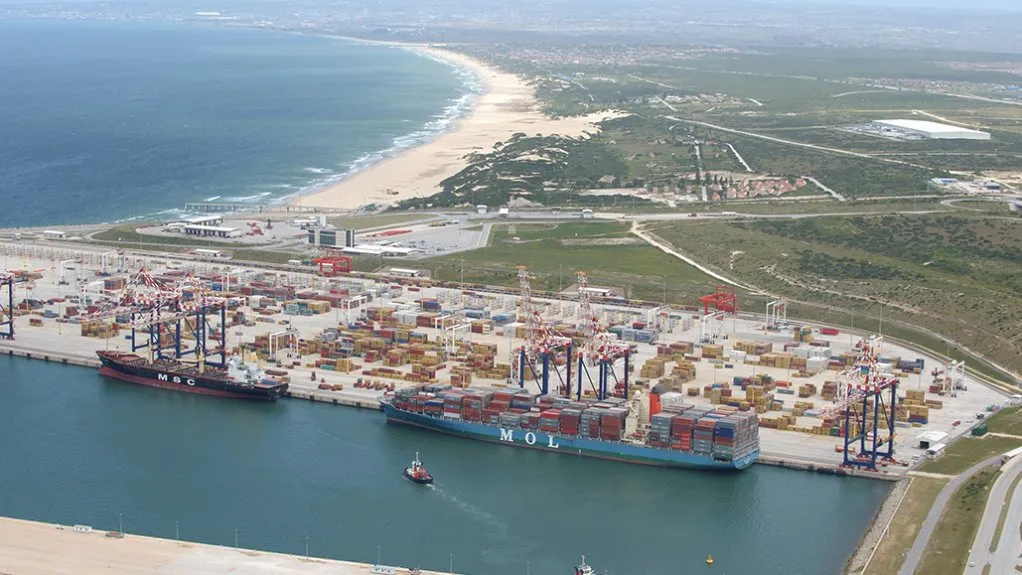
Transnet has launched the next stage of its plan to consolidate South Africa’s manganese exports through Ngqura.

Articles
Tuesday, September 29, 2026
Glencore deepens US critical minerals ties with $500m EXIM-backed VaultCo deal
Glencore's VaultCo agreement comes against a broader expansion of US engagement with its African critical-minerals portfolio.










-ltd-a325b1d3-6414-476b-9b7e-20c2285d5a51.webp?language=en)

-Primary-Logo.webp?language=en)