News & Media
Featured
Qala Shallows and the return of underground gold
Wednesday, April 29, 2026
What's in this article
First production marks more than a company milestone - it signals renewed confidence in building new underground gold mines in the Witwatersrand Basin. When West Wits Mining poured its first gold from the Qala Shallows project in March 2026, the moment carried significance far beyond a single quarterly milestone.
The inaugural 2.54 kg pour, processed through Sibanye-Stillwater’s Ezulwini plant, represents the first new underground gold mine to come online in South Africa in more than 15 years. This is a notable development in a sector often defined by declining output, rising costs and operational complexity. For West Wits, it marks the transition from explorer-developer to producer. For the industry, it raises a more profound question: can a new generation of smaller, more agile underground projects revive gold mining in the world-famous Witwatersrand Basin?
From legacy basin to modern mining model
The Witwatersrand Basin remains one of the most prolific gold regions in history, having produced an estimated 40% of all gold ever mined. Yet much of its remaining resource lies in increasingly challenging geological and economic environments. Qala Shallows represents a different approach. Rather than pursuing ultra-deep, capital-intensive mining, the project targets relatively shallow sections of the Kimberley Reef system, areas that were historically overlooked or left behind. This model focuses on:
- Lower upfront capital requirements
- Faster development timelines
- Mechanised, more flexible mining methods
- Leveraging existing infrastructure, such as third-party processing facilities
The use of the Ezulwini plant is central to this strategy, allowing West Wits to avoid the cost and complexity of building its own processing facility in the early stages. A senior executive at a major South African gold producer describes this shift as “a necessary evolution”: “The era of mega deep-level projects dominating the Witwatersrand is fading. What we’re seeing now are smarter, more targeted developments that focus on capital efficiency and execution discipline.”
The real challenge: execution
While first gold is a major achievement, industry observers are quick to emphasise that the real test lies ahead.
CEO Rudi Deysel has been explicit about the company’s priorities: “What matters from here is disciplined delivery… converting early production into consistent, reliable output that demonstrates operational stability, cost control and the ability to perform through the cycle.”
The ramp-up phase, now underway, will determine whether Qala Shallows can transition from a promising start to a sustainable, cash-generating operation. Key to this will be:
- Accelerating underground development to unlock additional mining areas
- Increasing ore delivery rates to the plant
- Managing input costs, particularly energy and labour
- Maintaining operational consistency in a volatile market environment
A Johannesburg-based mining analyst notes: “South Africa has seen projects achieve first gold before, but consistency is where many fall short. Investors will be watching closely for stable production over the next 12 to 18 months.”
Resource depth supports long-term vision
One of the factors underpinning confidence in Qala Shallows is the scale and quality of the broader resource base. West Wits recently upgraded its global MRE for the Witwatersrand Basin Project to 7.24 Moz at 4 g/t gold; a substantial increase driven by new prospecting rights and updated economic assumptions. At the heart of this resource are the Kimberley Reefs, which support both the current Qala Shallows operation and future developments such as Qala Deeps.
This expanding resource base does more than extend mine life, it provides optionality. It allows the company to think beyond a single project and toward a broader production platform. An institutional investor involved in the company’s recent capital raise explains: “The resource growth is critical because it gives visibility beyond the initial mine plan. It’s what supports the longer-term investment case.”
Scaling ambition: The “Project 200” vision
Looking beyond initial production, West Wits is already exploring pathways to significantly scale its output. Its “Project 200” scoping study, being conducted by Bara Consulting, is evaluating the potential to increase production across the basin to around 200,000 ozpa. If realised, this would transform the company from a single-asset producer into a mid-tier gold player with diversified production streams. The study reflects a dual-track strategy:
- Deliver near-term production and cash flow from Qala Shallows
- Build a pipeline of future operations across the basin
This approach is increasingly common among emerging miners seeking to balance risk and growth.
Capital, confidence and market backing
Execution at this scale requires capital and West Wits has moved to secure it. During the March quarter, the company raised A$33.74 million through an institutional placement, anchored by a A$10 million investment from Tribeca Investment Partners. The funding provides a clear runway to steady-state production and supports ongoing development and exploration activities. For investors, the combination of fresh capital and first production reduces one of the biggest risks associated with junior miners: funding uncertainty.
However, as one fund manager points out: “Raising capital is one thing, deploying it effectively is another. The focus now shifts entirely to execution and returns.”
A test case for South African gold
Beyond company-specific outcomes, Qala Shallows is being closely watched as a potential bellwether for the South African gold sector. For years, the narrative has been one of decline, ageing infrastructure, rising costs, regulatory challenges and decreasing output. Yet projects like Qala Shallows suggest a possible alternative future:
- Smaller, modular developments
- Strategic use of existing infrastructure
- Focus on efficiency rather than scale alone
- Incremental expansion supported by resource growth
A mining executive sums it up succinctly: “If Qala Shallows works, it proves that new underground gold mines are still viable in South Africa, just not in the way they were 30 years ago.”
The road ahead
West Wits now enters a new phase. The company must demonstrate that it can scale production, manage costs and deliver consistent performance - all while advancing its broader growth strategy. The stakes are high, but so is the potential upside. If successful, Qala Shallows could do more than transform West Wits into a sustainable gold producer. It could help reshape perceptions of what is possible in one of the world’s most storied gold mining regions.
RELATED:
Perseus fires first underground production blast at Yaouré
Market News
Related articles

Articles
Wednesday, September 16, 2026
From crude to capital: what Dangote’s refinery means for Africa’s mining and oil ambitions
The value of a resource can change dramatically when processing, capital and ownership move closer to the point of production.
Articles
Tuesday, September 15, 2026
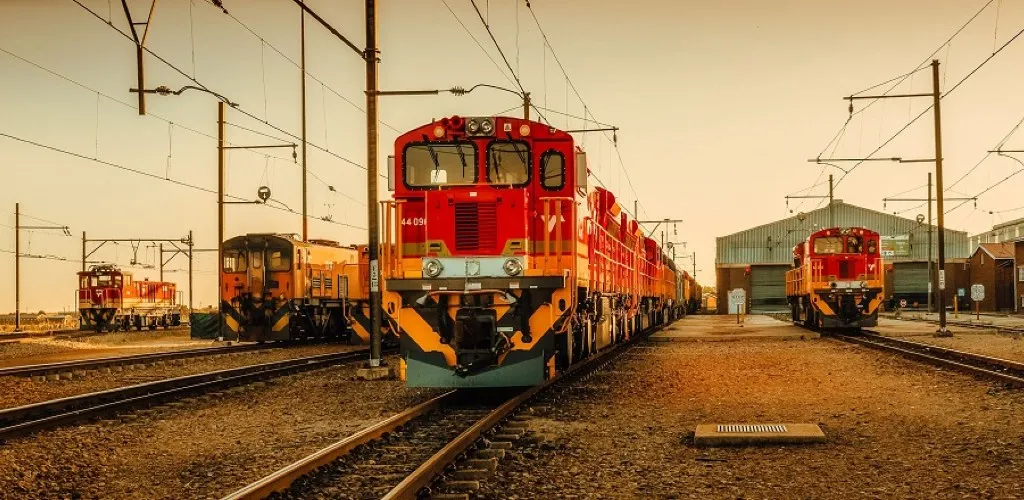
Transnet gains momentum as rail reform and investment reshape mining logistics
Return to profitability signals progress, but logistics recovery remains a work in progress.

Articles
Wednesday, September 9, 2026
State mining companies and the new architecture of mineral sovereignty
A growing number of mineral-producing governments are acquiring assets, activating marketing rights and building institutions that can intervene across the value chain.









-ltd-a325b1d3-6414-476b-9b7e-20c2285d5a51.webp?language=en)

-Primary-Logo.webp?language=en)