News & Media
Featured
South Africa bets big in high-stakes mining budget push
Wednesday, May 20, 2026
What's in this article
- 1.Mining industry welcomes exploration push but warns on power costs
- 2.Investors cautiously optimistic over critical minerals strategy
- 3.Oil and gas push likely to divide industry opinion
- 4.Beneficiation ambitions hinge on Eskom reforms
- 5.Safety improvements overshadowed by recent disasters
- 6.Budget allocations target exploration, rehabilitation and regulation
South Africa’s government has unveiled an aggressive strategy to shield the economy from global energy instability while positioning the country as a major player in the global critical minerals race. This will be done through new funding commitments, regulatory reforms and exploration incentives forming the backbone of the Department of Mineral and Petroleum Resources’ (DMPR) 2026/27 budget agenda.
Delivering the department’s budget vote speech on Tuesday, Mineral and Petroleum Resources Minister Gwede Mantashe framed energy security as a geopolitical and economic imperative, warning that South Africa can no longer remain vulnerable to external fuel supply shocks. “In this era, where energy security is intrinsically linked to national stability, we cannot stand on the sidelines and be passive observers,” Mantashe said.
He defended government’s push to expand upstream oil and gas development and domestic refining capacity, despite mounting pressure from environmental groups and global decarbonisation advocates. “The fact remains that petroleum security is not a theoretical debate, but an economic necessity and a national imperative.”
Mantashe’s address comes at a time where South Africa is grappling with rising electricity tariffs, constrained logistics infrastructure and slowing investment in traditional mining sectors, even as global demand for critical minerals accelerates.
Mining industry welcomes exploration push but warns on power costs
Mining companies and industry bodies broadly welcomed government’s intensified focus on exploration and geoscience mapping, particularly the expansion of the Junior Mining Exploration Fund (JMEF) and the R1.35 billion commitment from the Public Investment Corporation for continuation funding.
The DMPR confirmed that the JMEF, capitalised at R400 million alongside the Industrial Development Corporation, has already funded 13 projects, including rare earth exploration, copper, nickel and gold drilling activities. Anglo American also pledged R600 million to the fund, taking its total size to R1 billion.
Mining analysts said the move signals one of the strongest public-private exploration interventions seen in South Africa in decades. Peter Major, mining analyst at Mergence Corporate Solutions, said the budget reflected a significant philosophical shift toward rebuilding South Africa’s depleted exploration pipeline. “Government finally appears to understand that without exploration there is no future mining industry. South Africa has historically underinvested in greenfield exploration compared to peers like Australia and Canada.”
However, analysts warned that exploration incentives alone would not reverse declining investment sentiment unless structural constraints, particularly electricity and logistics, are addressed urgently. “The contradiction in this budget is that government wants beneficiation and downstream manufacturing growth while electricity prices continue rising at unsustainable levels,” said independent mining economist Dr. Azar Jammine. “That creates a competitiveness problem for ferroalloys, smelters and deep-level mining operations.”
Investors cautiously optimistic over critical minerals strategy
The government’s renewed focus on critical minerals is viewed positively by investors seeking exposure to battery metals, rare earths and energy transition supply chains. South Africa’s mining Gross Value Add reached R477 billion in 2025, contributing roughly 6.3% to GDP, supported by strong iron ore and manganese exports and firmer commodity prices. Mining royalties also rose 11% year-on-year to R11.8 billion.
The DMPR said the “era of passive policy is over,” positioning the Critical Minerals and Metals Strategy as a direct industrialisation and investment tool rather than a long-term policy framework.
The Council for Geoscience’s Integrated and Multi-Disciplinary Geoscience Mapping programme expanded national onshore mapping coverage from below 5% in 2019 to 20% in the 2025/26 financial year. The launch of the Virtual Core Library at Mining Indaba earlier this year was also highlighted as a strategic initiative to improve access to geological data.
Oil and gas push likely to divide industry opinion
While mining stakeholders welcomed exploration reforms, government’s strong defence of oil and gas development is likely to trigger renewed tensions with environmental organisations and climate-focused investors. Mantashe reiterated that South Africa’s dependence on imported refined petroleum products remains economically dangerous and unsustainable.
Government also confirmed it is accelerating the South African National Petroleum Company Bill to operationalise the SANPC as a state-owned participant in the oil and gas sector under the Upstream Petroleum Resources Development Act.
Energy analysts say the policy direction reflects growing concern over energy sovereignty following global supply disruptions linked to geopolitical instability. To paraphrase: The state is effectively saying energy security now outweighs ideological debates around fossil fuels. Attracting international upstream investment will still depend heavily on regulatory certainty and environmental approval processes.
Beneficiation ambitions hinge on Eskom reforms
The budget speech repeatedly acknowledged that high electricity tariffs remain one of the single greatest threats to mining competitiveness and beneficiation ambitions.
Government admitted South Africa “cannot fully realise the benefits of local beneficiation until the issue of affordable electricity is resolved,” particularly in the ferroalloy sector.
Executives in the platinum and gold industries have increasingly warned that escalating power costs are eroding margins at deep-level operations already facing declining ore grades and operational complexity.
A senior executive at a major platinum producer said the recognition of the electricity crisis in the budget was important, but industry now expects implementation rather than policy promises. “Mining companies are no longer asking government to identify the problem, we need measurable intervention on power pricing, transmission access and energy reform,” the executive said.
Safety improvements overshadowed by recent disasters
Government also highlighted progress in mine safety, noting that fatalities fell to a historic low of 41 deaths in 2025. Coal sector fatalities declined from six to two, while platinum mine deaths dropped from 19 to 11. However, Mantashe warned that recent incidents, including the Ekapa disaster that claimed five lives, demonstrate that operational complacency remains a major concern. “The uneven performance of the gold sector remains a matter of concern that requires accountability and focused intervention,” he added. The Mine Health and Safety Bill, currently before Parliament, aims to tighten enforcement measures and strengthen accountability across mining operations.
Budget allocations target exploration, rehabilitation and regulation
For the 2026/27 financial year, the DMPR has been allocated R2.86 billion, with R1.17 billion earmarked for public entities and strategic programmes.
Key allocations include:
- R666.9 million for the Council for Geoscience
- R328.7 million for Mintek
- R140.87 million for rehabilitation of derelict and ownerless mines
- R48.1 million for shale gas implementation
- R31.12 million for artisanal and small-scale mining programmes
Industry observers said the budget ultimately sends a clear message that South Africa intends to compete aggressively for critical mineral investment while simultaneously attempting to rebuild energy security and industrial capacity. Whether the strategy succeeds, however, may depend less on policy announcements and more on government’s ability to deliver affordable electricity, regulatory certainty and logistics reform at speed.
Market News
Related articles

Articles
Wednesday, September 30, 2026
Rainbow Rare Earths advances Phalaborwa towards PFS with Neo partnership
Rainbow Rare Earths is moving its Phalaborwa project closer to development after securing Neo Performance Materials as a technology and offtake partner.
Articles
Tuesday, September 29, 2026
South Africa puts $2.7 billion manganese corridor on the market
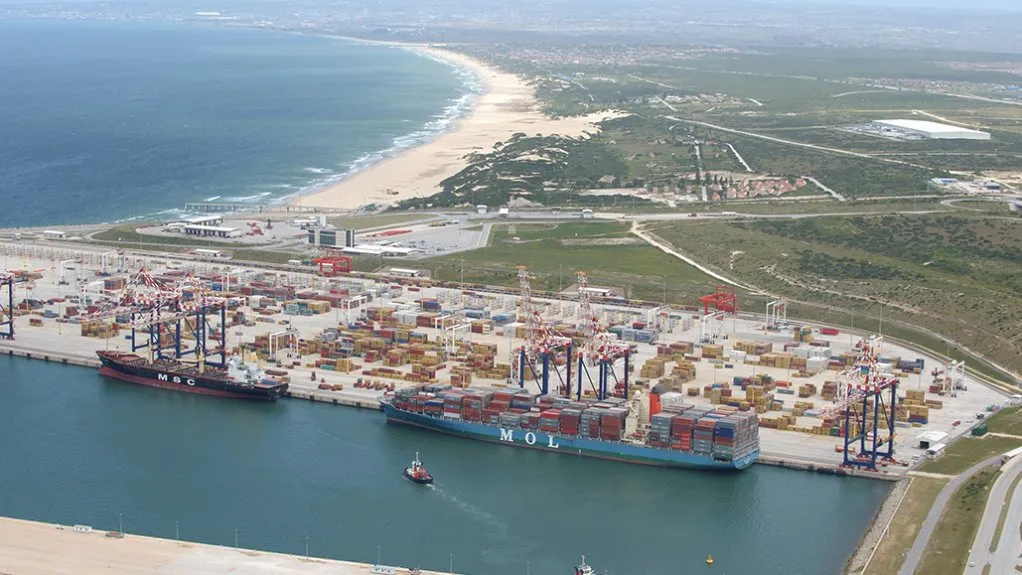
Transnet has launched the next stage of its plan to consolidate South Africa’s manganese exports through Ngqura.

Articles
Tuesday, September 29, 2026
Glencore deepens US critical minerals ties with $500m EXIM-backed VaultCo deal
Glencore's VaultCo agreement comes against a broader expansion of US engagement with its African critical-minerals portfolio.









-ltd-a325b1d3-6414-476b-9b7e-20c2285d5a51.webp?language=en)


-Primary-Logo.webp?language=en)