News & Media
Featured
Trade corridors: engines of industrialisation
Tuesday, May 19, 2026
What's in this article
Recent geopolitical disruptions have exposed the extent to which Africa’s industrial and agricultural systems remain externally dependent. From energy markets to fertilisers, every major trade shock is now transmitted directly into African inflation, food prices and fiscal accounts.
The renewed instability around the Strait of Hormuz has once again highlighted the vulnerability of supply chains that rely heavily on imported refined fuels, ammonia, urea and other industrial inputs despite Africa possessing many of the underlying resources required to produce them competitively at home.
Fertilisers illustrate the contradiction clearly. Africa holds around 80% of global phosphate rock reserves, possesses abundant undeveloped natural gas resources suitable for ammonia and urea production, and hosts significant untapped potash deposits across the Gulf of Guinea basin. Yet much of the continent remains structurally dependent on imported fertilisers and exposed to global price volatility, shipping disruptions and foreign exchange pressures.
At the Africa Finance Corporation, we believe the next phase of Africa’s industrialisation will not be defined by isolated national projects, but by corridors: integrated industrial ecosystems that connect resource endowment, infrastructure and regional demand into scalable investment platforms. In fertilisers, this means thinking beyond standalone plants toward connected gas, mining, rail, port and agricultural systems capable of aggregating fragmented national markets into competitive regional value chains.
Why Africa's supply chains are fragmented
Africa’s fragmentation is often explained through the familiar lens of colonial trade patterns, post-independence policy failures and weak institutional coordination. The inaugural Compendium of Africa’s Strategic Minerals, released earlier this year by the Africa Finance Corporation alongside Mining Indaba, points to a more actionable diagnosis: Africa’s supply chains are equally constrained by structural misalignment.
Across much of the continent, the three anchors of industrial viability — resource endowment, enabling infrastructure, and demand — rarely co-locate or operate as integrated systems.
Mineral deposits are often located far from reliable power, railways, ports or processing capacity. Industrial and agricultural demand centres remain fragmented across relatively small national markets. Energy infrastructure is frequently disconnected from mining and manufacturing clusters. As a result, Africa remains structurally configured to export raw materials while importing higher-value processed products and industrial inputs.
In doing so, African economies typically export commodities on a Free on Board (FOB) basis, absorbing inland transport and logistics costs before products even leave the continent. They then re-import finished goods on a Cost, Insurance and Freight (CIF) basis, paying again for shipping, insurance, financing and embedded risk premiums. In effect, Africa pays repeatedly for fragmentation across the entire value chain.
This is where corridors become transformative. By aligning infrastructure, industrial processing and regional demand into connected systems, corridors can materially reduce delivered costs, aggregate fragmented markets, and create the scale required to justify long-term industrial investment.
In this sense, corridors are not simply transport infrastructure. They are industrial platforms capable of converting resource wealth into manufacturing capacity, food security and economic resilience.
The right approach: align resources, infrastructure and demand against a solid policy backdrop
The prize of getting this right is large. Africa's mineral endowment is estimated at US$29.5 trillion in mine-site value (approximately 20% of the global total) with US$8.6 trillion still undeveloped (roughly 2.5 times the continent's annual GDP), according to Minex Consulting data.
But the sheer resource endowment pales when viewed in the light of what happens post beneficiation. The Compendium estimates that Africa's US$2.8 trillion in mine-gate iron ore translates into roughly US$25.4 trillion in steel value at the point of industrial use — illustrative how value expands exponentially through downstream processing and manufacturing.
And this is not theoretical uplift: research commissioned by the Australian Aluminium Council found that of the A$18 billion contributed by the entire aluminium industry, mining accounted for only 30%, with processing generating the remaining c.70%. The prize is not the ore itself; it is the activity that sits midstream and downstream of it.
The right approach is therefore not simply to extract more minerals, but to build integrated industrial systems underpinned by enabling infrastructure, aligned policy and regional market integration.
Africa’s demand fundamentals make this opportunity particularly compelling. The continent today has the world’s lowest electricity consumption per capita, the lowest steel consumption per capita, and among the lowest fertiliser application rates per hectare of any major region. Often framed as development deficits, these metrics also represent some of the largest sources of future demand growth globally.
Where to start: iron ore
Iron ore offers one of the clearest opportunities to operationalise the corridor model. Countries such as Guinea, Gabon and South Africa host some of the world’s highest-grade iron ore deposits (62–66%), well-suited for direct reduced iron and lower-carbon steel production.
The demand case is equally compelling. Africa’s infrastructure deficit implies structurally rising consumption of steel for transport networks, energy systems, housing and industrial development.
Developing a regional steel industry therefore requires more than mining assets alone. It requires high-grade iron ore resources with transport and energy infrastructure: expanding railway networks across West Africa and the Gulf of Guinea while leveraging natural gas for heat and steam and hydropower for competitive electricity at scale.
This is what ultimately makes corridors investable: not standalone projects, but integrated systems capable of connecting resources, infrastructure and regional demand into long-term engines of industrialisation.
Market News
Related articles

Articles
Wednesday, September 30, 2026
Rainbow Rare Earths advances Phalaborwa towards PFS with Neo partnership
Rainbow Rare Earths is moving its Phalaborwa project closer to development after securing Neo Performance Materials as a technology and offtake partner.
Articles
Tuesday, September 29, 2026
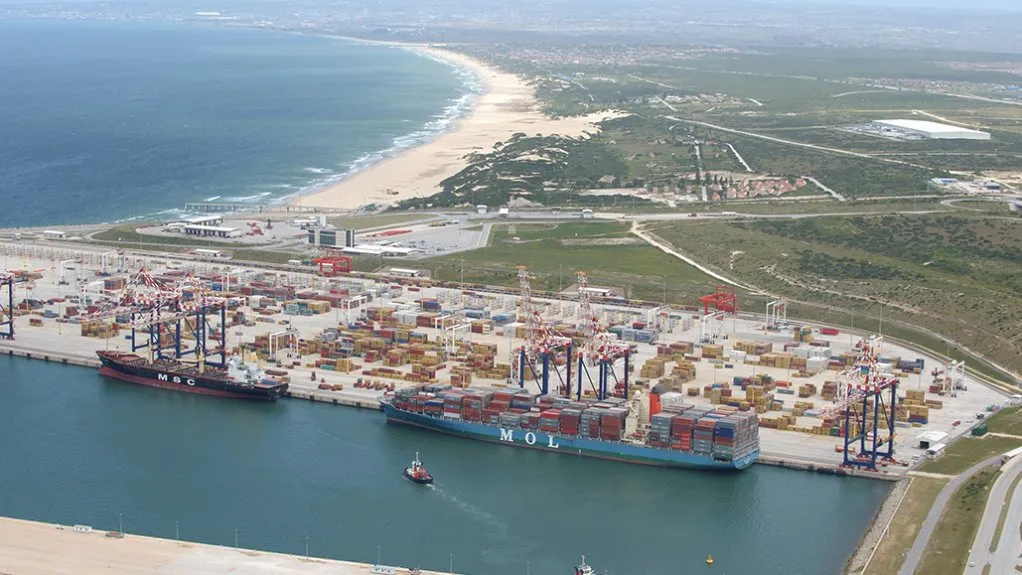
South Africa puts $2.7 billion manganese corridor on the market
Transnet has launched the next stage of its plan to consolidate South Africa’s manganese exports through Ngqura.

Articles
Tuesday, September 29, 2026
Glencore deepens US critical minerals ties with $500m EXIM-backed VaultCo deal
Glencore's VaultCo agreement comes against a broader expansion of US engagement with its African critical-minerals portfolio.











-ltd-a325b1d3-6414-476b-9b7e-20c2285d5a51.webp?language=en)


-Primary-Logo.webp?language=en)