News & Media
Featured
Partnership‑led infrastructure: a pragmatic path to water security
Thursday, April 9, 2026
What's in this article
At the 2026 Mining Indaba, Mzila Mthenjane, CEO of the Minerals Council South Africa, and Bertus Bierman, Strategic Advisor at the Badirammogo Water User Association, presented a compelling business case for partnership‑led infrastructure models as a strategic enabler of sustainable water infrastructure in South Africa.
Their remarks, delivered as part of the “Why partnership‑led infrastructure works” Mining Indaba TV interview, struck a central theme for the mining sector, government and development partners alike: collaboration unlocks tangible outcomes where traditional models have struggled.
Mthenjane framed water challenges not just as a technical or operational issue, but as a strategic infrastructure bottleneck that affects mining competitiveness, community resilience and regional economic stability. In his view, the mining industry’s role goes beyond consumption of water resources, it must be an active co‑investor and co‑designer of delivery models that produce shared value for industry and society.
“Partnership‑led infrastructure delivers real, lasting impact,” he emphasised, noting the benefits of multi‑stakeholder engagement in water initiatives that have historically exceeded the capacity of any single sector to deliver. By drawing on the experience of mining‑backed schemes and shared governance platforms, Mthenjane highlighted how aligned incentives can unlock investment opportunities and de‑risk projects for institutional and development capital.
Bierman: from concept to delivery - lessons from practice
Bertus Bierman brought a grounded, implementation‑focused perspective to the discussion. He reiterated that effective PPPs are not merely contractual arrangements, but governance ecosystems that require transparency, accountability and long‑term commitment from all stakeholders, including government entities, private companies and community representatives.
Drawing on examples from initiatives such as shared water infrastructure programmes in mining regions, Bierman underscored the importance of structured collaboration to balance competing priorities, from regulatory compliance to operational reliability and community access. These models, he argued, demonstrate that PPP approaches can scale beyond isolated projects to establish replicable templates for other regions facing similar water stress.
Mining’s strategic stakes in water infrastructure
Mzila Mthenjane’s broader framing at the Indaba reinforced why the mining sector has a stake in water infrastructure outcomes. South Africa’s mining industry, which directly supports hundreds of thousands of jobs and millions of livelihoods, has increasingly faced water supply constraints and rising delivery costs that risk operational continuity. Previous remarks by Mthenjane before the Indaba highlighted water as a priority risk area requiring urgent, collaborative solutions.
This recognition has driven mining houses to participate in landmark water projects such as the Lebalelo Water User Association scheme in Limpopo and the Vaal Gamagara Water Supply Scheme in the Northern Cape, illustrating how co‑investment and shared governance can deliver infrastructure outcomes that benefit both mining operations and broader communities.
Why PPPs are gaining traction as a delivery mechanism
A recurring theme in both Mthenjane and Bierman’s comments was that conventional infrastructure delivery models are no longer sufficient in the face of strained public resources, rising demand and the legacy of underinvestment. In this context, PPPs are seen not as optional niceties but as pragmatic mechanisms for mobilising finance, expertise and risk‑sharing arrangements that support resilience and scalability.
Key benefits highlighted include:
Capital mobilisation: PPPs can unlock institutional capital and blended finance instruments that governments alone cannot access at scale.
Shared governance: Multi‑stakeholder participation ensures that infrastructure planning aligns with operational realities and community needs.
Risk mitigation: Transparent partnership frameworks help balance risk allocation across public and private partners, making projects more investable.
Replication and scalability: Demonstrated success in water initiatives provides blueprints for broader application across sectors and regions.
A transformative outlook for water infrastructure delivery
Ultimately, both Mthenjane and Bierman positioned PPPs as transformative levers that can help South Africa close critical infrastructure gaps while driving economic and social outcomes. By fostering collaborative models that combine government oversight with private‑sector agility, these leaders are signalling a shift towards shared responsibility and joint delivery frameworks, particularly in sectors like water where traditional infrastructure financing and procurement approaches have struggled to keep pace with demand.
For B2B professionals and investors, the message from Mining Indaba 2026 is clear: innovative partnership‑led infrastructure is not an experimental sideline, it is central to unlocking sustainable growth, resilience and competitive advantage in South Africa’s core sectors.
Market News
Related articles
.webp?language=en)
Articles
Wednesday, October 7, 2026
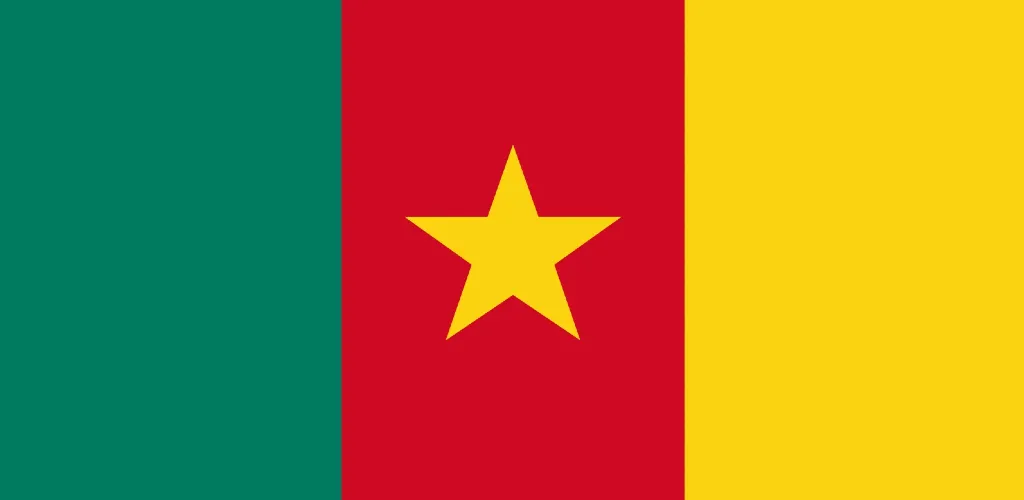
Cameroon opens its mining map to investors as sector enters new growth phase
Digital mining cadastre gives investors remote access to mining titles and geological information as Cameroon seeks to turn mineral potential into a larger investment pipeline.
.webp?language=en)
Articles
Tuesday, October 6, 2026
Gabon’s Milingui iron project moves towards production
After decades of waiting, construction activity is giving new momentum to one of Gabon’s largest iron-ore opportunities.
.webp?language=en)
Articles
Tuesday, October 6, 2026
Africa’s critical minerals: The opportunity of a generation
Geopolitics is fundamentally reshaping the global economy, and nowhere does that shift have greater impact, both in terms of challenges and opportunities, than Africa.











-ltd-a325b1d3-6414-476b-9b7e-20c2285d5a51.webp?language=en)


-Primary-Logo.webp?language=en)