News & Media
Featured
Africa’s rare earths moment hinges on value chains, not just resources
Wednesday, April 8, 2026
That was the central message from Tania Mandaza, Vice President for Mining & Metals at Stanbic Bank Zimbabwe, during discussions on “Harnessing Africa’s Rare Earth Potential” and an interview with MITV at Mining Indaba 2026. “Africa is sitting on significant rare earth potential, but the real opportunity lies beyond extraction,” Mandaza said. “If we continue to export raw materials, we will continue to export value. The shift must be towards processing, refining and full participation in the value chain.”
Her comments come at a time when rare earth elements - critical to electric vehicles, wind turbines and advanced electronics - are increasingly viewed as strategic minerals, with governments and corporates seeking to diversify supply chains away from traditional dominant producers. Mandaza emphasised that this global realignment presents a narrow but powerful window for Africa to reposition itself. “The question is no longer whether demand will materialise. It is whether Africa can position itself as a reliable, competitive and integrated supplier into these global supply chains,” she said.
From a financing perspective, she highlighted a structural shift in how capital is being deployed into the sector. Traditional project finance models focused solely on extraction are losing favour, replaced by more holistic approaches. “Investors are no longer looking at standalone mining projects,” Mandaza noted. “Bankability today depends on the entire ecosystem, from resource to processing to market. Without that integration, it becomes significantly more difficult to unlock funding.” This view is echoed by other industry participants, who point to the technical and commercial complexity of rare earth projects. Unlike bulk commodities, rare earths require specialised processing capabilities and often involve challenging metallurgy.
“Rare earths are not just another mining play, they are a chemical processing business as much as a mining one,” said a senior analyst at a global mining advisory firm. “That changes the risk profile entirely and requires a different level of technical and financial sophistication.” Infrastructure constraints remain another major hurdle. Limited access to reliable power, water and logistics networks continues to undermine project viability across several African jurisdictions.
“Without coordinated infrastructure development, even the best deposits will struggle to reach commercial scale,” said an executive at a multinational mining company with African assets. “This is where public-private partnerships become critical.” Mandaza also underscored the importance of policy certainty and regional collaboration. Fragmented regulatory frameworks and inconsistent beneficiation policies have historically deterred long-term investment. “Policy alignment is essential,” she said. “Investors need clarity and consistency, particularly for capital-intensive projects with long development timelines. At the same time, regional cooperation can unlock shared infrastructure and create economies of scale.”
Partnerships, she argued, will ultimately determine success. This includes collaboration between governments, financiers, miners and downstream technology players, as well as alignment with global customers seeking secure and sustainable supply. “Rare earth development cannot happen in silos,” Mandaza said. “It requires an ecosystem approach, where each stakeholder plays a defined role in building a competitive and resilient value chain.”
While the challenges are significant, so too is the opportunity. With the right mix of policy reform, infrastructure investment and strategic partnerships, Africa could move beyond its traditional role as a raw material exporter and emerge as a meaningful participant in the global rare earth value chain. “The prize is not just increased mining output,” Mandaza concluded. “It is long-term industrialisation and economic transformation.”
Market News
Related articles
.webp?language=en)
Articles
Monday, October 5, 2026
A new partnership for the DRC’s critical minerals future
What does the Buenassa Deal signal for the DRC’s critical minerals strategy?

Articles
Wednesday, September 30, 2026
Rainbow Rare Earths advances Phalaborwa towards PFS with Neo partnership
Rainbow Rare Earths is moving its Phalaborwa project closer to development after securing Neo Performance Materials as a technology and offtake partner.
Articles
Tuesday, September 29, 2026
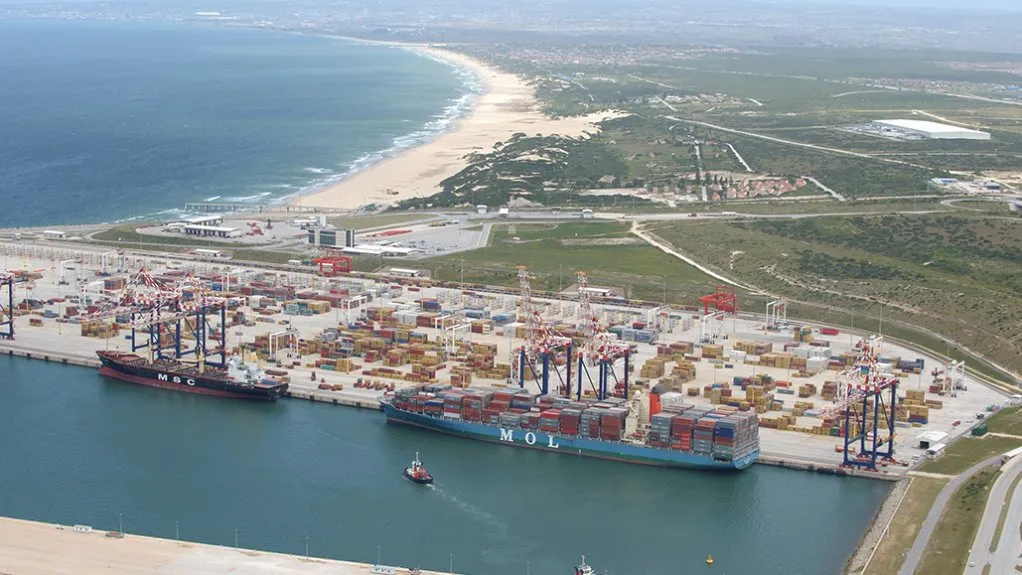
South Africa puts $2.7 billion manganese corridor on the market
Transnet has launched the next stage of its plan to consolidate South Africa’s manganese exports through Ngqura.









-ltd-a325b1d3-6414-476b-9b7e-20c2285d5a51.webp?language=en)


-Primary-Logo.webp?language=en)