News & Media
Featured
Glencore weighs $9 billion DRC copper deal as US deepens push into critical minerals
Wednesday, February 4, 2026
What's in this article
The diversified miner confirmed on Tuesday that it has signed a memorandum of understanding with the Orion Critical Mineral Consortium (Orion CMC), a partnership between private investment firm Orion Resource Partners and the US government.
The proposed transaction relates to Glencore’s interests in Mutanda Mining (Mumi) and Kamoto Copper Company (KCC), two of the largest copper and cobalt operations in the DRC. If completed, the deal would mark one of the most significant Western-backed investments in African critical minerals in recent years, at a time when the United States and its allies are seeking to reduce reliance on Chinese-controlled supply chains.
Glencore said the implied enterprise value of the assets is $9 billion. Under the proposed structure, Glencore and Orion CMC would jointly seek to expand and develop Mumi and KCC, working alongside the DRC government and state miner Gécamines, Glencore’s long-standing partner in KCC. The consortium would also look to acquire additional copper and other critical mineral assets in the DRC and across the broader African Copperbelt.
US Deputy Secretary of State Christopher Landau publicly endorsed the transaction, describing it as aligned with the objectives of the US-DRC Strategic Partnership Agreement. Signed in Washington on December 4, the agreement offers the US improved access to Congolese critical minerals in exchange for investment, infrastructure development and enhanced security cooperation.
Glencore chief executive Gary Nagle said the proposed transaction recognised the company’s strategic position in the country. “We are pleased that the US government and Orion CMC recognise Glencore’s role as the only major Western producer of copper and cobalt in the DRC, through our high-quality assets, Mumi and KCC,” Nagle said.
Oskar Lewnowski, founder and CEO of Orion Resource Partners, framed the deal in explicitly strategic terms. “This proposed transaction is exactly what Orion CMC was established to achieve – securing long-life, high-quality production of critical minerals while supporting resilient supply chains for the US and its allies,” he said.
Strategic timing
Analysts say the talks reflect a convergence of market fundamentals and geopolitics. Copper prices have surged to record levels, recently touching $14,500 per tonne, driven by tight supply, electrification demand and limited new project development globally. Cobalt, meanwhile, remains central to battery supply chains despite efforts to reduce its use. “The valuation suggests Glencore is monetising peak-cycle assets without relinquishing operational control, while bringing in a politically aligned partner,” one mining analyst said. “For Washington, this is about anchoring supply in a jurisdiction that has historically been dominated by Chinese capital.”
The potential stake sale comes against a backdrop of broader strategic uncertainty for Glencore. The company is simultaneously the subject of early-stage takeover talks with Rio Tinto, a transaction that could create the world’s largest mining group with a combined market value exceeding $200 billion. Bloomberg News reported last week that the two companies are expected to request additional time to negotiate valuation terms. Under UK takeover rules, Rio faces a February 5 deadline to either make a firm offer or walk away for six months, unless Glencore seeks an extension - a move analysts say is increasingly likely.
A merger would roughly double Rio Tinto’s copper output and add close to one million tonnes of future growth capacity, significantly reshaping the global copper landscape. Glencore, for its part, has reported improving fundamentals. On January 29, the company announced a strong increase in second-half copper production, alongside higher copper reserves, reinforcing the strategic value of its base-metal portfolio. The proposed Orion CMC transaction remains subject to due diligence and regulatory approvals. But if consummated, it would represent a landmark deal at the intersection of mining, geopolitics and the accelerating race for critical minerals.
Market News
Sustainability
Energy
Related articles

Articles
Monday, September 7, 2026
Exxaro exits Australia as portfolio reshaping accelerates
Exxaro is set to exit its only offshore asset through a two-step transaction that will see it acquire Anglo American’s remaining stake in the Moranbah South coking coal project before selling the entire asset to Stanmore Resources for $105 million.
Digital Diaries
Wednesday, November 5, 2025
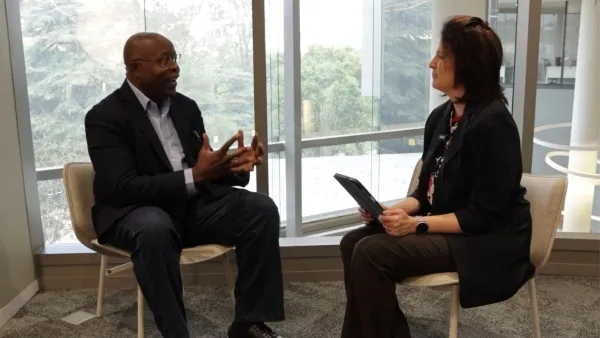
Digital Diary - Ben Magara, CEO of Exxaro Resources
In this exclusive conversation with Ben Magara, CEO of Exxaro Resources, our Product Director, Laura Nicholson, discusses Exxaro’s growth and diversification into manganese and renewable energy.

Wednesday, June 11, 2025
Championing the cause of women in mining
There can be no doubt that great strides have been made to ensure gender parity in the South African mining sector. This is largely underpinned by the initiatives that the Minerals Council has implemented in collaboration with its members.








-ltd-a325b1d3-6414-476b-9b7e-20c2285d5a51.webp?language=en)

-Primary-Logo.webp?language=en)