News & Media
Featured
How Africa can unlock capital for mineral value addition and regional value chains

Dr. Marit Kitaw
Thursday, May 7, 2026
Africa’s mineral sector is once again under immense pressure amid heightened demand driven by the global low-carbon agenda and competition for control. Africa stands yet again at a decisive inflection point, where it can seize this moment to capture value from its mineral resources.
The Africa Mining Vision (2009) and the African Green Minerals Strategy (2025), which are the strategic foundational documents that champion and advocate a paradigm shift from a pure extraction model to one of value capture for African citizens, position minerals as drivers of industrialization, regional integration, and inclusive growth.
To unlock capital to achieve this mostly elusive value capture, available capital must be unlocked, whose structure and source will need to be reevaluated and transformed. Financing for critical energy-transition minerals, or green minerals, is available in principle. It is, however, increasingly selective, targeting areas that offer regulatory and physical stability, policy clarity, and credible pathways to value addition rather than raw extraction. Aligning capital with Africa’s ambition to add value to minerals and build regional value chains has proven much more challenging than attracting capital.
This shift and urgency are in line with the March 2026 Magaliesberg communiqué by a group of eminent experts drawn from governments, civil society, selected organizations and institutions, think tanks, academia, and the private sector, which calls for a continental shift toward value addition, regional industrialization, and collective bargaining power. It further underscores that financing value chains must be regional by design. Unlocking capital must therefore focus on financing integrated, cross-border industrial ecosystems.
To unlock the right type of capital in Africa, the following actionable recommendations are strongly recommended.
First, it would be prudent and strategic for African governments to diversify their sources of capital and adopt a regional approach when soliciting or acquiring capital. Given that historically, investment in the mining industry was largely dominated by foreign capital, African governments should now focus on mobilizing domestic capital. These may include pension funds, sovereign wealth funds, and local capital focused on upstream and midstream processing for manufacturing and industrialization.
Simultaneously, governments should continue to appeal to African development finance institutions such as Afreximbank, the African Development Bank, and the Africa Finance Corporation to finance regional value chain projects, including infrastructure and mineral corridors. To this end, the African Union adopted frameworks such as the African Mineral and Energy Resources Classification (AMREC) and the Pan-African Reporting Code (PARC), which should be deployed as instruments for domestic resource mobilization.
By using standard classification for geological data and improving the transparency and bankability of mineral assets, AMREC and PARC enable African countries to attract investment, raise capital on regional exchanges, and structure asset-backed financing. In this way, AMREC and PARC support a shift from raw extraction to value-based capital formation.
The second recommendation relates to public capital. As value addition requires integrated strategies across the mineral, industry, energy, and infrastructure nexus, African governments are strongly recommended to use public resources to crowd in private investment. Public finance, in the form of guarantees, co-investments, and concessional funding, could be used for shared infrastructure projects such as mineral, energy, and transport corridors, and industrial special economic zones (SEZs). These are critical enablers of both value addition and regional value chains.
The third actionable recommendation concerns globally available finance. Whereas climate finance and energy transition investments are increasingly targeting critical energy transition minerals, they are not necessarily aligned with Africa’s value-addition agenda. Indeed, most of this capital is still structured around securing raw materials. African governments should engage in financial partnerships and agreements that embed local processing on the continent, promote technology transfer, and support skills development. There has been a call for a continental coalition of producing countries, central to strengthening Africa’s bargaining power and avoiding a race to the bottom.
The fourth aspect concerns financial instruments and tools that could be used for value-added projects and regional value chains. Innovative financial instruments such as blended finance models, green bonds, and regional infrastructure funds should be used and scaled up. Indeed, value-addition projects, such as refineries, smelters, battery precursor plants, and battery manufacturing, are capital-intensive and high-risk. Multilateral development banks and climate finance institutions have a key role in structuring these instruments to support regional industrialization.
Building bankable projects is a fifth recommendation. Indeed, among the major challenges of unlocking capital is the lack of pipelines of bankable projects that are technically prepared and commercially viable in most African countries. It is important not only to have integrated planning but also to have clear investment roadmaps. Governments must invest in project preparation, feasibility studies, and transaction advisory services to translate policy ambition into investable opportunities.
The sixth recommendation concerns policy harmonization at national, regional, and continental levels to unlock regional capital flows. Fragmented regulatory environments not only increase risk and deter investment but could also lead to a decrease in bargaining and negotiation power to secure deals that are favorable to the local value-creation agenda and increase the risk of a race to the bottom while competing to attract investment.
By leveraging the African Continental Free Trade Area (AfCFTA) agreement, African governments could harmonize regulatory frameworks to create coherent regional value chains. There is also a need to strengthen coherence and coordination at local, national, regional, and continental levels, across institutions, stakeholders, and governments. Transparent, predictable, and well-coordinated governance systems at all levels are essential for building investor confidence and sustaining long-term industrial investments.
The eighth and final recommendation concerns building human and institutional capital throughout the entire mineral value chain. It should be prioritized as a prerequisite for unlocking investment and sustaining industrial transformation. Value addition and regional value chains require specialized skills across multiple stages of production. Strategic investment in education, vocational training, and skills development is essential.
In conclusion, for African governments, unlocking capital for mineral value addition and building regional value chains requires analyzing the sources and goals of capital and redirecting it toward a unified African currency through innovative methods such as domestic resource mobilization.
Market News
Related articles
Articles
Thursday, September 17, 2026
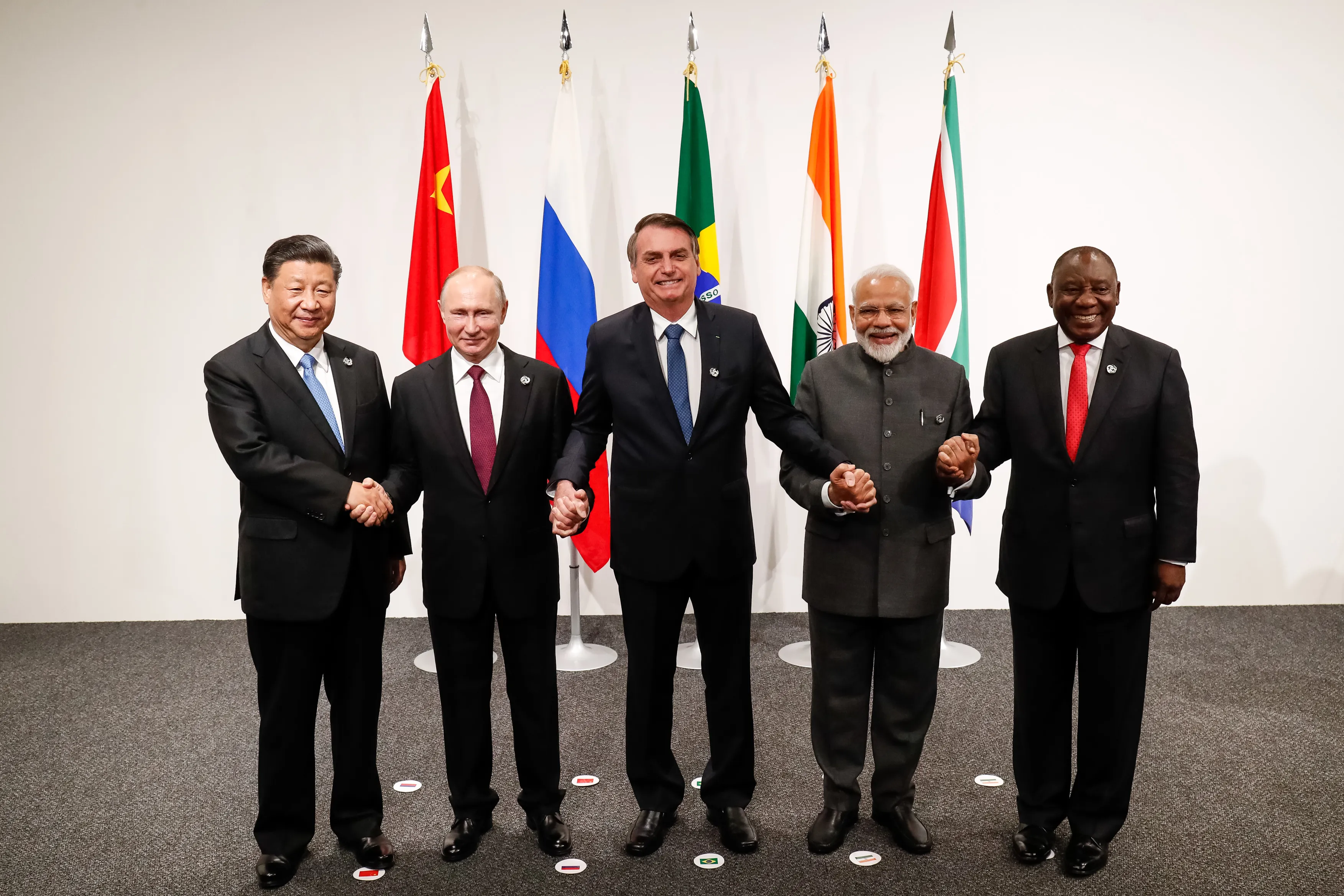
What does the BRICS summit mean for Africa’s mining value chains?
The BRICS summit has sharpened the race to secure critical minerals – but for Africa, the bigger opportunity is capturing more of the value created after extraction.

Articles
Wednesday, September 16, 2026
What does Dangote’s refinery mean for Africa’s mining ambitions?
The value of a resource can change dramatically when processing, capital and ownership move closer to the point of production.

Articles
Tuesday, September 15, 2026
Transnet gains momentum as rail reform and investment reshape mining logistics
Return to profitability signals progress, but logistics recovery remains a work in progress.










-ltd-a325b1d3-6414-476b-9b7e-20c2285d5a51.webp?language=en)


-Primary-Logo.webp?language=en)